Every time you crack open an egg for breakfast, have you stopped to wonder about the chicken that laid it? Here’s a mind-blowing fact: a single chicken can lay over 300 eggs in just one year! That’s almost one egg every single day. But not just any chicken can do this, it takes a special type called a layer chicken, and the farms that raise them are doing something pretty amazing to keep eggs available in stores all year round.
Layer poultry farming is one of the most important parts of Pakistan’s agriculture, especially in places like Multan and throughout Punjab. It’s the reason why you can walk into any store and find fresh eggs whenever you need them. These farms are like egg-producing factories, but instead of machines, they rely on thousands of hardworking chickens who have one main job: laying eggs!
In this article, you’re going to discover the fascinating world of layer poultry farming. We’ll explore what makes these chickens so special, how farmers take care of them, why this business is booming in Pakistan, and even some of the challenges that come with running an egg farm. By the end, you’ll never look at an egg the same way again!
What Exactly Are Layer Chickens and Why Are They Special?
Layer chickens aren’t your average backyard chickens. They’ve been specifically bred over many years to be egg-laying superstars. Think of them like Olympic athletes, while a regular chicken might lay an egg every few days, layer chickens are trained (well, bred) to produce eggs almost daily.
There are different breeds of layer chickens, and each has its own strengths. The White Leghorn is probably the most famous layer breed in the world. These chickens are small, energetic, and can lay white eggs like clockwork. They’re kind of like the marathon runners of the chicken world, lean, efficient, and built for endurance. Another popular breed is the Rhode Island Red, which produces brown eggs and has a slightly calmer personality.
Here’s something cool: the color of the eggshell depends on the breed of chicken, not what they eat! White chickens with white earlobes typically lay white eggs, while chickens with red earlobes usually lay brown eggs. The nutritional value is the same, though, so don’t let anyone tell you brown eggs are healthier just because they look fancier.
Layer chickens start producing eggs when they’re about 18 to 20 weeks old (that’s around 4 to 5 months). Once they start laying, they’ll continue for about a year or more before their production slows down. It’s like they have a built-in timer that kicks into action when they reach maturity!
How Do Layer Poultry Farms Actually Work?
Running a layer poultry farm is way more complex than just keeping chickens in a coop and collecting eggs. It requires careful planning, daily management, and attention to countless details. Let’s break down how these farms operate.
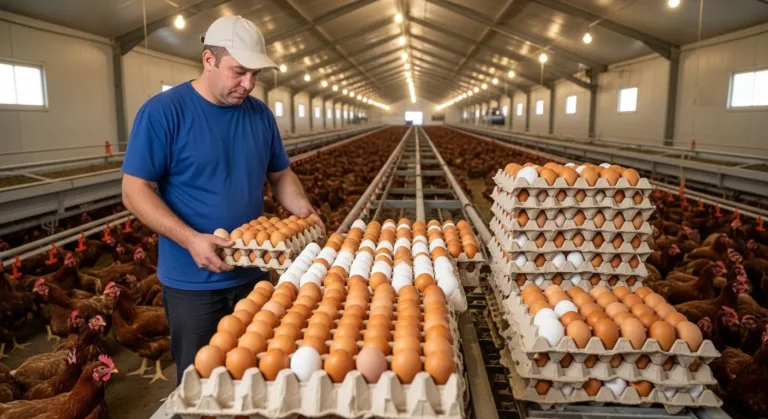
First, farmers need to create the perfect living environment. Layer chickens are usually housed in special buildings called poultry houses or layer barns. These aren’t just random sheds, they’re carefully designed structures with proper ventilation, lighting, and temperature control. Imagine living in a house where the temperature and lighting are always perfect, that’s what good farmers provide for their chickens.
The chickens are often kept in cage systems or floor systems. In cage systems, chickens live in rows of cages with slanted floors so eggs roll out automatically for easy collection. It’s kind of like a vending machine for eggs! Floor systems give chickens more space to move around freely, which some people prefer because they think it’s better for the chickens’ well-being.
Feeding is another crucial aspect. Layer chickens need a specially formulated diet that’s packed with protein, calcium, and other nutrients. The calcium is super important because it helps them form strong eggshells. Without enough calcium, their eggs would have thin, fragile shells that break easily. Think of calcium as the construction material for building strong eggshells, you can’t build a solid house without good bricks, right?
Water is just as important as food. Chickens drink a lot of water, especially when they’re producing eggs. A single layer chicken can drink about a quarter liter of water each day. Clean, fresh water must be available at all times, or egg production will drop quickly.
Why Is Layer Poultry Farming Growing So Fast in Pakistan?
Pakistan’s layer poultry industry has exploded over the past few decades, and there are some really good reasons why. Understanding these reasons helps explain why you see more and more poultry farms popping up across the country.
The demand for eggs keeps growing as Pakistan’s population increases. With over 240 million people, that’s a lot of breakfast omelets, cake recipes, and egg sandwiches! Eggs are an affordable source of protein compared to meat, which makes them super popular with families on all kinds of budgets.
Cities like Multan have become major hubs for layer poultry farming because the climate is suitable and there’s good infrastructure for transporting eggs to markets across the country. The region has the perfect combination of factors: experienced farmers, available land, reasonable costs, and access to feed supplies.
The business side is attractive too. Layer poultry farming can be quite profitable when done right. Unlike crops that you plant once and harvest once, layer chickens produce eggs every single day. This creates a steady income stream, kind of like getting an allowance daily instead of monthly. Farmers can sell eggs regularly and have consistent cash flow to support their operations and families.
Technology has also made layer farming more efficient. Modern poultry farms use automated feeding systems, temperature controls, and even machines that collect and sort eggs by size. Some farms in Pakistan are using solar panels to reduce electricity costs, and others are adopting computer systems to track production data. It’s agriculture meeting technology in really cool ways!
What Goes Into Taking Care of Thousands of Chickens?
Managing a layer poultry farm with thousands of chickens might sound overwhelming, but farmers develop systems and routines that make it manageable. Still, it’s definitely hard work that requires dedication and knowledge.
Health management is probably the most critical responsibility. Just like how diseases can spread quickly through a school when one person gets sick, diseases can sweep through a poultry farm rapidly. Farmers must follow strict biosecurity measures (that’s a fancy term for keeping diseases out). This includes controlling who enters the farm, disinfecting equipment, and sometimes even requiring visitors to change clothes and shoes before going near the chickens.
Vaccination programs are essential. Chickens receive vaccines to protect them against common poultry diseases like Newcastle disease, infectious bronchitis, and others. It’s similar to how you get vaccinated against measles or other illnesses, preventive medicine that keeps everyone healthy.
Farmers also need to monitor egg production closely. They keep records of how many eggs are laid each day, and if they notice a sudden drop, they investigate immediately. Lower egg production could signal health problems, poor nutrition, stress, or environmental issues that need to be fixed quickly.
Lighting plays a surprising role in egg production. Layer chickens need about 14 to 16 hours of light each day to maintain peak egg production. In poultry houses, farmers use artificial lighting to supplement natural daylight, especially during shorter winter days. The light tricks the chickens’ bodies into thinking it’s always springtime, which is when chickens naturally lay the most eggs.
What Challenges Do Layer Poultry Farmers Face?
Like any business, layer poultry farming comes with its share of challenges and obstacles. Understanding these helps us appreciate the work that goes into getting eggs to our tables.
Disease outbreaks are every farmer’s nightmare. Despite all the precautions, diseases can still strike. When they do, they can devastate a flock quickly, causing massive egg production losses and even chicken deaths. Bird flu, for instance, has caused serious problems for poultry farmers worldwide, including in Pakistan. When an outbreak occurs, farmers sometimes have to destroy entire flocks to prevent the disease from spreading.
Feed costs can eat up (pun intended!) a huge chunk of the farm’s expenses. Feed typically accounts for about 60 to 70 percent of total production costs. When the prices of corn, soybeans, and other feed ingredients go up, farmers’ profit margins shrink. It’s like if suddenly all your school supplies doubled in price, you’d have to spend more of your money just to have the same stuff.
Market price fluctuations affect profitability too. Egg prices don’t stay constant, they go up and down based on supply and demand. During certain times of the year, like religious festivals, demand might spike and prices rise. Other times, if too many farms are producing eggs at once, prices can drop below production costs, meaning farmers actually lose money on each egg sold.
Environmental concerns are becoming more important. Poultry farms produce a lot of waste, including chicken droppings and used bedding material. Managing this waste properly is essential for environmental protection and community relations. The good news is that chicken manure makes excellent fertilizer, so many farms sell it to crop farmers, turning a waste problem into an additional income source!
How Can Technology Make Layer Farming Better?
Modern technology is transforming layer poultry farming in exciting ways. Farms that embrace new technologies often become more efficient, profitable, and sustainable.
Automated systems are becoming more common even on medium-sized farms in Pakistan. Automated feeders distribute the exact amount of food at scheduled times, ensuring chickens never go hungry and reducing feed waste. Automated egg collection systems gently transport eggs from the cages to a central location, reducing breakage and saving hours of manual labor.
Environmental control systems use sensors and computers to maintain perfect conditions inside poultry houses. These systems can automatically adjust temperature, humidity, and ventilation based on real-time data. It’s like having a smart home, but for chickens! Some advanced farms even use apps that let farmers check on their flocks remotely from their smartphones.
Better genetics and breeding programs are producing even more efficient layer chickens. Scientists work to develop birds that lay more eggs, resist diseases better, and require less feed. It’s selective breeding taken to a scientific level, kind of like how dog breeders develop new breeds with specific traits.
Online platforms and websites like Multanfarms.com are helping farmers access valuable information, connect with suppliers, and even market their products directly to customers. The internet has opened up new possibilities for farmers to learn from experts, share experiences with other farmers, and run their businesses more effectively.
Why Should You Care About Layer Poultry Farming?
You might be wondering why all this matters to you. Well, layer poultry farming affects your life more than you probably realize!
First, it directly impacts food security and nutrition. Eggs are one of the most nutritious foods available, packed with protein, vitamins, and minerals. They’re called “nature’s multivitamin” for good reason! A strong layer poultry industry means affordable, accessible protein for everyone, which is especially important for growing kids who need good nutrition.
Economic opportunities are another big deal. Layer poultry farming creates jobs not just on the farms themselves, but in related industries too. Feed mills, veterinary services, egg transportation companies, packaging suppliers, and retail stores all depend on the poultry industry. When layer farming grows, it creates a ripple effect of economic benefits throughout communities.
For anyone interested in agriculture or business, layer poultry farming represents a real opportunity. It’s possible to start small with just a few hundred chickens and grow over time. Many successful poultry farm owners started as young entrepreneurs with big dreams and hard work.
Understanding where your food comes from also makes you a more informed consumer. Next time you’re at the store choosing eggs, you’ll know something about the journey those eggs took from farm to shelf. You’ll appreciate the farmers who wake up early every morning to care for their flocks and the complex systems that make fresh eggs available year-round.
Wrapping It All Up
So there you have it! Layer poultry farming is way more interesting and complex than most people realize. From the specially bred chickens that can lay almost an egg a day, to the carefully controlled environments they live in, to the challenges farmers face and the technology they’re adopting, there’s a whole fascinating world behind those eggs in your refrigerator.
Pakistan’s layer poultry industry, particularly in regions like Multan, continues to grow and evolve. Farmers are working hard every day to produce high-quality eggs efficiently while caring for their flocks and protecting the environment. It’s a perfect example of how traditional agriculture is meeting modern innovation to feed a growing nation.
Next time you crack open an egg, take a moment to think about the amazing journey it took to reach you. From a layer chicken doing her daily job to the farmer who cared for her to the distribution system that delivered it to your local store, it’s all pretty remarkable. So here’s a question to leave you with: would you ever consider visiting a layer poultry farm to see this incredible process firsthand? You might be surprised by what you discover!