Picture this: you’re scrolling through your phone when you see a video of the world’s largest bird, an ostrich, sprinting across a dusty landscape at speeds that would make your school’s track star jealous. These incredible birds can run up to 45 miles per hour! But have you ever stopped to wonder where these giant, flightless birds actually live? What kind of home does a creature that tall need, and could you even keep one as a pet?
Ostriches are pretty amazing when you think about it. They’re the tallest and heaviest birds on Earth, standing up to 9 feet tall (that’s probably taller than your basketball coach!) and weighing as much as 350 pounds. Unlike the birds you see flying around your backyard, ostriches are built for running, not flying. Their powerful legs and unique feet make them perfectly adapted to life on the ground. But where exactly is “home” for these fascinating creatures?
Whether you’re curious about wild ostriches roaming free in their natural habitat or wondering about ostrich farms (like the ones you might learn about on sites such as Multanfarms.com), understanding where and how these birds live is pretty fascinating. Let’s dive into the world of ostrich homes and discover what makes these birds so special.
The Wild Side: Where Ostriches Naturally Call Home
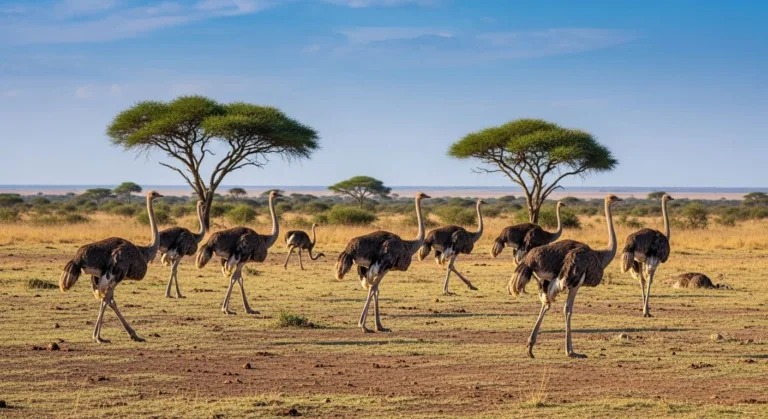
In the wild, ostriches are native to Africa, specifically the hot, dry regions of the continent. They’re not picky about exact locations, but they definitely have preferences. You’ll find them strutting around in savannas (those grasslands with scattered trees you’ve seen in nature documentaries), deserts, and semi-arid plains. Think of places where it’s hot, open, and you can see for miles in every direction.
Why do ostriches love these wide-open spaces? Well, it’s all about survival. Ostriches have incredible eyesight, possibly the best of any land animal. Their eyes are actually bigger than their brains! In open areas, they can spot predators like lions, leopards, and hyenas from far away. When you’re a big bird that can’t fly, being able to see danger coming and outrun it is pretty much your best defense strategy.
These birds also need room to roam. Wild ostriches can cover massive territories, sometimes traveling many miles in a single day looking for food and water. They’re basically the nomads of the bird world, moving around based on where the best grass, seeds, and insects are. During the dry season, they might gather near water sources, but when the rains come and plants start growing everywhere, they spread out across the landscape.
Building an Ostrich Home: What Farms Need to Know
Now, let’s talk about domestic ostriches, the ones raised on farms. Creating a proper home for these birds is way more complicated than just sticking them in a big chicken coop! Farmers who raise ostriches (and you can learn about this kind of farming on agricultural sites like Multanfarms.com) need to think carefully about what these birds require.
Space, Space, and More Space
First up is space, and lots of it. Each adult ostrich needs at least 1,000 square feet of outdoor space, but more is definitely better. That’s about the size of a small apartment! Can you imagine giving a bird that much room? But when you think about how ostriches are built to run and roam, it makes total sense. Keeping them in cramped spaces would be like asking you to spend your whole life in your bedroom, it’s just not healthy or fair.
The fencing around an ostrich enclosure needs to be strong and tall, usually at least 6 feet high. Ostriches are powerful birds with strong legs, and a panicked ostrich can damage weak fencing. The fence also needs to be smooth so the birds don’t injure themselves if they run into it. Think of it like childproofing a house, except you’re ostrich-proofing a farm!
Shelter From the Storm
Even though ostriches come from hot climates, they still need shelter. A simple three-sided barn or shed works great because it protects them from wind, rain, and extreme temperatures while still giving them the open feeling they prefer. Ostriches don’t like being completely enclosed, it makes them nervous. Their shelter is more like a covered patio than a closed room.
Inside the shelter, the floor should be covered with soft bedding like sand, straw, or wood shavings. This gives them a comfortable place to sit and rest. Ostriches actually sleep lying down, which looks pretty funny when you see a 9-foot-tall bird folded up on the ground!
Dinner Time: The Ostrich Dining Room
An ostrich’s home isn’t complete without access to food and water, and these birds have some interesting eating habits. In the wild, they’re omnivores (which means they eat both plants and animals), munching on grasses, seeds, flowers, roots, and occasionally insects or small reptiles. They’re not picky eaters!
On farms, ostriches get a specially formulated diet that usually includes grains, alfalfa, and nutritional supplements. Here’s a weird but true fact: ostriches also need to eat small stones and pebbles! These rocks sit in their gizzard (a special part of their stomach) and help grind up food since ostriches don’t have teeth. It’s like having a built-in food processor in your belly.
Water is super important too. Ostriches can drink several gallons of water a day, especially in hot weather. Farmers need to provide clean, fresh water in large, sturdy containers that these big birds can’t easily knock over. Some farms use automatic waterers, kind of like a drinking fountain designed specifically for ostriches.
Social Life: Do Ostriches Need Roommates?
Here’s something cool about ostriches: they’re social birds! In the wild, they often live in groups of 5 to 50 birds. There’s usually one dominant male (you can tell because he has black feathers) who lives with several females (they have brown feathers). The group works together to watch for predators, kind of like how you and your friends look out for each other.
On farms, ostriches do better when they have company. Keeping them completely alone can stress them out and make them aggressive. It’s like how you’d probably get pretty lonely if you never got to hang out with friends or family. However, farmers need to be careful about which ostriches they house together. During breeding season, males can get territorial and aggressive, so they often need separate spaces.
Baby ostriches, called chicks, need special housing. They’re pretty fragile when they’re young and need warmer temperatures than adults. Farmers usually keep chicks in special brooders (heated enclosures) for their first few weeks of life before gradually introducing them to outdoor pens.
From Africa to Your Neighborhood: Ostrich Farming Around the World
You might be surprised to learn that ostrich farming isn’t just an African thing anymore. People raise ostriches in the United States, Australia, Europe, and many other places around the world. Why? Well, ostrich meat is lean and healthy, their leather is super durable and valuable, and their feathers are used for all sorts of things from fashion to dusting.
Setting up an ostrich farm in places outside Africa means adapting their home to different climates. In colder regions, ostriches need better shelter and sometimes even heated barns for winter. In very hot places without much natural shade, farmers need to provide extra shade structures. It’s all about recreating the comfortable conditions these birds would naturally seek out.
Modern ostrich farms also focus on the birds’ mental well-being. Farmers might add enrichment items like large balls the ostriches can push around or varied terrain in their enclosures. This keeps the birds active and prevents boredom. Think of it like how you need different activities to stay entertained, ostriches need variety too!
Could You Keep an Ostrich at Home?
Now you might be wondering: could I keep an ostrich as a pet in my backyard? Technically, in some places where laws allow it, you could. But should you? Probably not, unless you have a massive property and lots of experience with large animals.
Ostriches aren’t like dogs or cats. They can be dangerous when scared or during breeding season. Those powerful legs that make them fast runners can also deliver kicks strong enough to seriously hurt or even kill a person. They’re also expensive to feed and require veterinarians who specialize in exotic birds. Plus, your neighbors might not be thrilled about having a 9-foot-tall bird next door!
Wrapping Up the Ostrich Story
Understanding where ostriches live, whether in the wild African plains or on managed farms, helps us appreciate these remarkable birds even more. Their homes need to provide space to run, shelter from weather, proper nutrition, and ideally, some bird buddies to hang out with. From the savannas of Africa to farms featured on sites like Multanfarms.com, ostriches have adapted to various environments while keeping their basic needs pretty consistent.
These incredible birds remind us that every animal has specific requirements to thrive. Just because an animal looks tough and can survive in harsh conditions doesn’t mean we shouldn’t think carefully about what makes them truly comfortable and healthy. Whether you’re a farmer raising ostriches or just someone fascinated by these amazing creatures, respecting their needs is key.
So here’s something to think about: What other animals do we see every day without really understanding what kind of home they truly need to be happy? Next time you see any animal, wild or domestic, you might find yourself wondering about their perfect home!