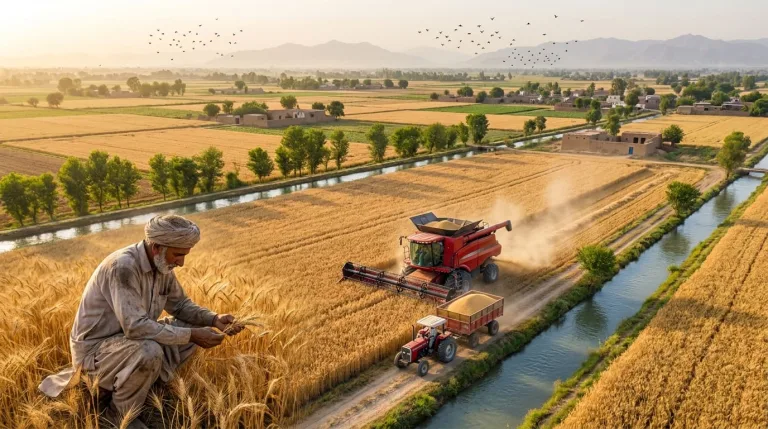
Have you ever looked at a loaf of bread and wondered where the wheat inside it came from? Every slice of bread, every chapati, and every bowl of pasta starts with tiny wheat seeds growing in large fields. In Pakistan, wheat is one of the most important crops because it feeds millions of people every day.
If you’ve ever traveled through the countryside, you’ve probably seen wide golden fields waving in the wind. Those beautiful fields are often full of wheat! In this article, you’ll discover the wheat growing areas in Pakistan, learn why these regions are perfect for farming, and find out how farmers work hard to grow one of the country’s most valuable crops.
Why Is Wheat So Important in Pakistan?
Wheat is often called Pakistan’s staple crop because it is a major part of everyday meals. Many families eat wheat products such as chapati, naan, bread, biscuits, and pasta almost every day.
Think about your school lunch. If you bring a sandwich or eat a chapati roll, you’re enjoying food made from wheat. That’s why farmers grow millions of tons of wheat every year to meet the country’s needs.
Did you know? Wheat is one of the largest crops grown in Pakistan and plays a big role in both farming and the country’s economy.
The Main Wheat Growing Areas in Pakistan
Pakistan has several regions where wheat grows successfully. These areas have fertile soil, suitable weather, and enough water to help the crop thrive.
Punjab, The Largest Wheat Producing Province
Punjab is the biggest wheat-producing province in Pakistan. It has rich farmland, a large network of canals, and hardworking farmers who have grown wheat for generations.
Some of the major wheat-growing districts include:
- Multan
- Faisalabad
- Sahiwal
- Bahawalpur
- Khanewal
- Vehari
- Sargodha
- Okara
- Lodhran
- Rahim Yar Khan
Imagine Punjab as the country’s biggest bakery. Just as a bakery produces fresh bread every day, Punjab produces huge amounts of wheat that supply homes across Pakistan.
Sindh, Growing Wheat After Cotton and Rice
Sindh is another important wheat-growing region. Farmers here usually plant wheat after harvesting crops like cotton or rice.
Major wheat-growing districts include:
- Hyderabad
- Sukkur
- Larkana
- Nawabshah
- Mirpurkhas
- Khairpur
The Indus River provides water to many farms through canals, making it easier for farmers to grow healthy wheat crops.
Khyber Pakhtunkhwa
Although Khyber Pakhtunkhwa grows less wheat than Punjab, it still plays an important role.
Important wheat-growing districts include:
- Mardan
- Swabi
- Charsadda
- Dera Ismail Khan
- Peshawar
Many farmers in these areas grow wheat to feed their families and sell extra grain in local markets.
Balochistan
Balochistan also grows wheat, especially in valleys where irrigation is available.
Some well-known wheat-growing districts are:
- Quetta
- Pishin
- Zhob
- Loralai
- Kalat
Because the weather is cooler in many parts of Balochistan, farming methods may differ slightly from those used in Punjab and Sindh.
What Makes These Areas Perfect for Growing Wheat?
Not every place is suitable for growing wheat. Farmers look for several important conditions before planting.
Here are the main factors:
- Fertile soil, provides nutrients that help wheat grow.
- Cool weather during planting, helps young plants develop.
- Warm sunshine during harvest, helps the grain ripen.
- Reliable water supply, from canals, rivers, or rainfall.
- Good farming practices, such as proper fertilization and weed control.
Think of wheat like a student preparing for an exam. It needs the right classroom, enough time to study, healthy meals, and good teachers to succeed. In the same way, wheat needs the right environment to grow into healthy crops.
How Do Farmers Grow Wheat in Pakistan?
Growing wheat is a step-by-step process that takes several months.
Here’s how it usually happens:
- Farmers prepare the land by plowing the soil.
- Wheat seeds are planted during the cooler months, usually from October to December.
- The crop is watered regularly using irrigation canals or tube wells.
- Farmers protect the crop from weeds and pests.
- Wheat is harvested during spring, usually from April to May.
Imagine planting a small flower in your garden. You water it, protect it, and wait patiently. Wheat farming works in a similar way, except farmers care for thousands of plants spread across large fields.
Interesting Facts About Wheat Farming
There are many fascinating things about wheat that most people don’t know.
Here are a few fun facts:
- Wheat changes from bright green to golden yellow as it ripens.
- Modern combine harvesters can harvest large fields much faster than manual harvesting.
- Pakistan grows many different wheat varieties to suit different climates.
- Wheat grains are milled into flour before they become bread, chapati, or bakery products.
Did you know? A single wheat plant can produce several grains, and millions of these plants together create the harvest that feeds the country.
Challenges Faced by Wheat Farmers
Even experienced farmers face challenges every growing season.
Some common problems include:
- Water shortages
- Unexpected weather changes
- Crop diseases
- Insect attacks
- Rising farming costs
For example, if heavy rain falls just before harvest, it can damage mature wheat. Similarly, long dry periods can reduce crop growth if enough irrigation isn’t available.
That’s why farmers carefully monitor their fields and adjust their farming practices whenever needed.
Why Should You Learn About Wheat Growing Areas in Pakistan?
Learning about the wheat growing areas in Pakistan helps you understand where one of your most important foods comes from. Every loaf of bread and every chapati represents months of hard work by farmers who prepare the land, plant seeds, water the fields, and harvest the crop.
The next time you enjoy breakfast or dinner, take a moment to think about the journey of wheat. From fertile fields in Punjab, Sindh, Khyber Pakhtunkhwa, and Balochistan to your family’s dining table, wheat travels a long way before becoming the foods you eat every day.
So, if you ever pass by a golden wheat field, will you see it as just another crop, or as the beginning of the bread, chapati, and other delicious foods that nourish millions of people?