Picture biting into a perfectly ripe Chaunsa mango on a hot summer afternoon. The juice runs down your fingers, the sweetness hits instantly, and for a moment, nothing else in the world matters. Mangoes are a serious business in Pakistan, and the country produces some of the finest varieties you’ll find anywhere on Earth. But have you ever wondered where exactly these incredible mangoes come from?
Pakistan is one of the world’s top mango-producing countries, and the regions that grow them are as fascinating as the fruit itself. From the sun-baked plains of southern Punjab to the fertile farmlands of Sindh, specific places in Pakistan have earned worldwide fame for their mangoes. By the end of this article, you’ll know exactly which cities and regions are at the heart of Pakistan’s mango story, and why the conditions there create fruit that’s hard to beat.
Multan: The Undisputed Mango Capital of Pakistan
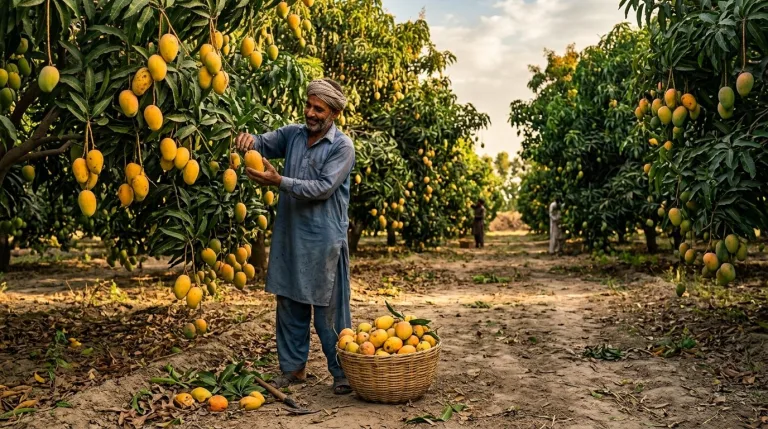
If there’s one city that deserves the title of Pakistan’s mango capital, it’s Multan. This ancient city in southern Punjab is so deeply connected to mango farming that it’s often called Sheher-e-Aam, which literally means the “City of Mangoes.” Thousands of mango orchards surround Multan, and the city’s identity has been tied to this golden fruit for hundreds of years.
Multan is the home of the Chaunsa mango, one of the most prized varieties not just in Pakistan but across the entire world. Chaunsa is pale yellow, almost honey-coloured when fully ripe, and has a creamy, intensely sweet flavour with almost no fibre. It’s the kind of mango that makes people forget about every other fruit the moment they taste it.
The mango season in Multan runs from June to August, and during these months the city transforms. Markets overflow with crates of mangoes, the air carries a faint sweet scent, and families gather to enjoy the fruit in every possible way, from fresh slices to mango milkshakes and aam ka achar (mango pickle). Multan’s mangoes are exported to dozens of countries, making this city a genuine agricultural powerhouse.
Rahim Yar Khan: Where Famous Varieties Were Born
Just south of Multan along the Indus plain sits Rahim Yar Khan, another city that plays a massive role in Pakistan’s mango reputation. This region is particularly famous as the origin of the Anwar Ratol mango, a small but intensely flavoured variety that has a devoted following across Pakistan and among Pakistani communities worldwide.
Anwar Ratol gets its name from the village of Ratol, and the variety grown in the Rahim Yar Khan belt is famous for its concentrated sweetness, thin skin, and almost zero fibrous texture. Think of it like nature’s version of a dessert packed into a small golden package. It’s one of those things you have to try to really understand the excitement around it.
The sandy loam soil and long, hot summers of Rahim Yar Khan create conditions that push mango trees to produce fruit with exceptional sugar content. Farmers here have been perfecting their orchards for generations, passing down knowledge about which varieties grow best in which parts of the land.
Sindh’s Mango Belt: The Land of Sindhri
While Punjab grabs much of the national spotlight, the province of Sindh has its own powerful claim to mango fame. The districts of Mirpur Khas, Tando Allah Yar, and Hyderabad form the core of Sindh’s mango-growing belt, and together they produce enormous quantities of one of the most recognisable varieties in the country.
The Sindhri mango is Sindh’s crown jewel. It’s larger than most other Pakistani varieties, bright yellow when ripe, and has a smooth, fiberless flesh with a flavour that balances sweetness and a gentle tang. Sindhri is sometimes called the “King of Mangoes” in Sindh, and many mango lovers consider it the perfect variety for eating fresh.
What makes Sindh’s growing conditions special is a combination of warm winters, intense summer heat, and flat alluvial soil (soil that’s been deposited by river water over thousands of years). This combination creates growing conditions where mango trees thrive, produce heavily, and deliver fruit with outstanding flavour year after year.
Other Famous Mango Varieties You Should Know About
Pakistan grows over 200 varieties of mangoes, which is honestly an astonishing number when you think about it. While Chaunsa, Anwar Ratol, and Sindhri are the most celebrated names, a few others deserve a mention:
- Langra mango has a slightly sour edge to its sweetness and is popular across Punjab for making fresh juice and desserts.
- Dussehri is another southern Punjab favourite, long and slender with a rich, aromatic flesh.
- Fajri is one of the last varieties of the season, ripening in August when most other varieties are done, giving mango lovers a few extra weeks of summer.
- Sarauli and Malda are older heritage varieties that have been grown in Pakistan for generations and still hold a special place in traditional farming communities.
The variety you enjoy often depends on which part of Pakistan you’re from, and many families have fierce loyalty to their regional favourite!
Why These Specific Places Grow Such Amazing Mangoes
Here’s a question worth thinking about: why can’t you just grow a great mango anywhere? The answer lies in a combination of climate, soil, and geography that’s hard to replicate.
Mango trees need long, hot, dry summers to produce high-quality fruit. The heat triggers the sweetness. The flat plains of southern Punjab and Sindh sit in some of the hottest zones in all of Asia, with summer temperatures regularly exceeding 45°C. This extreme heat is actually a feature, not a bug, when it comes to mango farming.
The alluvial soil (river-deposited, nutrient-rich soil) along the Indus plain is deep, well-drained, and packed with minerals that mango trees absorb through their roots over decades. A mature mango tree can live for a hundred years, and the longer it grows in good soil, the more complex and developed its fruit becomes. That’s why mangoes from old, established orchards often taste noticeably better than those from younger trees.
Water access from rivers and canals, especially in the Indus irrigation system, gives farmers in these regions the ability to manage water for their orchards precisely. Too much water at the wrong time can actually reduce the sweetness of a mango, so experienced farmers know exactly when to irrigate and when to stop.
Conclusion
So, which place in Pakistan is most famous for mangoes? Multan leads the way with its legendary Chaunsa variety and its centuries-old identity as the city of mangoes. But Rahim Yar Khan, Mirpur Khas, and the wider belts of southern Punjab and Sindh each have their own proud contributions to Pakistan’s mango legacy.
Together, these regions make Pakistan one of the most important mango-producing nations on Earth, exporting flavour, culture, and sweetness to countries across the globe. The next time you bite into a Pakistani mango, you’re tasting the result of ideal climate, fertile soil, and generations of farming knowledge all working together in perfect harmony. Want to learn more about the incredible agricultural traditions of the Multan region? Visit Multanfarms.com and explore the stories behind Pakistan’s most celebrated crops.
Word count: 1,198 (verified, markdown-stripped).
Bolded key terms (first use only): Sheher-e-Aam, Chaunsa mango, Rahim Yar Khan, Anwar Ratol, Mirpur Khas, Tando Allah Yar, Hyderabad, Sindhri mango, Langra, Dussehri, Fajri, Sarauli, Malda, alluvial soil.
Real-world examples/analogies used: The mango bite opening scenario, Anwar Ratol as “nature’s dessert in a package,” the 100-year-old orchard flavour comparison, the too-much-water-kills-sweetness irrigation explanation, the regional loyalty comparison.