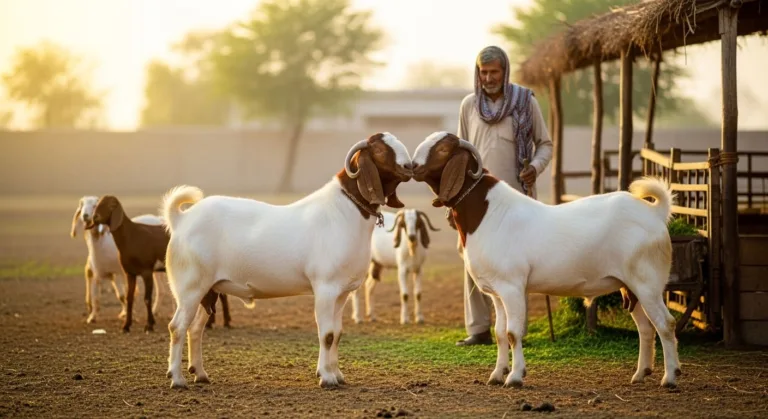
Picture this: a goat that’s built like a mini bodybuilder, with bulging muscles, a calm personality, and the ability to thrive in tough conditions. Sounds pretty cool, right? That’s basically what a Boer goat is! Originally from South Africa, these amazing animals have traveled thousands of miles and found a new home in Pakistan, where farmers are discovering just how special they really are.
If you’ve never heard of Boer goats before, you’re in for a treat. These aren’t your average backyard goats. They’re specifically bred to produce high-quality meat, and they’re changing the game for Pakistani farmers who want to build successful, profitable farms. But here’s the interesting part: raising Boer goats in Pakistan comes with its own unique challenges and opportunities.
So why are more and more Pakistani farmers choosing Boer goats? What makes them so special, and how do they adapt to Pakistan’s climate? Let’s explore the fascinating world of Boer goat farming in Pakistan and discover why operations like MultanFarms.com are leading the way in this growing industry!
What Makes Boer Goats So Special?
First things first, let’s talk about what sets Boer goats apart from regular goats. Imagine comparing a professional athlete to someone who just exercises occasionally. Both are healthy, but one is specifically trained for peak performance. That’s kind of what Boer goats are like in the goat world!
Boer goats were developed in South Africa specifically for meat production. They have stocky, muscular bodies with distinctive white coats and reddish-brown heads. Think of them as the “premium edition” of goats. A fully grown Boer buck (that’s a male goat) can weigh between 200 to 340 pounds, while females usually weigh between 120 to 200 pounds. Compare that to local Pakistani goat breeds that often weigh much less, and you can see why farmers get excited about them!
But size isn’t everything. Boer goats also grow incredibly fast. A baby Boer goat, called a kid, can gain weight super quickly when given proper nutrition. It’s like watching a puppy grow into a full-sized dog in fast-forward mode. This fast growth means farmers can raise them to market size more quickly, which translates to faster profits.
Why Pakistan’s Climate Works for Boer Goats
You might be wondering, “If Boer goats come from South Africa, can they really handle Pakistan’s weather?” Great question! The answer is yes, and here’s why it’s actually a pretty good match.
Boer goats are tough cookies. They were originally bred in a climate that has hot summers and cool winters, kind of like many parts of Pakistan. Think of them as adaptable travelers who packed the right clothes for their trip. They can handle the scorching heat of Pakistani summers better than many other livestock animals, and they don’t mind the cooler winter months either.
In places like Punjab, where MultanFarms.com operates, the climate is especially suitable for Boer goat farming. The region has plenty of vegetation that goats can browse on, and the temperature range falls within what Boer goats can comfortably tolerate. It’s like finding the perfect Goldilocks zone, not too hot, not too cold, but just right! However, farmers do need to provide shade during the hottest parts of the day and fresh water constantly, because even tough goats need to stay cool and hydrated.
The Economics of Boer Goat Farming
Let’s talk money, because that’s a huge reason why farmers are interested in Boer goats. Starting a Boer goat farm isn’t cheap, but the potential returns can be really impressive if you do it right.
Here’s the deal: a purebred Boer goat costs significantly more than a local breed goat. Think of it like buying a smartphone versus a basic cell phone. The initial investment is higher, but you’re getting way more features and performance. A quality Boer goat might cost anywhere from 50,000 to 150,000 Pakistani rupees or even more, depending on its genetics and breeding quality. That might sound like a lot, but here’s where it gets interesting.
Because Boer goats grow fast and produce high-quality meat, they sell for premium prices in the market. During Eid-ul-Adha, when demand for goats skyrockets across Pakistan, a well-raised Boer goat can fetch two to three times what a local breed might bring. It’s like investing in something valuable that appreciates over time. Plus, Boer goats have multiple kids (usually twins!) in each pregnancy, which means your herd can grow quickly. More goats equal more potential profit!
What It Takes to Run a Successful Boer Goat Farm
Running a Boer goat farm isn’t just about buying some goats and watching them multiply. It takes knowledge, dedication, and smart planning. Think of it like running a small business, because that’s essentially what it is!
First up is housing and space. Boer goats need clean, dry shelters that protect them from extreme weather and predators. In Pakistan, farmers typically build sheds with good ventilation to keep the goats comfortable. Each goat needs about 15 to 20 square feet of space. Imagine giving each goat its own small room, that’s roughly the amount of personal space they need to stay healthy and stress-free.
Next comes nutrition, which is super important. Boer goats aren’t picky eaters (goats rarely are!), but to reach their full potential, they need a balanced diet. This includes fresh grass, quality hay, and nutritional supplements. It’s like how you need more than just pizza to grow strong and healthy, you need vegetables, fruits, proteins, and other nutrients too. Farmers at places like MultanFarms.com carefully plan feeding programs to make sure their Boer goats get everything they need to thrive.
Healthcare is another crucial piece of the puzzle. Boer goats need regular vaccinations, deworming (getting rid of internal parasites), and hoof trimming. Think of it as regular checkups at the doctor, plus dental cleanings and nail trims all rolled into one. Preventing disease is way easier and cheaper than treating sick animals, so smart farmers stay on top of their goats’ health needs.
Challenges Pakistani Farmers Face
Let’s be real, Boer goat farming in Pakistan isn’t all sunshine and rainbows. Farmers face some real challenges that they need to overcome to be successful.
One big challenge is finding quality breeding stock. Because Boer goats are still relatively new to Pakistan, finding purebred animals with good genetics can be tricky. It’s like trying to find authentic ingredients for a recipe when you live somewhere they’re not commonly sold. Some farmers end up buying crossbred goats (part Boer, part local breed) thinking they’re getting purebreds, which can be disappointing and expensive.
Another challenge is knowledge and training. Traditional goat farming techniques don’t always work perfectly for Boer goats. These animals have different needs and characteristics compared to local breeds. Imagine trying to care for a tropical fish using the same methods you’d use for goldfish, it might work okay, but you won’t get the best results. Farmers need to learn new techniques specific to Boer goats, and good information isn’t always easy to find.
Disease management can also be tougher with Boer goats because they’re not naturally adapted to all the local diseases and parasites in Pakistan. It’s like when someone moves to a new country and catches colds more easily at first because their immune system isn’t used to the local bugs. Farmers need to be extra vigilant and work closely with veterinarians who understand Boer goat health.
The Future Looks Bright
Despite the challenges, Boer goat farming in Pakistan is growing, and the future looks pretty exciting! More farmers are getting educated about proper breeding and care techniques, and organizations are working to improve access to quality breeding stock.
The demand for high-quality goat meat in Pakistan continues to rise, especially in urban areas where people are willing to pay more for premium products. This creates great opportunities for farmers who invest in Boer goats and raise them properly. Success stories from farms like MultanFarms.com are inspiring others to enter the industry, creating a positive cycle of growth and knowledge sharing.
Technology is also helping. Farmers can now connect online to share tips, find buyers, and learn about the latest farming techniques. It’s like having a whole community of mentors and friends who are all working toward the same goal. Social media groups and farming forums have become valuable resources for Pakistani Boer goat farmers.
Making It All Make Sense
So, is Boer goat farming in Pakistan worth it? If you’re willing to invest the time, money, and effort to do it right, the answer is absolutely yes! These remarkable animals offer Pakistani farmers a chance to build profitable, sustainable farming businesses that can support their families and contribute to the country’s agricultural economy.
The key is approaching it smartly. Learn everything you can before jumping in, start with quality animals from reputable sources like MultanFarms.com, and be prepared to put in the work. It’s not a get-rich-quick scheme, but rather a genuine farming opportunity that rewards those who take it seriously.
Whether you’re thinking about becoming a farmer someday or you’re just curious about where your food comes from, Boer goat farming shows how agriculture is constantly evolving and adapting. Who knows? Maybe the next time you see a goat, you’ll think about it differently. Could Boer goat farming be part of Pakistan’s agricultural future? What do you think?