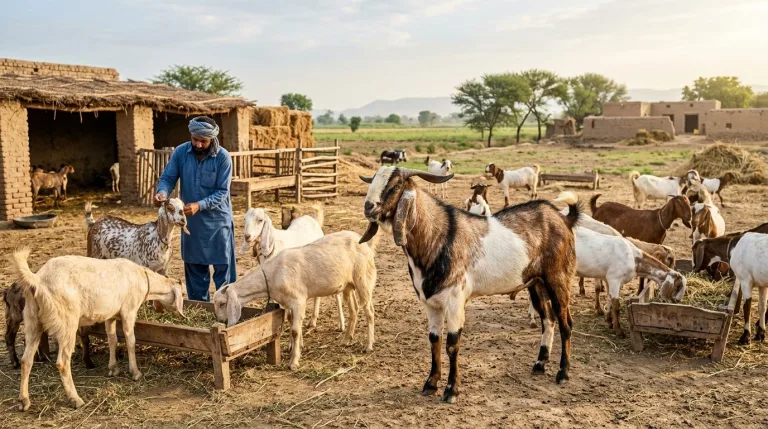
If you’ve ever walked through a rural village in Pakistan, you’ve almost certainly spotted a goat, or a whole herd of them, grazing along a roadside, resting in the shade of a tree, or being led through a bustling bazaar. Goats are everywhere in Pakistan, and for very good reason. With over 80 million goats, Pakistan ranks among the top five goat-owning nations in the entire world.
But these aren’t just any ordinary goats. Pakistan is home to some genuinely remarkable breeds, animals that produce rich milk, high-quality meat, and fine leather, all while being hardy enough to thrive in conditions ranging from the hot plains of Punjab to the rocky hills of Balochistan. Goat farming in Pakistan is a serious business and a deeply rooted cultural tradition.
So what makes Pakistani goats so special? Let’s meet the breeds, understand the farming, and explore why these animals matter so much to millions of families across the country.
Pakistan’s Star Goat Breeds
One of the most exciting things about goat farming in Pakistan is the sheer variety of breeds, each developed over generations to suit a specific region and purpose.
The Beetal is often considered the crown jewel of Pakistani goat breeds. Originally from the Gujranwala and Sialkot regions of Punjab, the Beetal is a large, elegant animal with long drooping ears and a convex nose. It’s primarily raised for meat and milk production and is in very high demand during the Eid ul-Adha season.
The Teddy is a smaller, stockier breed found mainly in central Punjab. What it lacks in size it more than makes up for in productivity. Teddy goats are known for producing a surprisingly high volume of milk relative to their body size, making them a popular choice for small farm households because they’re easy to manage and adapt well to different environments.
The Kamori comes from Sindh and is one of the most visually distinctive goats in Pakistan, known for its dark chocolate-brown coat with lighter spots. Kamori goats are highly prized and can fetch significant prices in the livestock market. They’re considered a status symbol in many parts of rural Sindh and are raised as much for prestige as for production.
The Nachi is a breed native to the Jhang and Multan regions of South Punjab, and it’s genuinely one of a kind. Nachi goats are famous for their distinctive dancing-style walk, a natural gait where they move both legs on the same side simultaneously. This unusual movement has made them a favourite at livestock festivals and cultural shows across the country.
What Do Pakistani Goats Give Us?
Goats in Pakistan aren’t just livestock, they’re a complete resource. A single goat can provide a family with multiple things at once, which is exactly why they’re so popular among smallholder farmers across the country.
Goat meat is one of the most consumed proteins in Pakistan. It’s the centrepiece of dishes like karahi, nihari, and sajji, and it’s the first choice for celebratory meals at weddings, Eid gatherings, and family events. Pakistani goat meat is also exported to Middle Eastern countries, where demand for halal meat is consistently high.
Goat milk is increasingly recognised for its nutritional qualities. It’s naturally easier to digest than cow’s milk because its fat globules are smaller and break down more quickly in the stomach. Many Pakistani families in rural areas rely on goat milk as their primary dairy source, and it’s also used to make traditional butter and soft cheeses.
Goat leather from Pakistani breeds is used in the production of shoes, bags, gloves, and garments. The leather from young goats, called kid leather, is especially soft and fine and is exported to international fashion markets. Even the hair and skin of goats have uses in traditional crafts, particularly in the production of rugs and woven items in KPK and Balochistan.
The Role of Goats in Eid ul-Adha
No discussion of goats in Pakistan is complete without talking about Eid ul-Adha, the Festival of Sacrifice. Every year, millions of goats are purchased across the country for qurbani (ritual sacrifice), and this single event drives the largest livestock market activity of the entire year.
In the weeks leading up to Eid, goat markets spring up in every city and town. Farmers who have raised their animals carefully throughout the year bring them in, and buyers look for healthy, well-fed goats with good size and strong build. A quality Beetal or Kamori goat can command prices ranging from tens of thousands to several lakhs of rupees, depending on its breed, size, and overall appearance.
For many rural families in Pakistan, the months of investment in raising a good goat for Eid represent a significant portion of their annual income. It’s a market where good, careful farming genuinely pays off.
How Goat Farming Actually Works in Pakistan
Most goat farming in Pakistan happens at the small to medium scale. A typical rural household might keep anywhere from 5 to 30 goats, raised on a mix of grazing land, crop residue, and supplementary feed. Larger commercial goat farms, especially in Punjab and Sindh, can house hundreds of animals and operate with more structured feeding programs and regular veterinary care.
One of the biggest advantages of goat farming is how manageable it is compared to cattle farming. Goats require less space, eat a wider variety of plants, and reproduce faster, with many breeds producing twins or triplets per pregnancy. This makes goat farming an accessible entry point for farmers with limited land or capital.
Challenges do exist. Disease management, access to clean water, quality feed during dry seasons, and market price fluctuations are all real concerns for goat farmers. But with the right breed selection and proper care routines, goat farming remains one of the most reliable and rewarding forms of livestock agriculture in Pakistan.
Goats: Small Animals, Big Impact
From the dancing Nachi of South Punjab to the prized Kamori of Sindh, Pakistani goats represent centuries of careful breeding, cultural tradition, and agricultural knowledge. They feed families, generate income, support rural economies, and remain central to the country’s most important cultural celebration.
Whether you’re a farmer thinking about starting a livestock operation, a consumer curious about where your food comes from, or simply someone who appreciates the quiet importance of animals in everyday life, goats from Pakistan deserve real recognition. These animals are small in size but enormous in the value they bring to communities across the country.
Explore more about Pakistan’s finest farm animals and authentic farm produce at Multanfarms.com.