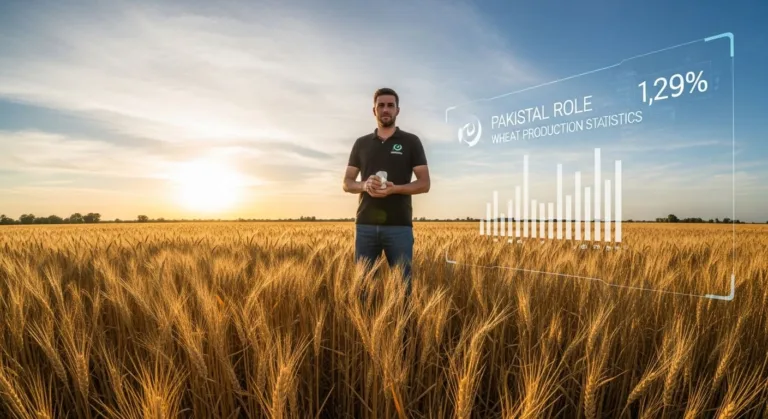
Have you ever thought about where your roti or bread comes from? It might seem simple, but behind every bite is a huge farming system working day and night. In Pakistan, wheat is one of the most important crops, and it plays a big role in feeding millions of people every single day.
Now imagine if we could track how much wheat is grown each year, just like checking your exam scores. That’s exactly what Pakistan wheat production statistics do. They help us understand how well the country is producing wheat and whether there will be enough food for everyone. In this article from Multanfarms.com, you’ll discover why these numbers matter, how they change, and what they mean for your daily life.
What Are Wheat Production Statistics?
Let’s start simple. Wheat production statistics are numbers that tell us how much wheat is grown in a certain time, usually in a year. Think of it like counting how many apples you picked from a tree, but on a much bigger scale.
These statistics usually include:
- Total wheat produced in tons
- Area of land used for farming
- Yield, which means how much wheat grows per acre
For example, if one farmer grows 20 bags of wheat from one acre, and another grows 30 bags from the same size land, the second farmer has a higher yield. These numbers help experts understand how well farming is going.
Why Is Wheat So Important in Pakistan?
Wheat is not just another crop in Pakistan, it’s a staple food, meaning people eat it almost every day. Roti, naan, and bread all come from wheat flour.
Here’s why it matters so much:
- It feeds millions of people daily
- It supports farmers and their families
- It helps the country’s economy grow
Think of wheat like fuel for a car. Without fuel, the car stops. In the same way, without enough wheat, food supply can become a big problem.
A Quick Look at Pakistan Wheat Production Statistics
Every year, Pakistan produces millions of tons of wheat. In recent years, the country has produced around 25 to 30 million tons annually. That’s a huge amount.
But these numbers don’t stay the same. They can go up or down depending on different factors, such as:
- Weather conditions like rain or drought
- Availability of water for irrigation
- Quality of seeds and fertilizers
For example, if there’s less rainfall in a year, wheat production might drop, just like a plant in your garden grows poorly without water.
What Affects Wheat Production the Most?
You might be wondering, why do these statistics change so much? Let’s break it down with some simple examples.
1. Weather Conditions
Weather plays a huge role. Too much rain can damage crops, and too little can dry them out.
Think about it like this, if you forget to water your plants at home, they start to wilt. Farmers face the same problem, just on a much bigger scale.
2. Farming Technology
Modern tools and machines can help farmers grow more wheat. Tractors, irrigation systems, and better seeds can increase production.
It’s like using a calculator instead of doing math by hand, you get faster and better results.
3. Government Support
The government sometimes helps farmers by providing subsidies, which are financial supports. This can make farming easier and more productive.
4. Soil Quality
Healthy soil grows better crops. If the soil lacks nutrients, wheat production goes down.
You can compare this to eating healthy food. Just like your body needs nutrients to grow, plants need good soil to thrive.
Why Should You Care About These Statistics?
You might think, “I’m not a farmer, so why does this matter to me?” But actually, it affects your life more than you realize.
Here’s how:
- Food Prices: If wheat production is low, prices of roti and bread can go up
- Food Availability: Less wheat means less food in the market
- Economy: Strong wheat production helps the country stay stable
Imagine if your favorite snack suddenly became twice as expensive. That’s what can happen when wheat production drops.
Real-Life Example, A Bad Wheat Year
Let’s say one year Pakistan faces a drought. Farmers don’t get enough water, and wheat production drops from 28 million tons to 24 million tons.
What happens next?
- Flour becomes more expensive
- Shops may have limited supply
- People start to worry about food shortages
This shows how important it is to keep track of Pakistan wheat production statistics. They act like an early warning system.
How Farmers Are Improving Wheat Production
The good news is that farmers and experts are always trying to improve wheat production.
Some smart methods include:
- Using better quality seeds
- Improving irrigation systems
- Learning modern farming techniques
It’s like upgrading from an old phone to a new one, everything works better and faster.
Organizations like Multanfarms.com also help spread awareness and knowledge, so farmers can make better decisions and grow more wheat.
Conclusion, What Do These Numbers Really Mean?
So, what have we learned? Pakistan wheat production statistics are not just boring numbers, they tell a story about food, farmers, and the future of the country. They help us understand whether there will be enough wheat for everyone and how stable food prices will be.
Next time you eat roti or bread, take a moment to think about the journey it made from a wheat field to your plate. Isn’t it amazing how much depends on those simple numbers?
Now here’s something to think about, what do you think would happen if farmers had even better tools and support, could Pakistan produce enough wheat for everyone and even export it to other countries?