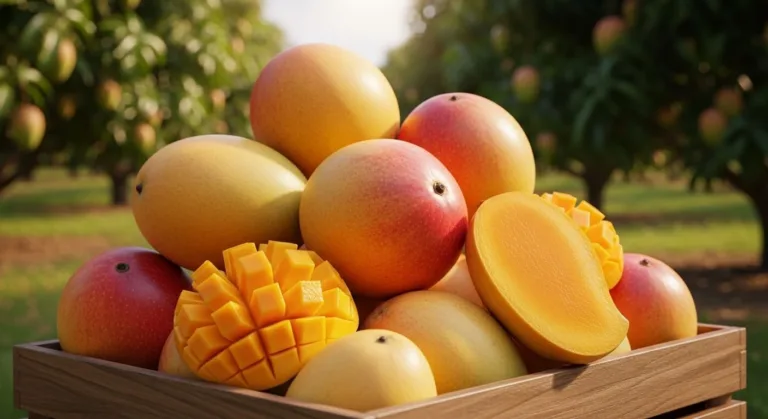
Picture this: it’s a scorching hot summer day, and you bite into a perfectly ripe, golden mango. The sweet juice drips down your chin, and for a moment, everything else disappears. If you’ve experienced this in Pakistan, you know exactly what makes our mangos so incredibly special. In fact, Pakistani mangos are so famous that people around the world consider them some of the best on the planet!
Pakistan isn’t just any mango-growing country, we’re one of the top producers in the entire world. From the fertile fields of Punjab to the orchards of Sindh, millions of mango trees produce fruit that’s sweeter, juicier, and more flavorful than almost anywhere else. Cities like Multan have earned the nickname “City of Mangos” because of the amazing fruit grown there.
But what makes Pakistani mangos so special? How do farmers grow these delicious fruits? And why do people from other countries eagerly wait for Pakistan’s mango season? Let’s dive into the fascinating world of Pakistani mangos and discover why they truly deserve to be called the king of fruits.
What Makes Pakistani Mangos Different?
You might think a mango is just a mango, but that couldn’t be further from the truth! Pakistani mangos have characteristics that make them stand out like a superstar in a talent show. Think of it like comparing a homemade pizza from a master chef to a frozen pizza from the store, both are pizza, but the experience is completely different.
The secret starts with Pakistan’s climate and soil. Our country has the perfect combination of hot summers, adequate water supply from rivers and canals, and rich soil that’s been nourished for thousands of years. In regions like Multan and Rahim Yar Khan, the temperature and humidity levels create ideal conditions for mangos to develop their signature sweetness and aroma.
Pakistani mangos are known for their intense flavor profile, which means they pack more taste into each bite than many other varieties. The flesh is often softer and creamier, almost melting in your mouth. The sweetness level is naturally high, sometimes reaching sugar content that would make a candy bar jealous! Plus, our mangos have this amazing fragrance that fills an entire room, announcing their presence before you even see them.
We also grow numerous varieties, each with its own personality. Some are small and super sweet, others are large and slightly tangy. Some have fiber (those little strings), while others are completely smooth. This diversity means there’s a perfect Pakistani mango for everyone’s taste preferences.
The Famous Mango Varieties of Pakistan
Pakistan grows over a dozen popular mango varieties, but a few have become absolute legends. Let’s meet the superstars of the mango world!
Sindhri is like the gentle giant of mangos. Grown primarily in Sindh province, these mangos are large, oval-shaped, and have a beautiful golden-yellow color when ripe. They’re famous for being incredibly sweet with almost no fiber, making them perfect for eating fresh or making mango shakes. If mangos had a popularity contest, Sindhri would definitely be in the top three.
Chaunsa might be the most beloved variety in Pakistan. Named after a town in Punjab, these mangos have a devoted fan following. They’re medium to large sized with a distinctive aroma that’s instantly recognizable. Chaunsa mangos have a honey-like sweetness and are available in different types, including the White Chaunsa and Red Chaunsa. Many Pakistanis consider Chaunsa season (July to August) to be the highlight of summer.
Anwar Ratol is the small but mighty champion. Don’t let its size fool you, this little mango packs an incredible punch of sweetness! It’s so sweet that people sometimes call it “the honey mango.” Anwar Ratol is smaller than your fist but delivers flavor that’s unforgettable. These are often the most expensive mangos in the market because of their exceptional taste.
Langra is another favorite, especially in northern Punjab. These green-skinned mangos stay green even when perfectly ripe, which confuses people who think all ripe mangos must be yellow! Langra has a unique tangy-sweet taste that makes it perfect for people who don’t want their mangos too sugary.
How Do Farmers Grow These Amazing Mangos?
Growing world-class mangos isn’t as simple as planting a seed and waiting. It’s more like being a careful gardener, a weather watcher, and a scientist all rolled into one! Let’s explore how farms in regions like Multan, where Multanfarms.com operates, produce these incredible fruits.
The journey begins with selecting the right rootstock and grafting. Farmers don’t just plant mango seeds and hope for the best. Instead, they use a technique called grafting, where they attach a branch from a proven, high-quality mango tree onto a strong rootstock. Think of it like creating a super-tree that combines the best traits of two different trees. This ensures that the mangos will be consistent in quality year after year.
Mango trees need patience. A newly planted tree takes about 3-5 years before it starts producing fruit, and it might take 7-10 years to reach full production. That’s like waiting from first grade until high school graduation! But once a mango tree matures, it can produce fruit for decades, sometimes even over a century. Some of the oldest mango trees in Pakistan are still producing delicious fruit after 100 years.
Water management is crucial in Pakistan’s climate. Farmers must carefully balance providing enough water without drowning the roots. During the hot summer months, mango trees need regular watering, but too much water can actually reduce the fruit’s sweetness. It’s a delicate balance that experienced farmers have mastered over generations.
Protecting the crop from pests and diseases requires constant attention. Fruit flies, mango hoppers, and various diseases can damage the crop if not managed properly. Modern farms use a combination of traditional knowledge and modern techniques to keep trees healthy while ensuring the fruit remains safe to eat.
The Business of Mangos in Pakistan
Did you know that mangos aren’t just delicious snacks, they’re a massive part of Pakistan’s economy? The mango business affects millions of people and brings money into the country through exports.
Pakistan produces over 1.8 million tons of mangos every year! That’s roughly the weight of 12 million cars. We’re the fourth or fifth largest mango producer in the world, competing with countries like India, China, and Thailand. In Punjab alone, especially in districts like Multan, Muzaffargarh, and Rahim Yar Khan, hundreds of thousands of acres are dedicated to mango cultivation.
The export market is where things get really interesting. Pakistani mangos are shipped to over 40 countries, including the United Kingdom, United Arab Emirates, Saudi Arabia, and even as far as Japan and South Korea. When mango season arrives, Pakistani communities living abroad eagerly await shipments of mangos from home. Some people are willing to pay premium prices, sometimes $3-5 per mango in foreign countries, because they miss the authentic taste of Pakistani mangos.
For farmers and businesses like Multanfarms.com, the mango season is incredibly important. A successful season can provide income that supports families throughout the entire year. Many farms employ hundreds of workers during harvest season for picking, sorting, packing, and transporting the fruit. It’s like a massive, delicious operation that requires teamwork and coordination.
The government has also recognized mangos as a valuable crop, providing support for farmers to improve quality, fight diseases, and access international markets. Special “mango festivals” are held in cities across Pakistan to celebrate the fruit and promote Pakistani varieties globally.
Challenges Facing Mango Farmers
Growing perfect mangos isn’t always easy. Pakistani farmers face several challenges that can affect their crops and livelihoods. Understanding these challenges helps us appreciate the hard work behind every mango we enjoy.
Climate change is becoming a serious concern. Mango trees are sensitive to temperature and rainfall patterns. Unexpected heat waves, unseasonable rains during flowering season, or changes in winter cold periods can all affect fruit production. In recent years, some farmers have noticed that weather patterns are becoming less predictable, making it harder to plan and manage their orchards.
Water scarcity is another major issue. While Punjab has historically had good access to water from rivers and canals, competition for water is increasing. Mango trees need consistent watering, especially during critical growth periods. Farmers are learning to use more efficient irrigation methods, like drip irrigation, to make every drop count.
Market access and fair prices can be tricky. Small farmers sometimes struggle to get fair prices for their mangos, especially if they don’t have direct connections to exporters or large buyers. Middle-men sometimes take a large share of the profits, leaving farmers with less money than they deserve for their hard work.
Post-harvest losses are frustrating for everyone. Mangos are delicate fruits that can bruise easily and spoil quickly in hot weather. Without proper cold storage and transportation, a significant portion of the harvest can go to waste. This is why farms with better facilities and equipment, like those in established mango-growing regions, often have an advantage.
Why Pakistani Mangos Matter to You
You might be wondering, “Why should I care so much about mangos?” Well, besides being incredibly delicious, Pakistani mangos represent something bigger. They’re part of our cultural identity and agricultural heritage.
Think about all the memories connected to mangos. Maybe it’s sitting with family on a hot summer evening, competing to see who can eat the most mangos. Or perhaps it’s the excitement when your parents bring home the first Chaunsas of the season. These small moments are woven into the fabric of Pakistani life.
Mangos also provide nutrition that’s important for growing bodies. They’re packed with Vitamin C, Vitamin A, and fiber. A single mango can give you a significant portion of your daily vitamin needs while tasting like a natural candy. It’s like nature created the perfect healthy dessert!
Supporting Pakistani mango farmers by choosing locally grown fruit helps our economy and preserves agricultural traditions that go back centuries. When you buy mangos from farms like those in Multan, you’re helping families earn a living and encouraging farmers to continue growing high-quality fruit.
From the sun-soaked orchards of Punjab to fruit stands in your neighborhood, Pakistani mangos represent the perfect combination of nature’s gifts and human expertise. These golden fruits are more than just something sweet to eat, they’re a source of pride, a business opportunity, and a delicious reminder of what makes Pakistani agriculture special.
The next time you bite into a juicy Pakistani mango, take a moment to appreciate the years of patience, the careful tending, and the generations of knowledge that went into producing that perfect fruit. Whether it’s a massive Sindhri, a sweet little Anwar Ratol, or your favorite Chaunsa, you’re tasting something that’s recognized around the world as truly exceptional.
So, what’s your favorite mango variety, and what memories do you have of mango season? Maybe it’s time to create some new ones!