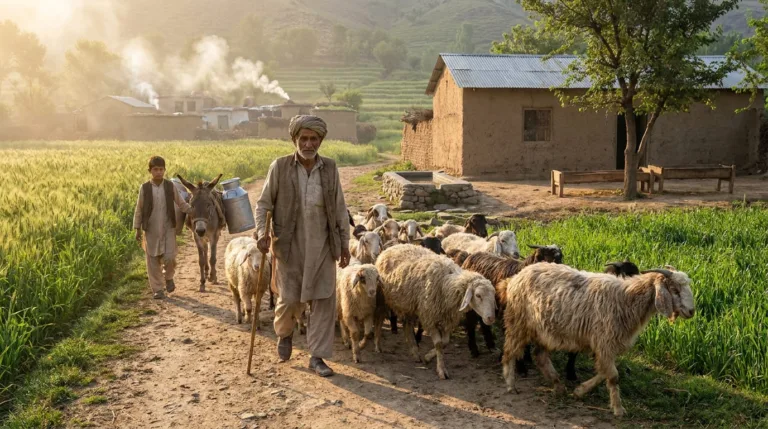
Imagine walking through the countryside and seeing hundreds of fluffy sheep and nimble goats grazing on hillsides, their bells tinkling as they move from spot to spot. This isn’t just a peaceful scene, it’s actually a snapshot of one of Pakistan’s most important industries! Pakistan is home to over 80 million sheep and goats combined, making it one of the top ten countries in the world for these animals. That’s more sheep and goats than there are people in many countries!
But here’s the really interesting part: these aren’t just farm animals wandering around. Sheep and goats are absolutely essential to Pakistan’s economy, culture, and way of life. They provide meat, milk, wool, and leather that millions of families depend on for their livelihoods. In rural areas especially, owning a herd of sheep or goats can mean the difference between poverty and financial stability. Some families have been raising these animals using the same techniques for hundreds of years, passing down their knowledge from grandparents to parents to kids.
So what makes Pakistan’s sheep and goats so special, and why should you care about livestock (that’s the fancy word for farm animals) halfway around the world? Let’s dive into this fascinating topic and discover how these humble creatures shape an entire nation’s agriculture, including farms featured on platforms like Multanfarms.com!
The Amazing Variety of Pakistani Breeds
Did you know that Pakistan has some truly unique breeds of sheep and goats that you won’t find anywhere else in the world? It’s like how different dog breeds have different traits, Pakistani sheep and goats have been bred over centuries to thrive in specific regions and climates. Let’s talk about some of the coolest ones!
The Damani sheep, for example, are massive animals that can weigh up to 200 pounds! They’re mostly found in the Balochistan region and are prized for their meat. Then there’s the Kajli sheep, which have these distinctive black and white markings that make them look like they’re wearing fancy wool coats. They’re popular in Punjab and are known for being hardy, which means they can survive in tough conditions without getting sick easily.
When it comes to goats, the Beetal goat is a superstar. These goats are huge compared to other breeds, with long floppy ears that almost look like they’re wearing earrings! They produce lots of milk and are commonly raised in Punjab province. Another favorite is the Teddy goat, which sounds cute and definitely lives up to its name with its compact size and friendly personality. Farmers love these breeds because they’ve adapted perfectly to Pakistan’s varied climate, from scorching deserts to cooler mountain regions.
Why Farmers Choose Sheep and Goats Over Other Animals
You might be wondering, why not just raise cows or chickens instead? Well, sheep and goats have some serious advantages that make them perfect for Pakistani farmers, especially those working with limited resources. First off, they’re way cheaper to buy and maintain than larger animals like cattle. A farmer with a small budget can start with just a few goats and gradually build up their herd over time.
Here’s another cool thing: sheep and goats are like the ultimate survivors. They can eat plants that other animals won’t touch, including thorny bushes, weeds, and dried grasses. This makes them perfect for areas where good grazing land is scarce. It’s kind of like if you could eat foods that nobody else wanted, you’d never go hungry, right? That’s exactly what gives these animals their edge.
They also reproduce pretty quickly. A female goat (called a doe) can have babies twice a year, often giving birth to twins or even triplets! That means a farmer’s herd can grow rapidly without much extra effort. Compare that to a cow, which usually has just one calf per year, and you can see why goats are such a smart investment for small-scale farmers.
The Business Side: Meat, Milk, and More
Let’s talk about what these animals actually produce and why it’s such a big deal. Meat is probably the most obvious product. Mutton (that’s meat from sheep) and goat meat are incredibly popular in Pakistan. In fact, they’re preferred over beef or chicken for many traditional dishes and celebrations. During special occasions like Eid-ul-Azha, millions of sheep and goats are sacrificed and their meat is distributed to families, neighbors, and people in need. It’s both a religious practice and a major economic event.
But meat isn’t the only valuable product. Milk from goats is a nutritional powerhouse! It’s easier to digest than cow’s milk and is often recommended for people with certain stomach sensitivities. Farmers sell fresh goat milk to local markets or turn it into products like yogurt and cheese. Some families even prefer goat milk for their babies and young children because it’s so nutritious and gentle on tiny tummies.
Then there’s wool from sheep, which is collected by shearing (that’s like giving the sheep a haircut) usually once or twice a year. This wool gets spun into yarn and woven into carpets, shawls, and traditional clothing. Pakistani wool products are famous worldwide for their quality and craftsmanship. Finally, the hides and skins from these animals are processed into leather for shoes, bags, and other goods. Basically, almost every part of the animal can be used for something valuable, which makes them incredibly efficient from a farming perspective.
Life on a Pakistani Sheep and Goat Farm
So what does a typical day look like for someone raising sheep and goats in Pakistan? Well, it depends on whether they’re nomadic herders or settled farmers, but let’s paint a picture! Many shepherds wake up super early, often before sunrise, to let their animals out to graze. They might walk with their flocks for several miles to find good grazing areas, always keeping an eye out for predators like wolves or wild dogs.
Water is a huge concern, especially in the drier parts of Pakistan. Herders have to know where all the water sources are and plan their routes accordingly. It’s like being a navigator and a bodyguard all rolled into one! During the hot summer months, animals need shade and extra water to avoid heat stress, so farmers often bring them back to shelters during the hottest part of the day.
Health care is another important responsibility. Just like you visit a doctor when you’re sick, sheep and goats need veterinary care too. Farmers vaccinate their animals against common diseases, treat them for parasites (tiny organisms that can make them sick), and watch carefully for any signs of illness. In rural areas, this knowledge often comes from years of experience rather than formal training. Older family members teach younger ones how to recognize when an animal isn’t feeling well and what to do about it.
Challenges Facing the Industry Today
It’s not all sunshine and grazing pastures, though. Farmers raising sheep and goats in Pakistan face some serious challenges that make their jobs really tough. Climate change is a big one. Unpredictable weather patterns mean droughts that dry up grazing land, or unexpected floods that can sweep away entire herds. Imagine spending years building up your flock only to lose it all in one natural disaster, that’s the heartbreaking reality for some farmers.
Disease outbreaks are another major worry. When animals live close together, infections can spread quickly through a herd. Diseases like foot-and-mouth disease or peste des petits ruminants (that’s a fancy name for a goat plague) can wipe out huge numbers of animals before farmers can stop it. Access to veterinary services is limited in remote areas, which makes prevention and treatment even harder.
Then there’s the economic challenge. Many small farmers struggle to get fair prices for their animals and products. Middlemen (people who buy from farmers and sell to markets) often take a large cut of the profits, leaving farmers with barely enough to survive. This is where platforms like Multanfarms.com can make a real difference by connecting farmers directly with buyers and helping them get better prices for their hard work.
The Future of Sheep and Goat Farming
Despite these challenges, the future looks promising in many ways. The Pakistani government and various agricultural organizations are working to improve conditions for livestock farmers. They’re introducing better breeding programs to develop animals that are more disease-resistant and productive. They’re also providing training on modern farming techniques, like how to improve nutrition through better feed or how to use technology to track herd health.
Technology is starting to play a bigger role too. Some forward-thinking farmers are using mobile apps to get weather forecasts, market prices, and expert advice right on their phones. Imagine being able to text a veterinarian a photo of your sick goat and get advice without traveling for hours to the nearest town! That’s becoming a reality in some areas.
There’s also growing interest in organic and sustainable farming practices. Consumers around the world are willing to pay more for meat and dairy products that come from animals raised humanely and sustainably. Pakistani farmers who adopt these practices could tap into premium markets both at home and internationally.
Why This Matters to All of Us
You might be thinking, “Okay, but I don’t live in Pakistan, so why should I care?” Here’s the thing: understanding how people in different parts of the world produce food helps us appreciate the global food system we all depend on. The leather in your shoes, the wool in your sweater, or even certain specialty foods in international grocery stores might have connections to Pakistani sheep and goat farmers.
Plus, these farmers are dealing with challenges like climate change and economic uncertainty that affect agricultural communities everywhere, including right here at home. The solutions they develop, like raising hardy breeds or finding creative ways to market their products, could inspire farmers in other countries facing similar problems. We’re all connected in this global community, and learning from each other makes everyone stronger.
Sheep and goats might seem like simple farm animals, but as you’ve discovered, they’re actually at the center of a complex, fascinating industry that supports millions of people. From the ancient breeds developed over centuries to the modern challenges of climate and economics, Pakistan’s sheep and goat farming tells a story of resilience, adaptation, and hope. So next time you see a sheep or goat, whether in real life or in a picture, you’ll know there’s way more to these animals than meets the eye, right?