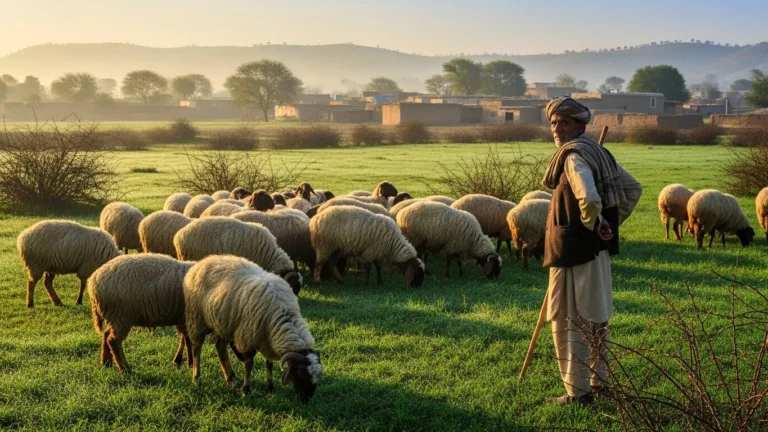
Picture this: you’re standing in a bustling market in Pakistan during Eid al-Adha, one of the most important religious celebrations of the year. Everywhere you look, there are sheep! Big ones, small ones, fluffy ones with thick wool coats, and some with distinctive curved horns. Families are carefully selecting their animals, children are excitedly pointing at their favorites, and the air is filled with the sounds of bleating sheep. This scene happens millions of times across Pakistan every year, and it tells us something really important: sheep aren’t just farm animals in Pakistan, they’re a vital part of the country’s culture, economy, and way of life.
Pakistan is home to over 30 million sheep, making it one of the top sheep-raising countries in the world! That’s a lot of woolly animals. But why does Pakistan have so many sheep, and what role do they play in this South Asian nation? The relationship between Pakistan and sheep goes back thousands of years and touches everything from religion and festivals to farming and fashion.
In this article, we’ll explore the fascinating world of sheep farming in Pakistan, discover the unique breeds that call this country home, and understand why these humble animals are so incredibly important to millions of Pakistani families. Get ready to learn some surprising facts about these fluffy creatures!
The Ancient Bond: Sheep and Pakistani Heritage
Sheep have been part of life in the region we now call Pakistan for over 8,000 years! That’s even before the ancient pyramids were built in Egypt. Archaeological evidence shows that people in the Indus Valley Civilization, one of the world’s oldest civilizations located in present-day Pakistan, raised sheep for meat, milk, and wool. So this relationship isn’t something new, it’s deeply rooted in the area’s history and culture.
In Pakistan today, sheep farming, called sheep husbandry, is practiced by millions of people, from small family farms to larger commercial operations. Many rural families keep a small flock of sheep as a form of savings, kind of like a living piggy bank! When they need money for school fees, medical emergencies, or other expenses, they can sell one or two sheep. It’s a practical way to keep wealth that actually grows over time as the sheep have babies.
Different regions of Pakistan have developed their own unique relationships with sheep based on their local environment. In the mountainous northern areas, herders move their flocks up and down the mountains with the seasons, a practice called transhumant herding. In the agricultural heartland of Punjab, sheep graze alongside other farm animals on lands like those managed by Multanfarms.com. And in the desert regions of Sindh and Balochistan, specially adapted breeds thrive in tough, dry conditions. Each region has its own story of how sheep fit into daily life!
Pakistan’s Unique Sheep Breeds: More Than Just Fluffy White Animals
If you think all sheep look the same, you’re in for a surprise! Pakistan is home to about 30 different sheep breeds, each specially adapted to different parts of the country. These breeds have evolved over centuries to survive and thrive in Pakistan’s diverse climates, from scorching deserts to cool mountain valleys. Let’s meet some of the most interesting ones!
The Kajli sheep is one of Pakistan’s most distinctive breeds. Found mainly in the Punjab region near cities like Multan, this breed has a striking appearance with a black-and-white coat that looks almost like it’s been painted! Kajli sheep are medium-sized and known for producing delicious meat. Farmers love them because they’re tough, can handle hot weather, and don’t need as much food as some other breeds. They’re like the all-terrain vehicle of the sheep world!
Another cool breed is the Balochi sheep, sometimes called Rakhshani. These sheep live in the harsh desert and semi-desert areas of Balochistan province. They’ve adapted to survive on very little water and can eat thorny desert plants that other sheep wouldn’t touch. Balochi sheep are larger than many other Pakistani breeds and can weigh up to 90 pounds! Their ability to survive in extreme conditions makes them perfect for areas where farming is really challenging.
Then there’s the Lohi sheep, considered one of the best meat-producing breeds in South Asia. Lohi sheep are big, strong, and grow fast, which makes them popular for commercial farming. They have distinctive Roman noses (kind of like the bridge of their nose is curved outward) and come in various colors from white to brown to black. During Eid al-Adha, Lohi sheep are especially popular because of their size and quality. It’s like they’re the premium choice for special occasions!
Eid al-Adha: When Sheep Take Center Stage
Want to understand how important sheep are to Pakistani culture? Just look at Eid al-Adha, also called the “Festival of Sacrifice.” This is one of the two major Islamic holidays celebrated by Pakistan’s predominantly Muslim population. Every year, during this three-day festival, millions of families across Pakistan sacrifice animals, primarily sheep, goats, and cows, to commemorate the story of Prophet Ibrahim’s willingness to sacrifice his son in obedience to God.
The weeks leading up to Eid al-Adha are absolutely crazy in Pakistan! Temporary markets called “cattle markets” (even though they sell sheep too!) pop up in cities and towns everywhere. These markets are like massive outdoor bazaars filled with thousands of animals. Families visit these markets to select their sacrifice animal, which they often take care of for several days before Eid. Kids sometimes get attached to the animals and even give them names and treats!
The economic impact of Eid al-Adha on Pakistan’s sheep industry is enormous. In just a few weeks, the sheep trade generates billions of rupees! Farmers who’ve been raising their flocks all year finally get to sell their animals at good prices. Transporters move animals from rural areas to cities. Feed sellers do great business. And after the sacrifice, the meat is distributed, with one-third traditionally given to the poor, one-third to relatives and friends, and one-third kept by the family. This massive redistribution of meat ensures that even families who can’t afford to buy meat regularly get to enjoy it during this special time.
The Economics of Wool: Pakistan’s Textile Connection
Here’s something you might not have realized: when you wear a warm wool sweater, there’s a chance that wool came from Pakistan! Pakistan is a significant wool producer, with its 30+ million sheep producing around 40,000 tons of wool every year. That’s enough wool to make approximately 100 million sweaters! While Pakistan’s wool production isn’t the biggest in the world, it plays an important role in the country’s textile industry.
Pakistani wool has unique characteristics depending on which breed it comes from. Some breeds produce fine, soft wool perfect for clothing, while others produce coarser wool better suited for carpets and rugs. The famous hand-woven rugs from Pakistan often contain wool from local sheep. These rugs are exported worldwide and are prized for their beauty and durability. It’s pretty cool to think that sheep grazing on farms in Pakistan might end up as part of a beautiful carpet in someone’s home thousands of miles away!
However, Pakistan’s wool industry faces some challenges. The quality of Pakistani wool is sometimes lower than wool from countries like Australia or New Zealand, where sheep breeds have been specifically developed for high-quality wool production. Many Pakistani sheep breeds were developed primarily for meat production, so their wool is a secondary product. Despite this, local textile factories still use lots of Pakistani wool, and there are ongoing efforts to improve wool quality through better breeding programs and sheep care. Places like Multanfarms.com, which focus on quality agricultural practices, are part of the movement to improve Pakistan’s livestock products.
Sheep Farming: More Than Just Letting Animals Graze
You might think sheep farming is simple, just let the sheep eat grass and they’ll be fine, right? Actually, successful sheep farming requires a lot of knowledge and hard work! Pakistani sheep farmers have developed sophisticated understanding of animal care, breeding, nutrition, and disease management over generations. Let’s peek into what sheep farming really involves.
First, there’s the matter of feeding. While sheep do graze on grass and other plants, they need a balanced diet to stay healthy and produce good meat or wool. During dry seasons when grass is scarce, farmers supplement their sheep’s diet with things like wheat straw, corn, and special feed mixes. It’s kind of like how you need more than just salads to be healthy, you need proteins, carbohydrates, and vitamins too. Sheep are the same way!
Then there’s breeding management. Smart farmers carefully select which rams (male sheep) and ewes (female sheep) breed together to produce healthier, stronger lambs. They keep records of which sheep are the best producers and try to pass those good traits to the next generation. Modern farmers might even use veterinary services to ensure their breeding programs are successful. A good breeding program can dramatically improve a flock’s quality over just a few years.
Health care is another crucial aspect. Sheep can get various diseases and parasites, so farmers need to vaccinate their animals, provide regular check-ups, and watch for any signs of illness. In rural Pakistan, where veterinary services might not be readily available, farmers rely on traditional knowledge passed down through families, combined with modern medicine when they can access it. Successful farmers are always learning and adapting their practices to keep their flocks healthy and productive.
Challenges Facing Pakistan’s Sheep Industry
While sheep farming is important in Pakistan, it’s not without its problems. Understanding these challenges helps us appreciate what farmers deal with and why improvements matter. One major issue is the lack of modern facilities and technology in many areas. While some farms have access to good veterinary care, quality feed, and proper shelter for their animals, many small-scale farmers struggle with limited resources.
Another challenge is disease management. When sheep live in large groups, diseases can spread quickly if not properly controlled. Outbreaks of foot-and-mouth disease or other infections can devastate a farmer’s flock, wiping out months or years of work in just weeks. Access to vaccines and veterinary care varies greatly across Pakistan, with rural and remote areas often lacking these essential services. It’s like how a flu outbreak at school can affect everyone, but imagine if there wasn’t a nurse’s office or medicine available!
Climate change is also becoming a serious concern for Pakistani sheep farmers. More frequent droughts mean less grass for grazing and higher feed costs. Extreme heat waves stress the animals and can even kill them. Flash floods can wash away flocks and destroy grazing lands. Farmers are having to adapt to these changing conditions, sometimes by switching to more heat-tolerant breeds or changing their grazing patterns. It’s a reminder that farming isn’t just about animals and plants, it’s also about understanding and working with the environment.
The Future of Sheep and Pakistan: Growing Together
Despite the challenges, Pakistan’s sheep industry has a bright future! The government and private organizations are working on programs to improve sheep farming through better breeding programs, increased access to veterinary services, and training for farmers. New technologies, like mobile apps that provide farming advice or help farmers connect directly with buyers, are making their way into even remote areas.
There’s also growing interest in organic and sustainable farming practices. Some farms are focusing on raising sheep without antibiotics or artificial growth promoters, producing healthier meat that can be sold at premium prices both locally and internationally. This approach aligns well with traditional farming methods that many Pakistani herders have used for centuries, just with some modern scientific knowledge added to the mix. Farms like Multanfarms.com represent this blend of traditional wisdom and modern agricultural practices.
The connection between sheep and Pakistani society continues to evolve. While sheep remain culturally and religiously important, they’re also increasingly seen as an economic opportunity. Young people are starting to view sheep farming not as old-fashioned, but as a viable business that can support families and communities. With proper support, training, and infrastructure, Pakistan’s 30 million sheep could help lift thousands of families out of poverty while preserving important cultural traditions.
Wrapping It All Up: Sheep That Matter
So why are sheep so important to Pakistan? As we’ve discovered, these woolly animals are woven into nearly every aspect of Pakistani life. They’re part of ancient traditions stretching back thousands of years. They play a central role in one of the most important religious celebrations. They provide meat, wool, and income for millions of families. They’ve adapted to survive in every corner of Pakistan, from scorching deserts to cool mountains. And they continue to represent opportunity for the future.
The relationship between Pakistan and sheep is really a story about how humans and animals can develop deep, mutually beneficial connections over time. Pakistani farmers have shaped sheep breeds to suit their needs, and sheep have shaped how communities in Pakistan organize their lives, celebrate their faith, and support their families. It’s a partnership that’s lasted millennia and shows no signs of ending anytime soon.
Next time you see a sheep, whether in a picture, at a farm, or even on a plate at dinner, think about all the ways these animals matter to people around the world, especially in countries like Pakistan. These aren’t just cute, fluffy animals that say “baa,” they’re part of a complex story connecting religion, culture, economics, and tradition. Pretty impressive for an animal that mostly just wants to eat grass and hang out with its flock, don’t you think? What other farm animals might have surprisingly important roles in different countries around the world?