Imagine walking through the countryside and seeing fluffy clouds moving across green hills. Wait, those aren’t clouds, they’re sheep! These woolly animals might look cute and simple, but they’re actually economic powerhouses in Pakistan. From the sweaters you wear to the delicious kabobs served at celebrations, sheep play a starring role in Pakistani life that most people never think about.
Pakistan is home to over 30 million sheep, making it one of the largest sheep-raising countries in the world. That’s roughly the same as the entire population of Canada! But these aren’t just farm animals grazing peacefully in fields. Sheep farming in Pakistan is a centuries-old tradition that supports millions of families, feeds communities, and keeps important cultural practices alive. From the mountains of Balochistan to the plains of Punjab, sheep farming is woven into the fabric of Pakistani society.
So what makes sheep farming in Pakistan so special? How do farmers raise these animals in such a diverse country? And why should anyone care about sheep when we’ve got smartphones and video games to think about? Stick around, because the answers might just surprise you and help you understand how agriculture connects all of us, no matter where we live.
The Sheep Breeds That Call Pakistan Home
Here’s something cool: not all sheep are created equal! Pakistan is home to several unique sheep breeds that have adapted to the country’s different climates and terrains over thousands of years. Each breed has special characteristics that make it perfect for its environment, kind of like how polar bears are built for the Arctic while camels thrive in deserts.
The Balochi sheep is one of the most famous breeds, originating from the rugged Balochistan province. These sheep are tough survivors who can handle harsh, dry conditions where other animals would struggle. They’re medium-sized with coarse wool and are raised mainly for meat. Think of them as the off-road vehicles of the sheep world, built to handle rough terrain!
Up in Punjab, you’ll find the Lohi sheep, which is like the celebrity of Pakistani sheep breeds. Lohi sheep are big, beautiful animals known for producing high-quality meat and milk. They’re especially popular during Eid-ul-Adha, the Islamic festival where families sacrifice animals. A prize Lohi sheep can cost as much as a motorcycle, seriously! Farmers take incredible pride in raising these animals, grooming them and feeding them special diets to make them healthy and impressive.
Then there’s the Kajli sheep, which comes from the Attock district in Punjab. These sheep are smaller but super efficient, producing good meat and wool even when food is scarce. The Thalli sheep from the mountainous northern regions are adapted to cold weather and high altitudes. It’s amazing how nature has created exactly the right type of sheep for each part of Pakistan!
Why Sheep Farming Makes Economic Sense
Let’s talk money for a second, not because we’re greedy, but because understanding the economics helps explain why sheep farming is so important in Pakistan. For millions of rural families, sheep aren’t just animals, they’re like walking bank accounts that provide multiple sources of income throughout the year.
First, there’s meat production, which is the biggest money-maker. Pakistanis consume a lot of mutton (that’s what we call meat from adult sheep) and lamb (meat from young sheep). It’s a staple at weddings, religious celebrations, and family gatherings. During Eid-ul-Adha alone, millions of sheep are sold, creating a massive economic boost for farmers. Some farmers can make as much from selling a few sheep during Eid as they would from several months of other work!
But meat isn’t the only product. Sheep produce wool, which is used to make carpets, blankets, and traditional clothing. While Pakistan’s climate doesn’t require super-thick wool like countries such as New Zealand, the wool industry still employs thousands of people in processing, weaving, and selling wool products. Have you ever seen those beautiful handmade Pakistani rugs? There’s a good chance sheep wool went into making them.
Here’s something you might not know: sheep also produce milk, which is used to make yogurt, cheese, and traditional dairy products. Sheep milk is actually richer and creamier than cow’s milk, though it’s not as commonly drunk by itself. And let’s not forget about manure, which sheep produce in abundance! This natural fertilizer is gold for farmers growing crops, enriching the soil without expensive chemical fertilizers.
How Pakistani Farmers Raise Their Flocks
Sheep farming in Pakistan isn’t like the industrial farms you might see in other countries with huge barns and automated systems. Most Pakistani sheep farmers practice what’s called pastoral or semi-nomadic farming, which means the sheep spend a lot of time grazing on natural grasslands, moving from place to place with the seasons.
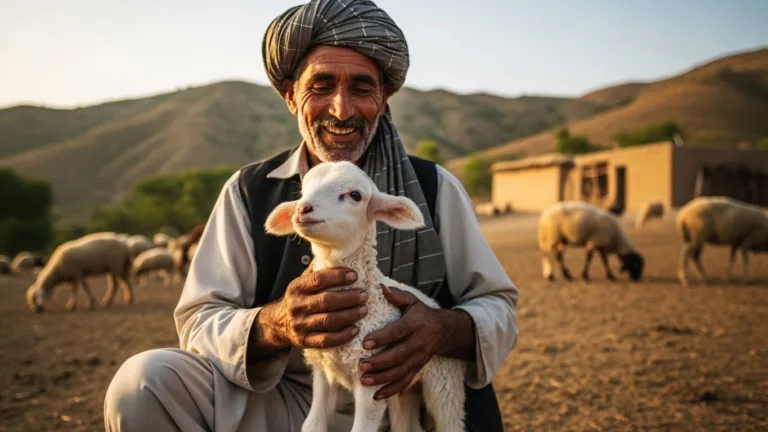
In many rural areas, you’ll see shepherds (often kids not much older than you!) leading flocks of sheep along roads, through fields, and up mountainsides. These shepherds have an incredibly important job, they keep the flock together, protect them from predators like wolves and wild dogs, and make sure they find good grazing spots. It’s like being a combination of a bodyguard, tour guide, and nutritionist all at once!
The daily routine of a shepherd is tough but follows a rhythm that’s been practiced for generations. Early morning means letting the sheep out to graze while the grass is fresh and dewy. During the hot afternoon hours, sheep rest in the shade (yes, sheep get hot too and need breaks!). Evening brings another grazing session before the flock returns to a safe enclosure for the night. This enclosure might be a simple fence, a small barn, or even just a corner of the family’s yard in rural villages.
Modern technology is slowly changing sheep farming in Pakistan too. Websites like Multanfarms.com help farmers learn about better breeding techniques, disease prevention, and market prices for their animals. Some progressive farmers are using mobile apps to track their flock’s health or connect with buyers directly. It’s fascinating to see ancient traditions meeting modern innovation!
The Challenges Facing Pakistan’s Sheep Farmers
Now, let’s keep it real, sheep farming in Pakistan isn’t all sunshine and woolly cuddles. Farmers face some serious challenges that make their work harder and threaten their livelihoods. Understanding these problems helps us appreciate what goes into producing the meat and wool we often take for granted.
Disease outbreaks are a constant worry. When sheep live close together and interact with other flocks, diseases can spread quickly. Foot-and-mouth disease, parasites, and respiratory infections can wipe out entire flocks if not treated quickly. Many rural farmers don’t have easy access to veterinarians or can’t afford expensive medicines, which makes disease control really difficult.
Water scarcity is another huge issue, especially in provinces like Balochistan and southern Punjab. Sheep need to drink several liters of water daily, and when droughts hit (which is happening more often due to climate change), farmers struggle to keep their animals hydrated. Some farmers travel miles every day just to find water sources for their flocks. Imagine walking that far just to give your pet a drink, now multiply that by a hundred sheep!
Predators are a real threat, particularly in mountainous and remote areas. Wolves, jackals, and even stray dogs attack sheep, especially young lambs. Farmers sometimes lose several animals in a single night, which is devastating both emotionally and financially. Traditional guard dogs help, but they’re not always enough against determined predators.
Finally, there’s the challenge of market access and fair prices. Small farmers often sell their sheep to middlemen who don’t pay fair prices, taking most of the profit for themselves. Transportation to markets can be expensive and difficult, especially in rural areas with poor roads. This is where digital platforms and better infrastructure could really make a difference.
Sheep and Pakistani Culture Go Way Back
Here’s where things get really interesting. Sheep aren’t just livestock in Pakistan, they’re deeply woven into the country’s cultural and religious traditions going back thousands of years. Understanding this cultural connection helps explain why sheep farming remains so important even as Pakistan modernizes.
The biggest cultural event involving sheep is definitely Eid-ul-Adha, also called the Festival of Sacrifice. This Islamic holiday commemorates the willingness of Prophet Ibrahim (Abraham) to sacrifice his son as an act of obedience to God. Muslims around the world, including in Pakistan, honor this by sacrificing an animal, usually a sheep, goat, or cow. The meat is divided into three parts: one for family, one for relatives and friends, and one for the poor.
During Eid-ul-Adha, the demand for sheep goes absolutely crazy! Prices skyrocket, and special livestock markets pop up in cities and towns. Families spend weeks choosing the perfect animal, and kids often get emotionally attached to the sheep staying in their backyard (which leads to some tearful goodbyes). This tradition keeps sheep farming economically viable for millions of farmers who depend on these seasonal sales.
Beyond religious festivals, sheep appear in Pakistani folk tales, poetry, and idioms. The image of a shepherd caring for his flock is used as a metaphor for leadership and responsibility. Traditional sports like Polo (which originated in Central Asia and Pakistan) often involved prizes of sheep. Wedding gifts sometimes include sheep as symbols of prosperity and blessing for the new couple.
What the Future Holds for Sheep Farming
So what’s next for sheep farming in Pakistan? Will it survive in a rapidly changing world where more people are moving to cities and technology is transforming agriculture? The answer is probably yes, but it’ll look different than it does today.
Improved breeding programs are helping farmers raise healthier, more productive sheep. Scientists are working on breeds that can produce more meat with less food and water, which is crucial in a country facing resource challenges. Imagine if your phone battery lasted twice as long with the same charge, that’s basically what selective breeding can do for sheep!
Better veterinary services are slowly reaching rural areas, thanks to mobile vet clinics and telemedicine. Farmers can now send photos of sick animals to vets via WhatsApp and get advice on treatment. This simple technology is saving countless animals and preventing disease outbreaks.
Direct marketing platforms like those offered by Multanfarms.com are helping farmers cut out middlemen and get better prices for their sheep. By connecting directly with buyers, farmers keep more profit and consumers can learn exactly where their meat comes from. It’s a win-win situation that could transform the entire industry.
Sustainable farming practices are also gaining attention. Some farmers are learning about rotational grazing (moving sheep between different pastures to let grass recover) and natural parasite control. These methods help protect the environment while keeping sheep healthy, kind of like how eating vegetables and exercising keeps you healthy instead of just taking medicine all the time.
Why You Should Care About Sheep in Pakistan
You might be wondering, “Okay, this is interesting, but why should I personally care about sheep farming in a country I might never visit?” That’s a totally fair question, and here’s the answer: understanding where our food and clothing come from makes us better global citizens and helps us make smarter choices.
If you wear wool clothing, there’s a chance it came from sheep in Pakistan or similar countries. If you eat lamb or mutton at a restaurant, that animal was raised by farmers dealing with many of the challenges we’ve discussed. When we understand the effort, tradition, and skill involved in raising sheep, we waste less, appreciate more, and support systems that treat animals and farmers fairly.
Plus, the challenges Pakistani sheep farmers face, like water scarcity, disease management, and climate change, are global issues affecting farmers everywhere. Solutions developed in Pakistan might help farmers in other countries, and vice versa. We’re all connected through the food system, even if we don’t realize it.
Finally, sheep farming represents something important: it’s a way of life that connects modern people to ancient traditions. In our world of instant everything, there’s something valuable about practices that have worked for thousands of years. Shepherds today use some of the same techniques their great-great-great-grandparents used, adapted for modern times. That’s pretty amazing when you think about it.
Wrapping Up the Wool
From the rugged mountains of Balochistan to the fertile plains of Punjab, sheep farming in Pakistan is way more than just raising animals. It’s an economic lifeline for millions of families, a cultural tradition stretching back millennia, and a testament to human ingenuity in working with nature. The 30+ million sheep in Pakistan represent jobs, food security, cultural heritage, and a sustainable way of using the land.
These woolly animals face real challenges, from diseases to climate change to market pressures, but Pakistani farmers continue adapting and innovating. With help from technology, better education, and platforms that connect them directly with consumers, the future of sheep farming in Pakistan looks promising.
Next time you see wool clothing, eat lamb, or even just see a sheep in a picture, take a moment to think about the incredible journey that animal represents. Behind every sheep is a farmer, a family, a community, and thousands of years of tradition. That’s something worth knowing about, don’t you think?
Have you ever seen sheep being raised, or have you tried traditional dishes made from lamb or mutton? What other aspects of agriculture around the world would you like to learn about?