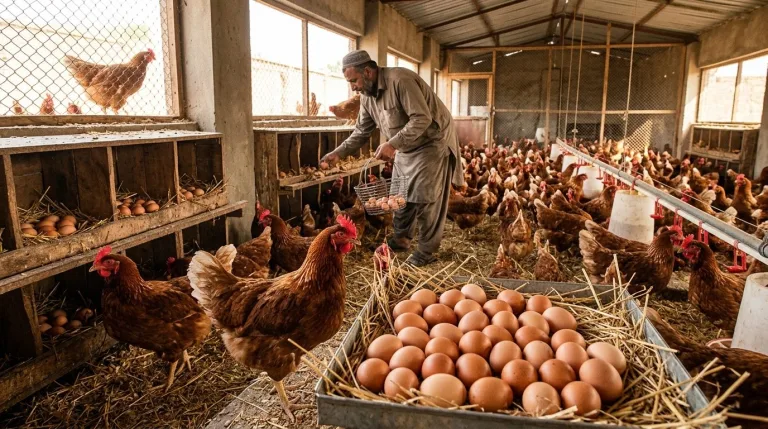
Have you ever cracked open a breakfast egg and wondered which hen made it? Behind every egg on your plate is a hard-working chicken that started her job before sunrise. Many of those hens are brown layers chicken, a group of hens famous for their reddish-brown feathers and their brown eggs.
Brown layers are some of the most popular egg-laying birds on farms around the world, including in Pakistan. They’re friendly, strong, and produce a lot of eggs. In this article, you’ll learn what brown layers are, why their eggs are brown, how many eggs they lay, and what farmers do to keep them happy and healthy.
What Exactly Is a Brown Layer Chicken?
A layer is simply a hen raised mainly to lay eggs. Farmers also raise “broilers,” which are chickens grown for meat. Think of it like sports teams: broilers are like football players built for power, while layers are like marathon runners built for endurance, showing up day after day.
A brown layer is a layer hen with brown or reddish-brown feathers that lays brown eggs. Some well-known types include the Lohmann Brown, the ISA Brown, and the Hy-Line Brown. Older farm favorites like the Rhode Island Red also belong to this family. Their warm, copper-colored feathers make them easy to spot in a flock.
Why Are Their Eggs Brown?
Here’s a fun fact: the color of an egg has nothing to do with how tasty or healthy it is. It’s all about the hen’s genes.
As an egg forms inside the hen, a natural pigment called protoporphyrin gets painted onto the shell in the final hours before the egg is laid. It’s a bit like a tiny artist adding a coat of brown paint at the very last minute. Hens with white feathers and white earlobes usually skip this step, so their eggs stay white.
Here’s a handy clue. If a hen has brown or red feathers and red earlobes, she’ll usually lay brown eggs. Take a peek at a chicken’s ears next time you visit a farm!
How Many Eggs Can a Brown Layer Produce?
This is where brown layers really shine. A good brown layer starts laying at about 18 to 20 weeks old, and in her first year she can lay around 280 to 320 eggs. That’s almost one egg every single day!
Imagine a student who gets a perfect attendance award nearly every day of the school year. That’s a brown layer at work. Of course, no hen is perfect. Egg production slowly drops as she gets older, and most hens lay best during their first two years.
Did you know? A hen doesn’t lay eggs “on command.” It takes her body about 24 to 26 hours to make one egg, which is why she sometimes skips a day.
What Do Brown Layers Eat?
Making an egg takes a lot of energy and nutrients, just like an athlete needs good meals to perform well. Brown layers are slightly larger than white-egg breeds, so they tend to eat a little more too.
A healthy layer diet usually includes:
- Grains like maize and wheat for energy
- Protein from soybean meal or similar feed to build strong eggs
- Calcium from crushed limestone or shell grit to make hard shells
- Fresh, clean water all day long, because an egg is mostly water
Calcium is a big deal. Without enough of it, a hen would lay eggs with thin, crackly shells, a bit like trying to build a house with weak bricks. Green vegetables and a little sunshine also help keep hens strong and cheerful.
Do Brown Eggs Taste Better Than White Eggs?
Many people believe brown eggs are healthier or tastier, but that’s a myth. A brown egg and a white egg have almost the same nutrition. What really changes the taste and yolk color is what the hen eats and how fresh the egg is.
For example, hens that eat plenty of yellow maize or leafy greens often lay eggs with deeper orange yolks. It’s like how a carrot looks brighter when it’s grown in healthy soil. Also, brown eggs often cost a bit more, not because they’re better, but because brown hens eat more feed.
How Do Farmers Take Care of Brown Layers?
Happy hens lay more eggs, so good care matters. Farmers focus on a few simple things:
- A clean, airy coop so hens stay healthy and breathe fresh air
- Enough space so hens don’t feel crowded, just like you wouldn’t want to study in a packed room
- Regular vaccinations and health checks to keep diseases away
- Nest boxes that are soft, quiet, and private, where hens can lay in peace
- Steady light of about 14 to 16 hours a day, since light helps hens keep laying
In hot places like South Punjab, farmers also make sure the coop stays cool in summer. Shade, fans, and plenty of cool water help hens beat the heat, because a hot hen is an unhappy hen who lays fewer eggs.
Why Brown Layers Matter to Us
Brown layers do more than give us breakfast. Eggs are a cheap, filling source of protein, vitamins, and healthy fats, which help your muscles and brain grow. In many homes, eggs turn up in everything from a quick omelette to a weekend paratha breakfast. Every one of those meals starts with a hen doing her daily job.
Brown layers also support families and farmers. Poultry farming gives people work, feeds communities, and keeps fresh, local food on the table.
Wrapping It Up
So, what have we learned? Brown layers chicken are hardworking hens with reddish-brown feathers that lay brown eggs, often close to 300 a year. The brown color comes from a pigment added to the shell at the very end, and it doesn’t change the nutrition inside. With good food, clean water, and a comfy coop, these hens stay healthy and keep the eggs coming.
Next time you crack open a brown egg, take a second to think about the journey it took, from a busy hen on a farm to your plate. And here’s something to wonder about: if a hen’s food can change the color of a yolk, what other surprising things on a farm are shaped by what’s on the menu?