Have you ever walked through a busy market with your family and overheard people haggling over the price of lamb? Maybe you’ve noticed that sometimes meat seems more expensive and other times it’s a bit more affordable. If you’ve ever wondered why lamb prices in Pakistan seem to jump around like they’re on a roller coaster, you’re not alone! The price of lamb is actually determined by a fascinating mix of factors that affect millions of families across the country.
Pakistan is one of the world’s largest producers of sheep and lamb, with over 30 million sheep roaming everywhere from the plains of Punjab to the mountains of Balochistan. With so many animals, you’d think lamb would be super cheap, right? Well, it’s not quite that simple. The price you see at the butcher shop or local market is the result of a complex journey that involves farmers, middlemen, transporters, weather patterns, and even international events.
In this article, we’ll explore what makes lamb prices tick in Pakistan. You’ll discover why prices spike during certain times of the year, how farmers decide what to charge, and what role places like Multanfarms.com play in the meat industry. By the end, you’ll have a whole new appreciation for that delicious lamb karahi or seekh kebab on your dinner plate!
The Basics: What Determines Lamb Prices?
Let’s start with the fundamentals. When you buy lamb at the market, you’re not just paying for the meat itself. You’re actually paying for a whole chain of costs that stack up like building blocks. Think of it like buying a video game, you’re not just paying for the disc or download, but also for the people who made it, marketed it, and got it to the store.
The base cost of lamb depends on several key factors. First, there’s the cost of raising the animal, which includes feed, water, veterinary care, and the farmer’s time and effort. In Pakistan, most sheep are raised on a mix of grazing on natural pastures and supplemental feed like wheat straw, corn, and special nutritional supplements. When feed prices go up (which they often do), the cost of raising sheep increases, and those costs get passed along to consumers.
Second, there’s the weight and quality of the lamb. A healthy, well-fed lamb that weighs more will obviously cost more than a smaller one. Buyers also pay attention to the age of the animal, younger lambs (usually under one year old) have more tender meat and often command higher prices than older sheep. It’s similar to how a brand-new phone costs more than an older model, the newer and better quality it is, the more valuable it becomes.
Finally, there’s the supply and demand principle, the basic rule of economics that affects everything from concert tickets to lamb chops. When lots of people want to buy lamb but there aren’t many animals available, prices shoot up. When there’s plenty of lamb but fewer buyers, prices drop. Simple, right?
The Seasonal Roller Coaster: Why Prices Change Throughout the Year
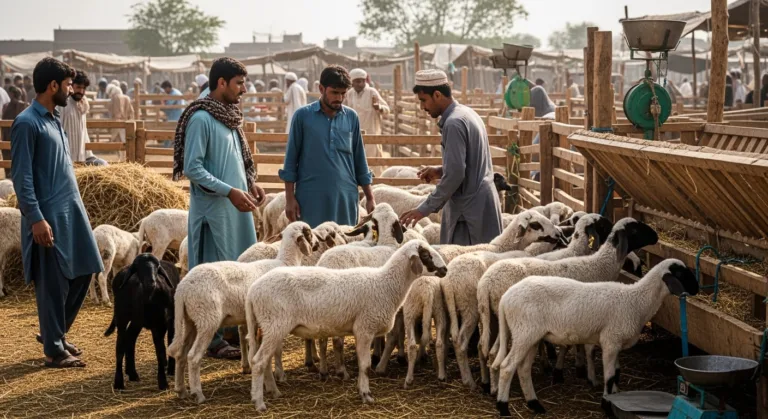
If you’ve been paying attention to lamb prices in Pakistan, you’ve probably noticed they’re not constant. They rise and fall throughout the year like waves in the ocean. The biggest price spike happens around Eid al-Adha, one of the most important Islamic festivals when millions of families purchase animals for sacrifice.
During the weeks leading up to Eid, lamb prices can increase by 30% to 50% or even more! This is classic supply and demand at work. Suddenly, millions of families all need to buy an animal at the same time, but the number of sheep available doesn’t magically increase overnight. Farmers and sellers know this is their peak season, so they hold onto their best animals and charge premium prices. It’s kind of like how hotel prices near Disneyland skyrocket during summer vacation, everyone wants the same thing at the same time.
After Eid, prices typically drop because demand returns to normal. Families have already made their purchases, and the market settles down. This is actually a great time for regular consumers to buy lamb at more reasonable prices. Smart shoppers and restaurants often stock up during these quieter periods.
Weather and seasons also play a huge role. During winter months, sheep tend to be healthier and heavier because the cooler weather is less stressful for them. In the scorching summer heat, especially in places like Multan and southern Punjab, sheep may lose weight and require more expensive care to stay healthy. These seasonal variations directly impact prices at the market.
From Farm to Table: Understanding the Price Chain
Here’s something most people don’t think about: by the time lamb reaches your plate, it has passed through several hands, and each person along the way adds their own cost. This is called the supply chain, and understanding it helps explain why prices can seem high even in a country that produces so much lamb.
Let’s follow a lamb’s journey from a farm like Multanfarms.com to your dinner table. First, the farmer raises the animal for months, investing in feed, healthcare, and labor. When it’s time to sell, the farmer might sell directly to consumers, to middlemen (called commission agents), or at a livestock market called a mandi. Each of these options offers different prices.
Next, if the lamb goes through middlemen, these agents take their cut for connecting sellers with buyers. Then there’s transportation, someone needs to truck the animals from rural farms to city markets, and fuel costs money! Once the lamb reaches a butcher, they need to cover their shop rent, employee salaries, and profit margin. All of these costs add up like items in a shopping cart, and the final price reflects everyone’s contribution to getting that meat to you.
Modern farms and organizations are trying to shorten this chain. By selling directly to consumers or working with fewer middlemen, places like Multanfarms.com can offer better prices to both farmers (who get paid more) and customers (who pay less). It’s a win-win situation, kind of like buying directly from a lemonade stand instead of getting lemonade at a fancy restaurant!
Regional Differences: Why Location Matters
Did you know that lamb prices can vary significantly depending on where you are in Pakistan? A kilogram of lamb in Karachi might cost differently than the same quality meat in Lahore or Peshawar. This happens for several interesting reasons.
First, transportation costs play a big role. If you’re in a city far from major sheep-raising areas, the cost of trucking animals or meat to your market adds to the final price. It’s like ordering pizza from a restaurant that’s far away versus one that’s right around the corner, delivery costs matter!
Second, local demand varies. In some cities, lamb is the preferred meat and people buy lots of it, which can drive prices up. In other areas, people might prefer chicken, beef, or fish, so lamb prices stay lower because there’s less competition among buyers. Cultural preferences and local cuisines also influence how much people are willing to pay.
Third, the availability of local farms matters too. Areas with thriving livestock farms like parts of Punjab (where Multanfarms.com operates) often have more competitive prices because the supply is closer and more abundant. Rural areas near farms typically enjoy lower prices than big cities where most meat has been transported from elsewhere.
The Impact of Feed Costs and Economic Factors
Let’s talk about something that doesn’t get much attention but hugely impacts lamb prices: the cost of animal feed. Sheep don’t magically grow without eating, and what they eat costs money. In Pakistan, feed costs can account for 60-70% of the total cost of raising livestock!
When grain prices rise internationally or domestically, feed becomes more expensive. During droughts or crop failures, the price of wheat straw, corn, and other feed ingredients can skyrocket. Farmers have no choice but to pay these higher costs if they want to keep their animals healthy. Then, naturally, they need to charge more when selling their lambs to recover their investment. It’s a domino effect that starts in the crop fields and ends at your dinner plate.
The Pakistani rupee’s value against other currencies also matters more than you might think. Pakistan imports some feed ingredients and veterinary medicines. When the rupee weakens against the dollar, imports become more expensive, and those costs trickle down to lamb prices. Global economic events, like oil price increases or international trade disputes, can have surprising effects on what you pay for meat at your local butcher.
Inflation is another factor. As the general cost of living rises in Pakistan, everything becomes more expensive, including the costs farmers face. Labor wages, electricity for water pumps, and even the plastic bags used at the butcher shop all cost more during inflationary periods.
Quality Matters: Why Some Lamb Costs More
Not all lamb is created equal, and this is something that really affects pricing. Just like how some brands of shoes cost way more than others even though they all serve the same basic purpose, lamb quality varies and buyers pay different prices based on what they’re getting.
Premium quality lamb typically comes from animals that were raised with excellent care, fed high-quality nutrition, and processed hygienically. These lambs tend to be younger, healthier, and have better-tasting meat. Farms that focus on quality, like Multanfarms.com, invest heavily in proper breeding, nutrition programs, and animal welfare. This investment shows up in the superior product, but it also means higher prices.
On the other hand, you’ll find cheaper lamb in the market that might come from older animals, less controlled breeding, or farms where quality standards aren’t as strict. This meat might be tougher, less flavorful, or have more fat and less actual edible meat per kilogram. It’s like comparing a home-cooked meal made with fresh ingredients to fast food, both fill you up, but the experience and quality are quite different.
Some buyers are willing to pay extra for guaranteed quality, especially for special occasions or if they have particular health concerns. Others prioritize affordability and are okay with average quality. Both types of buyers exist in the market, which is why you’ll see such a wide range of lamb prices depending on where you shop.
The Bottom Line on Lamb Pricing
Understanding lamb prices in Pakistan is like solving a puzzle with many pieces. It’s not just about one thing, it’s about farming costs, seasonal demand, supply chains, regional differences, economic conditions, and quality standards all working together. Each piece affects the final number you see on the price tag.
For consumers, knowing these factors helps you make smarter buying decisions. Maybe you’ll choose to buy lamb during off-peak seasons when it’s cheaper, or you’ll seek out farms that sell directly to cut out middleman costs. Perhaps you’ll understand why that premium lamb from a quality-focused farm costs a bit more but delivers better value in terms of taste and nutrition.
Next time you’re at the market with your family and someone mentions lamb prices, you can share some of this knowledge! Can you think of other products whose prices are affected by similar factors? Understanding how markets work helps us all become smarter consumers and appreciate the hard work that goes into producing the food we love.