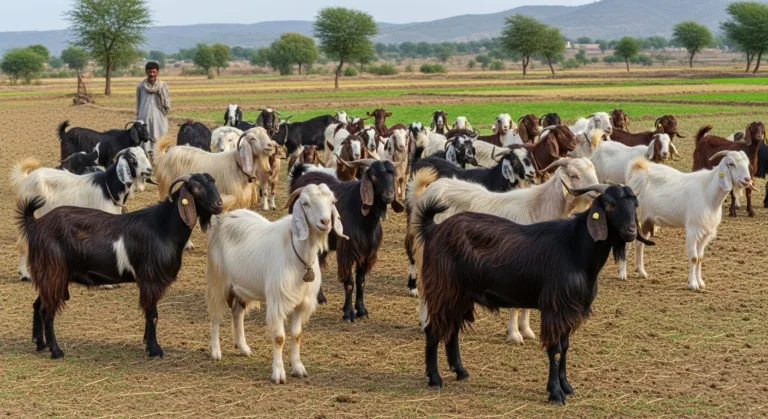
Picture this: you’re walking through a bustling village in Pakistan, and suddenly you spot a goat with ears so long they almost touch the ground! A few minutes later, you see another goat that’s completely different, this one has short, perky ears and a coat that looks like it belongs on a teddy bear. Wait, are these even the same animal? Yep, they’re all goats, but Pakistan is home to some of the most diverse and interesting goat breeds you’ll ever see!
Here’s something that might surprise you: Pakistan has over 80 million goats, making it one of the top goat-raising countries in the world. That’s more goats than the entire population of the United Kingdom! But what’s even cooler is that these aren’t just random goats. Pakistan has developed more than 25 different goat breeds, each one specially adapted to survive in different parts of the country, from scorching deserts to freezing mountain peaks.
In this article, we’re going to explore the fascinating world of Pakistani goat species. You’ll discover why these animals are so important to millions of families, what makes each breed unique, and how these tough creatures have adapted to survive in some pretty extreme environments. Trust me, by the end of this, you’ll never look at goats the same way again!
The Superstars: Pakistan’s Most Famous Goat Breeds
Let’s start with the celebrities of the goat world! The Beetal goat is probably Pakistan’s most famous breed, and when you see one, you’ll understand why. These goats are absolutely massive, sometimes weighing up to 90 kilograms (that’s about 200 pounds!). They have long, floppy ears that hang down like a basset hound’s, and they come in all sorts of cool color patterns, black and white, brown and white, or even solid colors.
Beetal goats are mainly found in Punjab province, and they’re famous for producing tons of milk. A good Beetal can give you 2-3 liters of milk per day, which is like filling up several large soda bottles! Families use this milk to make yogurt, cheese, and butter. Think of Beetal goats as the dairy cows of the goat world, except they’re better suited for Pakistan’s hot climate.
Then there’s the Teddy goat, and yes, it’s called that because it literally looks like a stuffed teddy bear! These goats have incredibly fluffy, curly coats that make them look adorable and cuddly. Don’t let their cute appearance fool you, though. Teddy goats are tough survivors who do great in Punjab’s varying weather conditions. People love them not just for their looks but also because they grow fast and produce good quality meat.
The Kamori goat is another superstar, especially in Sindh province. These goats are dark brown or black with a distinctive Roman nose (meaning their nose has a slight bump on it). Kamori goats are like the luxury cars of the goat world, they’re expensive, beautiful, and highly valued. During special occasions like Eid-ul-Adha, a single Kamori goat can sell for thousands of dollars because people consider them prestigious!
Mountain Champions: Goats Built for the Heights
Now let’s talk about the tough guys who live in the mountains! The Kaghani goat comes from the beautiful but harsh Kaghan Valley in northern Pakistan. These goats are medium-sized with long, shaggy coats that protect them from freezing temperatures. Imagine wearing a winter jacket all year round, that’s basically what these goats do!
Kaghani goats are expert climbers, able to navigate rocky cliffs and steep mountainsides that would make most humans nervous. They’ve developed strong, sturdy legs and amazing balance. It’s like they’re born with built-in rock-climbing skills! Local herders take these goats up to high mountain pastures in summer where the grass is greenest, and then bring them back down to valleys in winter. This traditional practice is called transhumance, which is basically a fancy word for seasonal migration.
The Gaddi goat is another mountain specialist found in the northern regions. These goats have adapted to eating whatever plants they can find in rocky, difficult terrain. They’re not picky eaters at all! While goats living in fertile valleys might prefer tender grass, Gaddi goats happily munch on shrubs, leaves, and even thorny bushes. They’re like the adventurous eaters who’ll try anything on the menu.
Here’s a cool fact: mountain goats like these actually help prevent soil erosion. When they eat plants on steep slopes, they’re doing natural landscaping that helps hold the soil in place. Plus, their manure fertilizes the mountain soil, making it better for other plants to grow. Nature’s gardeners, right?
Desert Survivors: Built for the Heat
If you think living in the mountains is tough, try surviving in Pakistan’s deserts! The Barbari goat is found in the hot, dry regions of Sindh and southern Punjab. These goats are smaller than their mountain cousins, but they’re incredibly efficient. In the scorching desert heat, being smaller actually helps because you need less food and water to survive.
Barbari goats have short coats and long legs, which helps them stay cool. Think about it like this: would you rather wear a thick sweater or a light t-shirt in 110-degree heat? Their bodies have adapted to handle serious temperature swings, freezing cold desert nights and blazing hot days. They can also go longer periods without water compared to other goat breeds, storing moisture more efficiently in their bodies.
The Pateri goat from Balochistan province is another desert warrior. These goats are medium-sized with distinctive markings and can survive on sparse vegetation that other animals would ignore. Balochistan is one of Pakistan’s driest provinces, where rain is rare and vegetation is scarce. Pateri goats have learned to eat desert plants that most animals won’t touch, making them perfect for this harsh environment.
What’s really impressive is how these desert goats help families survive in areas where farming is almost impossible. They provide milk, meat, and even hair for making ropes and fabrics. For people living in remote desert villages, these goats aren’t just animals, they’re like walking supermarkets that require very little input!
Why Goat Diversity Matters So Much
You might be wondering, why does Pakistan need so many different types of goats? Couldn’t they just stick with one or two breeds? Well, here’s the thing: Pakistan is an incredibly diverse country geographically. It has deserts, plains, river valleys, and some of the world’s highest mountains. Each environment needs animals that can thrive in those specific conditions.
Having different goat breeds is like having different tools in a toolbox. You wouldn’t use a hammer to screw in a bolt, right? Similarly, a Beetal goat that’s great for milk production in Punjab’s moderate climate would struggle to survive in Balochistan’s desert or in the freezing mountains of the north. Each breed has evolved over hundreds or even thousands of years to be perfectly suited to its environment.
This diversity also protects farmers from disasters. If disease strikes one breed or climate change affects certain areas, other breeds in different regions can still survive and thrive. It’s nature’s insurance policy! Scientists call this genetic diversity, and it’s super important for food security. The more variety you have, the better chance some animals will survive whatever challenges come their way.
Plus, different breeds serve different purposes. Some are champion milk producers, others are raised mainly for meat, and some provide valuable fiber for textiles. Farmers choose breeds based on what they need most. A family that makes yogurt and cheese for the market will choose different goats than someone who raises goats mainly to sell for meat.
The People Behind the Goats
Let’s talk about the amazing people who raise these goats. In Pakistan, goat farming isn’t usually done by big companies with fancy equipment. Instead, it’s mostly small-scale farmers and herding families who’ve been raising goats for generations. Many of these families have traditional knowledge passed down from their grandparents and great-grandparents about how to care for specific breeds.
These herders can tell you everything about their goats, which ones are related, which goat prefers what food, and even individual personality traits! It’s like how you might know all your friends’ favorite foods and hobbies. The relationship between herders and their goats is actually pretty special. Goats learn to recognize their owner’s voice and will come when called, kind of like dogs!
Goat farming provides income for millions of Pakistani families, especially in rural areas where job opportunities are limited. For many, goats are like a savings account. When families need money for emergencies, school fees, or weddings, they can sell a goat. Since goats reproduce quickly (a female can have kids twice a year!), the “savings account” keeps growing.
Women play a huge role in goat farming too. In many rural communities, women are responsible for feeding, milking, and caring for the goats. The milk and products they make provide important nutrition for their families and extra income when sold at markets. It’s empowering work that helps women contribute economically to their households.
Challenges and the Future
Like everything else, goat farming in Pakistan faces some challenges. Climate change is affecting traditional grazing patterns, with droughts becoming more common in some areas. Diseases can spread quickly among goat herds, especially when animals aren’t vaccinated. And as cities expand, there’s less grazing land available for goats in some regions.
But there’s good news too! The Pakistani government and various organizations are working to preserve and improve local goat breeds. They’re setting up breeding programs to maintain the unique characteristics of each breed, providing veterinary services to keep goats healthy, and teaching farmers modern techniques while respecting traditional knowledge. Some farmers are even using social media to sell their goats, connecting with buyers across the country!
Scientists are also studying these different breeds to understand what makes them so resilient. The knowledge gained could help develop even better breeds in the future or help other countries raise goats in similar climates. Pakistan’s goat genetic diversity is actually a valuable resource for the whole world!
Young people are getting more interested in goat farming too, seeing it as a profitable business rather than just old-fashioned farming. With better education, access to markets, and modern breeding techniques, the future of Pakistan’s diverse goat population looks pretty bright.
Why This Matters to Everyone
Understanding Pakistan’s goat species teaches us something important: diversity is strength. Whether we’re talking about animals, plants, or even human cultures, having variety makes systems stronger and more resilient. These different goat breeds have survived for centuries because they’re each perfectly adapted to their specific environments.
Next time you think about Pakistan, don’t just picture mountains and cities, think about those 80 million goats scattered across the country, from fluffy Teddy goats in Punjab to tough Pateri goats in Balochistan’s deserts. Each one represents thousands of years of adaptation and the hard work of countless generations of farmers.
So here’s something to think about: what other animals in your area have developed special adaptations to survive in their environment? And how are people working to preserve that diversity? The world of goats in Pakistan is just one example of the amazing variety of life on our planet. Pretty cool, isn’t it?