Close your eyes and imagine biting into a perfectly ripe, juicy mango. The sweet flavor explodes in your mouth, and the juice drips down your chin. Now here’s a fun fact: if you’re eating a mango in Pakistan during summer, there’s a really good chance it came from an orchard not too far from where you live. Pakistan isn’t just any mango-growing country, it’s actually one of the top mango producers in the entire world!
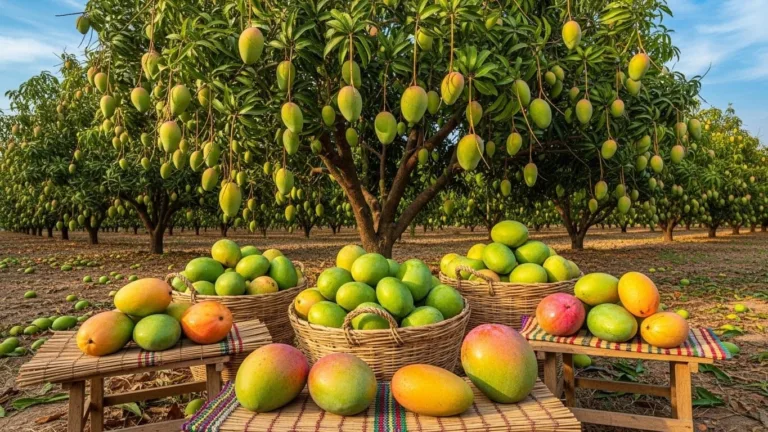
Every summer, when the temperature rises and schools let out for vacation, something magical happens across Pakistan. Millions of mango trees burst with fruit, painting orchards in shades of yellow, orange, and red. From the farms of Punjab to the groves of Sindh, mangoes become the star of the season. They show up at every dinner table, in every market, and even get shipped to countries thousands of miles away.
But have you ever wondered how Pakistan became such a mango powerhouse? What makes Pakistani mangoes so special that people around the world crave them? And what does it take to grow millions of these delicious fruits every single year? Let’s dive into the sweet world of mango production in Pakistan and discover why this fruit is more than just a tasty treat, it’s a big part of Pakistan’s economy and culture.
What Makes Pakistan Perfect for Growing Mangoes?
Think of growing mangoes like Goldilocks trying to find the perfect bed. The conditions need to be just right, not too hot, not too cold, and with just the right amount of rain. Pakistan happens to hit that sweet spot perfectly!
The climate in Pakistan is ideal for mango trees. These trees love warm weather and plenty of sunshine, which Pakistan has in abundance, especially during the spring and summer months. The country gets hot, dry weather when the mangoes are developing, which helps them become super sweet. It’s like baking cookies in an oven, you need the right temperature for the perfect result.
Geography plays a huge role too. The fertile plains along the Indus River provide rich soil that mango trees absolutely love. This soil is packed with nutrients, kind of like how a protein shake gives athletes energy. The water from the Indus and its tributaries keeps the trees hydrated during the growing season. Provinces like Punjab, Sindh, Khyber Pakhtunkhwa, and Balochistan all have thriving mango orchards, with Punjab and Sindh leading the way.
Here’s something cool: Pakistan grows over 200 varieties of mangoes! That’s like having 200 different flavors of ice cream to choose from. Some of the most famous ones include Sindhri, Chaunsa, Anwar Ratol, and Langra. Each variety has its own unique taste, texture, and even appearance. Some are super sweet, others have a tangy kick, and some are so smooth they practically melt in your mouth.
From Blossom to Basket: How Mangoes Grow
Ever wondered how a tiny flower turns into that massive mango you devour during summer? The process is actually pretty fascinating!
It all starts in the winter months, usually around January or February, when mango trees begin to flower. These small, yellowish flowers appear in clusters, and not all of them will become mangoes. In fact, only a small percentage of flowers actually develop into fruit. It’s nature’s way of making sure the tree doesn’t get overwhelmed, like how teachers limit the number of students in a class so everyone gets attention.
After the flowers get pollinated, usually by bees and other insects, tiny mangoes start to form. During March and April, you can see these baby mangoes, called fruit sets, hanging from branches. Farmers watch these young fruits carefully, making sure the trees get enough water and nutrients.
The real growth happens during April and May. This is when mangoes grow quickly, soaking up sunshine and water like a sponge. Farmers work hard during this period, protecting the fruit from pests and diseases. Some farmers even wrap individual mangoes in paper bags to keep insects away and prevent damage from birds. Imagine gift-wrapping hundreds of mangoes, that’s dedication!
By June, the first mangoes start ripening, and the harvest season officially begins. This continues through August, with different varieties ripening at different times. Some mangoes mature early in the season, while others take longer. It’s like having friends with birthdays spread throughout the year, there’s always something to celebrate!
The People Behind Your Favorite Fruit
Behind every delicious mango is a farmer who’s put in months of hard work. Mango farming in Pakistan isn’t just about planting trees and waiting for fruit to appear. It’s a year-round job that requires knowledge, patience, and lots of physical effort.
Most mango orchards in Pakistan are run by families who’ve been growing mangoes for generations. These farmers know their trees like you know your best friends. They can tell just by looking at a tree whether it’s healthy or needs attention. This traditional knowledge gets passed down from grandparents to parents to children, creating a legacy of expertise.
A typical day for a mango farmer varies depending on the season. During the growing season, farmers wake up early to irrigate their orchards, often before the sun gets too hot. They check each tree for signs of disease or pest problems. They might need to apply organic fertilizers or prune branches to help the tree focus its energy on producing quality fruit.
Harvest time is the busiest period. Farmers hire extra workers to carefully pick mangoes from the trees. This isn’t as simple as just grabbing fruit, mangoes need to be picked at exactly the right time and handled gently to avoid bruising. Workers use long poles with baskets or climb ladders to reach high branches. It’s like a careful treasure hunt, except the treasure is delicious fruit!
Organizations like Multanfarms.com work with farmers to improve mango production through better techniques and modern knowledge. They help farmers understand things like proper irrigation methods, pest control, and how to get the best prices for their harvest.
Why Pakistani Mangoes Are World Famous
Pakistani mangoes have earned a reputation that reaches far beyond the country’s borders. People in the Middle East, Europe, and even North America eagerly wait for Pakistani mango season. But what makes them so special?
First, there’s the taste. Pakistani mangoes, especially varieties like Sindhri and Chaunsa, are known for being incredibly sweet and aromatic. When a Pakistani mango ripens, its fragrance can fill an entire room. The flesh is smooth, almost buttery, with very little fiber. Compare that to some other varieties that can be stringy or bland, and you’ll understand why people are willing to pay premium prices.
The Sindhri mango from Sindh is often called the “king of mangoes.” It’s large, oval-shaped, and has a beautiful golden-yellow color when ripe. One Sindhri can weigh as much as a small watermelon! The taste is so sweet and rich that people describe it as honey-like.
Then there’s Chaunsa, which comes from the areas around Multan and Rahim Yar Khan. This variety is considered by many to be the perfect mango. It has a unique fragrance, creamy texture, and a sweetness that’s balanced perfectly. Chaunsa season, which peaks in July and August, is like a national celebration in Pakistan!
Pakistani mangoes also have an interesting history. The Mughal emperors, who ruled the region centuries ago, were obsessed with mangoes. They created royal orchards and even commissioned poets to write about the fruit. This royal connection gave Pakistani mangoes a prestige that continues today.
The Business Side: Mangoes and Money
Mango production isn’t just about growing delicious fruit, it’s also a huge part of Pakistan’s economy. Let’s talk numbers for a second, because they’re pretty impressive.
Pakistan produces over 1.8 million tons of mangoes every year. That’s roughly the weight of 300,000 elephants! This makes Pakistan one of the top five mango-producing countries globally. All these mangoes generate billions of rupees in revenue, supporting hundreds of thousands of families across the country.
Export is where things get really interesting. Pakistani mangoes are shipped to over 40 countries worldwide. The main customers include the United Arab Emirates, Saudi Arabia, the United Kingdom, and increasingly, China and Japan. When you see “Pakistani Mangoes” labeled in a store in London or Dubai, that’s Pakistan’s reputation traveling the world.
However, exporting mangoes isn’t as simple as putting them in a box and shipping them off. Mangoes are delicate and perishable, meaning they can spoil quickly. Farmers and exporters use special cold storage facilities and refrigerated containers to keep mangoes fresh during their journey. It’s like sending mangoes on a first-class flight, they get special treatment to arrive in perfect condition!
The mango industry also creates thousands of jobs beyond farming. There are people who sort and grade mangoes, workers in packing facilities, truck drivers who transport fruit to markets, and vendors who sell mangoes in cities and towns. It’s a whole ecosystem of employment built around one fruit.
Challenges That Make Farmers Worry
Even though mango production in Pakistan is successful, it’s not without problems. Understanding these challenges helps us appreciate the hard work that goes into every mango.
Climate change is becoming a major concern. Mango trees need predictable weather patterns, but recent years have brought unexpected changes. Unusual rain during flowering season can damage blossoms, reducing the crop. Extreme heat waves can stress trees and affect fruit quality. It’s like trying to follow a recipe when someone keeps changing the temperature on your oven.
Pests and diseases constantly threaten mango crops. Fruit flies are particularly troublesome, they lay eggs inside developing mangoes, ruining them from the inside. Fungal diseases can spread through orchards, especially during humid weather. Many small farmers can’t afford expensive pesticides or don’t have access to proper pest management knowledge.
Water scarcity is another growing problem. Mango trees need consistent watering, especially during fruit development. But with increasing competition for water resources and changing rainfall patterns, many farmers struggle to irrigate their orchards properly. It’s like trying to keep plants alive during a water shortage, you have to make difficult choices about where to use limited water.
Market access can be tricky for small farmers. While large orchards have direct connections to exporters and big markets, smaller farmers often have to sell to middlemen at lower prices. These middlemen then sell the mangoes at much higher prices, pocketing the difference. It’s not always fair, but it’s the reality many farmers face.
Looking Ahead: The Future of Mango Magic
Despite the challenges, the future of mango production in Pakistan looks bright. New technologies and farming methods are helping farmers grow better mangoes more efficiently.
Some progressive farmers are adopting drip irrigation systems, which deliver water directly to tree roots. This saves water and ensures trees get exactly what they need. It’s like drinking through a straw instead of trying to catch water from a fountain, much more efficient!
Research organizations are developing disease-resistant mango varieties and teaching farmers about sustainable practices. The government has also recognized mangoes’ importance and sometimes provides support through subsidies and training programs.
Young people are bringing fresh ideas to traditional mango farming. Some are using smartphones and apps to monitor orchard conditions, connect with buyers, and learn about best practices. Others are exploring value-added products like mango juice, dried mango slices, and mango-based desserts that can be sold year-round.
The Sweet Conclusion
Mango production in Pakistan is more than just agriculture, it’s part of the country’s identity. These golden fruits represent the hard work of thousands of farming families, the richness of Pakistani soil, and a tradition that stretches back centuries.
Next time you bite into a juicy Pakistani mango, take a moment to think about the journey it made. From a tiny flower on a tree in a Punjab orchard to the fruit in your hand, it represents months of careful work, favorable weather, and the dedication of people who take pride in growing the world’s most delicious mangoes.
So here’s a question to think about: as climate change and other challenges threaten traditional agriculture, how can your generation help protect and improve Pakistan’s mango legacy? The answer might be as sweet as the fruit itself!