Picture this: you wake up in the morning and grab a piece of toast for breakfast. At lunch, you bite into a delicious sandwich. For dinner, maybe you’re having pasta or roti with your meal. What do all these foods have in common? They’re all made from wheat! Now, imagine a country where wheat isn’t just important, it’s absolutely essential to feeding millions of people every single day. That country is Pakistan, and wheat is basically the backbone of its food supply.
Pakistan is one of the world’s largest wheat producers, which means it grows an enormous amount of this golden grain every single year. In fact, wheat covers more farmland in Pakistan than any other crop! It’s not just about having fields full of waving wheat stalks that look pretty in the breeze, though. For Pakistan, wheat means survival. It’s the main ingredient in chapati and roti, the flatbreads that millions of Pakistani families eat with almost every meal. Without wheat, the country’s entire food system would collapse like a house of cards.
But here’s what makes this story really interesting: growing wheat in Pakistan isn’t as easy as just throwing some seeds in the ground and waiting for them to grow. Pakistani farmers face incredible challenges, from unpredictable weather to water shortages, yet they still manage to produce enough wheat to feed over 220 million people! In this article, we’re going to explore why wheat is so crucial to Pakistan, how it’s grown, what challenges farmers face, and why this matters not just to Pakistan but to the whole world. Trust me, you’ll never look at your morning toast the same way again!
Pakistan’s Wheat Growing Regions: Where the Magic Happens
Let’s start by understanding where all this wheat actually grows. Pakistan isn’t just one big flat field, it has different regions with different climates, and wheat grows best in specific areas. The absolute superstar wheat-growing region is Punjab province, which produces about 75% of all the wheat in Pakistan! Think of Punjab as the breadbasket of the country, kind of like how the Midwest in the United States is known as America’s breadbasket.
Punjab has something special that wheat plants absolutely love: fertile soil and access to water from the mighty Indus River system. The Indus River is like a giant lifeline that runs through Pakistan, and farmers use canals to bring water from the river to their wheat fields. Without this irrigation system (irrigation just means watering crops in an organized way), growing wheat in Pakistan’s hot, dry climate would be nearly impossible. It’s similar to how you need to water a houseplant regularly, except on a massive scale!
Sindh province is another important wheat-growing area, though it produces less than Punjab. Khyber Pakhtunkhwa and Balochistan also grow wheat, but they face more challenges because water is harder to find there. The wheat-growing season in Pakistan typically runs from November to May, which might seem backward if you live in a place where crops grow in spring and summer. But in Pakistan, farmers plant wheat in the cooler winter months because the scorching summer heat would basically cook the plants before they could grow properly!
From Seed to Harvest: The Journey of Pakistani Wheat
Ever wonder what it actually takes to grow wheat? It’s way more complicated than you might think! Pakistani farmers start preparing their fields months before planting. They have to plow the land, breaking up hard soil so that seeds can settle in properly and roots can grow deep. It’s kind of like how you’d need to dig and loosen soil before planting a garden, just on a much bigger scale with tractors and plows instead of hand tools.
When it’s time to plant, usually around October or November, farmers carefully sow wheat seeds in neat rows across their fields. Modern farmers might use seed drills, which are machines that plant seeds at exactly the right depth and spacing, while some smaller farms still do this by hand. The seeds need water pretty quickly after planting, kind of like how you’d water seeds in a pot right after planting them. This early watering helps the seeds germinate, which is just a fancy word for when a seed starts sprouting and growing.
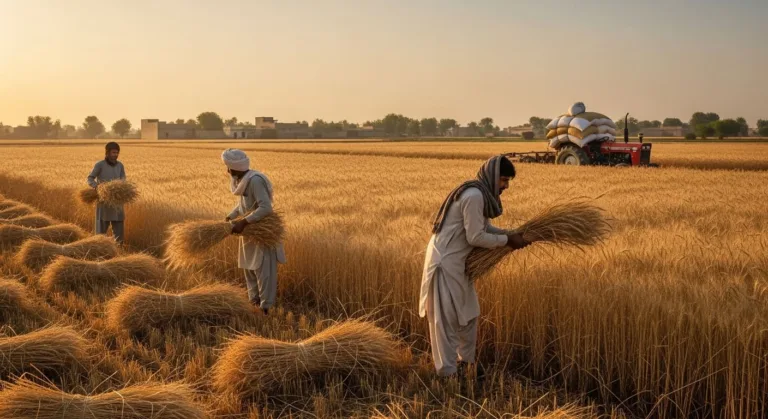
Over the next few months, farmers have to take care of their wheat like you’d take care of a pet. The plants need regular watering, protection from pests and diseases, and sometimes fertilizer to give them extra nutrients. By March or April, the wheat fields turn into a beautiful golden sea of grain that’s ready for harvest. Farmers cut down the wheat stalks, separate the grain from the rest of the plant (a process called threshing), and then the wheat is ready to be turned into flour. Places like Multanfarms.com work with farmers to ensure this wheat reaches people as fresh, high-quality grain that’s perfect for making all kinds of delicious foods.
The Challenges: Why Growing Wheat in Pakistan Isn’t Easy
Here’s where things get real. Pakistani farmers are basically like superheroes because they face some seriously tough challenges when growing wheat. The biggest problem? Water, or rather, not having enough of it. Climate change is making Pakistan’s weather more unpredictable, with some years bringing terrible droughts (long periods without rain) and other years bringing devastating floods. Imagine trying to grow a garden when you never know if it’s going to rain too much or not at all, that’s what Pakistani wheat farmers deal with constantly!
Another huge challenge is something called water stress. Even though the Indus River provides water for irrigation, there’s not always enough water to go around for all the farmers who need it. Plus, many of Pakistan’s irrigation systems are old and inefficient, meaning a lot of water gets wasted before it even reaches the fields. It’s like trying to fill a pool with a leaky hose, you lose a bunch of water along the way. Scientists estimate that Pakistan needs to modernize its water systems to keep growing enough wheat for its growing population.
Farmers also battle against pests, diseases, and changing temperatures. Wheat rust, a nasty fungal disease that can destroy entire crops, is a constant threat. Rising temperatures due to climate change mean that heat waves can strike during critical growing periods, basically stressing out the wheat plants and reducing how much grain they produce. On top of all this, many Pakistani farmers are small-scale, meaning they don’t have tons of money to invest in fancy equipment or technology that could help them overcome these challenges. Despite all these obstacles, they keep growing wheat year after year because they know their country depends on it.
Why Pakistan’s Wheat Matters to Everyone
You might be thinking, “Okay, but I don’t live in Pakistan, so why should I care about their wheat?” Great question! Pakistan’s wheat production actually affects the entire world in ways you might not expect. First off, Pakistan is home to over 220 million people, that’s more than half the population of the entire United States! If Pakistan can’t grow enough wheat to feed its own people, the country has to buy wheat from other countries, which drives up wheat prices everywhere.
When wheat prices go up globally, it affects the cost of bread, pasta, cereals, and all sorts of foods that people eat all around the world. It’s kind of like a domino effect: if one major wheat-producing country struggles, everyone feels it in their grocery bills. During times when Pakistan has had to import large amounts of wheat, it has put pressure on the global wheat market and made food more expensive for families everywhere, including possibly yours!
There’s also the humanitarian side of things. When food becomes scarce or expensive in Pakistan, millions of families struggle to afford basic meals. Food security (having reliable access to enough food) is a basic human right, and wheat is at the center of Pakistan’s food security. Organizations around the world, along with companies committed to quality grain distribution like Multanfarms.com, work to ensure that wheat reaches the people who need it most. When we understand these connections, we realize that what happens in wheat fields thousands of miles away can affect our own communities too.
The Future of Wheat in Pakistan: Hope and Innovation
Despite all the challenges, there’s actually a lot of hope for Pakistan’s wheat future! Pakistani scientists and farmers are working together to develop new varieties of wheat that can handle heat better, resist diseases, and produce more grain using less water. These improved wheat varieties are kind of like upgrading from a regular bicycle to a mountain bike, they’re better equipped to handle tough conditions.
Technology is also coming to the rescue in some pretty cool ways. Some farmers are starting to use weather apps on their phones that help them predict the best times to water their crops or protect them from storms. Drip irrigation systems, which deliver water directly to plant roots instead of spraying it everywhere, are helping farmers use water more efficiently. It’s like the difference between drinking from a water fountain (where lots of water splashes around and gets wasted) versus drinking from a straw (where almost all the water goes exactly where you want it).
There’s also a growing movement to help small-scale farmers get access to better seeds, tools, and training. When farmers learn modern techniques while still using their traditional knowledge about local conditions, amazing things can happen. Some areas have seen wheat yields (the amount of wheat produced per field) increase by 20% or more just by combining old wisdom with new science. Programs that connect farmers directly with markets also help them get fair prices for their wheat, which means they can invest more in their farms and grow even better crops next year.
Supporting Pakistan’s Wheat Farmers
Organizations and businesses are realizing that supporting Pakistani wheat farmers isn’t just charity, it’s smart for everyone. When farmers have access to good seeds, proper irrigation, and fair markets, they grow more wheat, which helps feed Pakistan’s population and stabilizes global wheat supplies. Some companies focus specifically on working with farmers to bring high-quality wheat to market while ensuring farmers get paid fairly for their hard work.
Educational programs are teaching young Pakistanis about modern farming techniques, creating a new generation of farmers who understand both traditional methods and cutting-edge agricultural science. Some students are even using drones to monitor wheat fields and identify problems before they become serious! It’s like combining the wisdom of grandparents with the tech skills of teenagers, and the results are pretty impressive.
International cooperation also plays a role. Countries and organizations share wheat varieties, technology, and expertise to help Pakistan overcome its agricultural challenges. After all, in our connected world, helping one country grow more food efficiently is actually helping ensure everyone has access to affordable, nutritious meals. It’s a perfect example of how cooperation works better than competition when it comes to something as essential as food.
Wrapping It Up: The Grain That Feeds Millions
So what have we learned about wheat in Pakistan? It’s way more than just a crop, it’s the foundation of food security for over 220 million people, a massive industry that employs millions of farmers, and a key player in the global food system. From the fertile fields of Punjab to the challenges of climate change, Pakistani wheat tells a story of resilience, innovation, and the incredible hard work of farmers who keep their country fed.
The next time you eat bread, pasta, or any wheat-based food, take a second to think about the journey those grains took to reach your plate. Somewhere in Pakistan, a farmer is working in a wheat field, battling challenges you might never face, all to grow the grain that feeds their family and millions of others. Companies like Multanfarms.com play a crucial role in ensuring this wheat reaches people as fresh, quality grain that turns into the delicious foods we enjoy every day.
Understanding where our food comes from and the challenges involved in growing it helps us appreciate what we have and inspires us to support systems that work for everyone. Pakistan’s wheat story is really humanity’s story, about people working together to feed the world despite incredible obstacles. Pretty amazing when you think about it, right? Next time you bite into that piece of toast, will you think about the Pakistani farmer who might have grown the wheat that made it possible?