Have you ever walked into a store with your parents to buy eggs and noticed the price was different from last week? Maybe you wondered why something as simple as eggs doesn’t cost the same amount all the time. Well, you’re not alone in thinking about this! In Pakistan, especially in cities like Multan, the price of desi eggs (that’s the local, farm-fresh variety) goes up and down like a roller coaster. But why does this happen, and what makes desi eggs so special anyway?
Understanding egg prices might seem like something only adults care about, but it actually affects your daily life more than you think. Those scrambled eggs you had for breakfast, the omelet your mom makes for dinner, or even the eggs used in your favorite cake all come with a price tag that keeps shifting. Today, we’re going to crack open the mystery behind desi egg prices in Pakistan and discover what makes them change. By the end of this article, you’ll know exactly why your family might pay more for eggs one month and less the next!
What Makes Desi Eggs Different from Regular Eggs?
Before we dive into prices, let’s talk about what makes desi eggs special. Desi eggs come from local chickens that are usually raised on farms in a more traditional way. Think of it like comparing homemade bread to store-bought bread. Both are good, but homemade bread has that special touch, right?
Desi chickens often roam around more freely and eat natural foods like grains, insects, and kitchen scraps. This gives their eggs a richer taste and a deeper yellow color in the yolk. Many people believe desi eggs are healthier and more nutritious than eggs from chickens raised in big commercial facilities. In Pakistan, especially in agricultural areas like Multan, desi eggs are super popular because families trust the quality and know where their food comes from.
At Multanfarms.com, for example, you can find information about locally raised chickens and the eggs they produce. These farms take pride in raising healthy birds that lay quality eggs, which is why people are willing to pay a bit more for them.
How Much Do Desi Eggs Actually Cost?
Now, let’s get to the numbers! The price of desi eggs in Pakistan can vary quite a bit depending on where you live and when you’re buying them. As of early 2025, you might see desi eggs selling anywhere from 250 to 400 rupees per dozen in different parts of the country. That’s like the difference between buying a small snack and a full meal!
In Multan and other cities in Punjab, prices tend to be a bit more stable because there are lots of local farms producing eggs. However, during certain times of the year, prices can jump up suddenly. Imagine if your favorite video game suddenly cost twice as much – that’s kind of what happens with egg prices sometimes, and people who buy them regularly definitely notice.
The interesting thing is that desi eggs usually cost more than regular commercial eggs. Why? Because they’re considered premium quality, kind of like how organic fruits cost more than regular ones at the grocery store.
Why Do Egg Prices Go Up and Down?
Here’s where things get really interesting. Egg prices don’t stay the same because lots of different factors push them up or pull them down. Let’s break down the main reasons:
Feed Costs Are a Big Deal: Chickens need to eat, just like you do! Farmers have to buy feed (chicken food) to keep their birds healthy and laying eggs. When the price of corn, wheat, or other grains goes up, it becomes more expensive to feed the chickens. Farmers then have to charge more for eggs to cover their costs. It’s like if the ingredients for your school lunch got more expensive, the cafeteria would have to raise prices too.
Seasonal Changes Matter: During hot summer months, chickens don’t lay as many eggs because the heat stresses them out. Think about how you feel less energetic on super hot days – chickens feel the same way! When there are fewer eggs available but people still want to buy them, prices naturally go up. This is basic supply and demand, a concept you might learn about in your social studies class.
Transportation and Market Demand: Getting eggs from farms to markets or stores costs money. If fuel prices increase, transportation becomes more expensive, and that cost gets added to the egg price. Plus, during special occasions like Ramadan or Eid, more people want to buy eggs for cooking special dishes, so demand increases and prices can spike.
The Journey of an Egg from Farm to Your Table
Let’s follow an egg’s journey to understand why pricing works the way it does. Imagine you’re an egg that just got laid by a happy desi chicken on a farm in Multan!
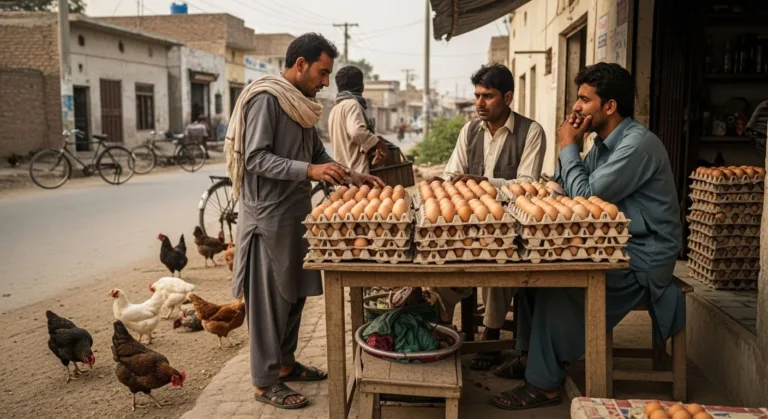
First, the farmer collects you carefully from the chicken coop early in the morning. You get checked to make sure you’re not cracked or damaged. Then, you’re packed into trays with other eggs (usually in dozens) and stored in a cool place. The farmer might sell you directly to local customers, or you might get loaded onto a truck heading to a market or shop in the city.
At each step of this journey, someone is working and needs to make a living. The farmer needs money for chicken feed and taking care of the birds. The truck driver needs payment for fuel and time. The shopkeeper needs to keep the lights on at the store. All these costs add up, which is why an egg that costs the farmer 15 rupees to produce might sell for 30 or 35 rupees at the store.
Understanding this chain helps you see why prices can’t always stay the same. If any part of the journey becomes more expensive, the final price changes too.
How Farmers and Websites Like Multanfarms.com Help
In today’s world, farmers are getting smarter about how they sell their products. Websites like Multanfarms.com connect people directly with local farms and agricultural information. This is super helpful because it cuts out some of the middlemen in the supply chain.
When you can buy eggs directly from a farm or get accurate information about local prices, everyone benefits. Farmers get a fair price for their hard work, and customers know they’re getting fresh, quality eggs without paying extra unnecessary costs. It’s a win-win situation!
These platforms also help people stay informed about current prices, so you’re not surprised when you go shopping. Some websites even explain why prices are changing, which helps families plan their grocery budgets better. Knowledge is power, especially when it comes to understanding where your food comes from and what it should cost.
What Can You Do with This Information?
You might be thinking, “Okay, this is interesting, but what does it have to do with me?” Actually, understanding egg prices teaches you valuable lessons about economics, agriculture, and smart shopping that you’ll use throughout your life.
Next time you’re at the market with your family, you can impress them by explaining why egg prices might be higher this week. You’ll understand that it’s not just random – there are real reasons behind the changes. This kind of thinking helps you become a smarter consumer who makes informed decisions.
You can also appreciate the work that goes into producing your food. Those eggs didn’t just magically appear in the store – they came from real chickens, raised by real farmers who work hard every day. When you know the story behind your food, you might waste less and value it more.
Wrapping It All Up
So, we’ve cracked the code on desi egg prices in Pakistan! We learned that desi eggs are special because they come from traditionally raised chickens that produce higher-quality eggs. We discovered that prices change based on feed costs, seasons, transportation, and demand. We followed an egg’s journey from farm to table and understood why each step adds to the final cost.
The next time you eat eggs for breakfast or see them being used in cooking, you’ll have a whole new appreciation for these simple but amazing food items. You’ll also understand that prices aren’t random – they reflect real-world costs and challenges that farmers and sellers face every day.
Here’s something to think about: How might understanding food prices help you make better choices about what you eat and how much you waste? What other foods in your daily life have similar pricing stories? Keep asking questions like these, and you’ll keep learning amazing things about the world around you!