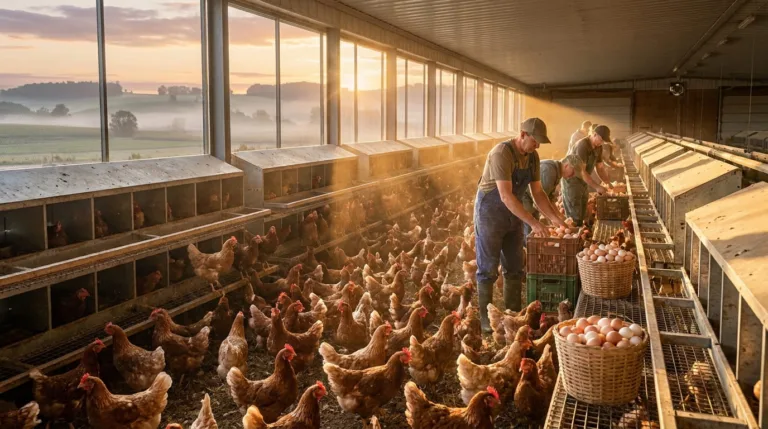
Picture this: You’re at the breakfast table, cracking open a fresh egg for your morning omelet. Have you ever stopped to think about where that egg came from? Not just “the store,” but how it actually got there in the first place? The answer involves something pretty cool called layer farming, and it’s happening on farms all around the world, including right here at Multanfarms.com in Punjab!
Layer farming isn’t about stacking things on top of each other (though that would be interesting). Instead, it’s all about raising chickens specifically for egg production. These special chickens are called “layers,” and they’re basically the MVPs of the egg world. They spend their days doing what they do best, laying eggs that eventually end up on our plates. But there’s way more to this process than you might think. From the moment a baby chick hatches to the day it becomes a full-grown egg-laying superstar, there’s a whole science and art behind keeping these birds healthy, happy, and productive.
In this article, we’ll crack open the world of layer farming (pun intended) and explore everything from what makes a good layer chicken to how farmers create the perfect environment for egg production. Trust me, you’ll never look at your breakfast the same way again!
What Exactly Is a Layer Chicken?
So, what makes a layer chicken different from any other chicken? Great question! Not all chickens are created equal. Some chickens, called broilers, are raised for meat. But layer chickens are bred specifically for one superpower: laying tons of eggs throughout their lives.
Think of it like this. If chickens were students, broiler chickens would be the athletes focused on building muscle, while layer chickens would be the marathon runners built for endurance and consistency. Layer breeds like the White Leghorn, Rhode Island Red, and ISA Brown can lay anywhere from 250 to 300 eggs per year. That’s almost an egg every single day! Imagine being that productive at anything you do.
These chickens start their egg-laying journey when they’re around 18 to 20 weeks old, which is pretty much their teenage years in chicken time. Once they start, they can keep laying eggs for about two to three years, though their productivity does slow down as they get older (kind of like how your phone battery doesn’t last as long after a couple of years).
Creating the Perfect Home for Layers
You can’t just stick chickens in any old space and expect them to produce quality eggs. Layer farming requires creating an environment where chickens feel comfortable, safe, and healthy. At farms like Multanfarms.com, this means paying attention to every little detail.
First up, there’s housing. Modern layer farms use special buildings called poultry houses that protect chickens from extreme weather, predators, and diseases. These houses are designed with proper ventilation so fresh air keeps circulating, temperature control systems that keep things neither too hot nor too cold, and lighting that mimics natural daylight patterns. Why lighting? Because chickens need about 14 to 16 hours of light each day to keep their egg production at its peak. It’s like how you feel more energetic on sunny days versus gloomy ones.
Inside these houses, chickens have different living arrangements. Some farms use cage systems where chickens have their own individual spaces, while others prefer cage-free systems where birds can roam around in a larger area. There’s also something called free-range farming, where chickens can actually go outside. Each system has its pros and cons, but the goal is always the same: keeping the chickens healthy and stress-free.
Feeding Time: The Secret Recipe for Great Eggs
Here’s something you might not know: what a chicken eats directly affects the quality of the eggs it produces. That’s why nutrition is absolutely crucial in layer farming. These birds need a carefully balanced diet that includes proteins, carbohydrates, vitamins, minerals, and especially calcium.
Why calcium? Well, think about what an eggshell is made of. It’s basically calcium carbonate, the same stuff in chalk and seashells. A layer chicken needs to build a strong shell around each egg it produces, and that requires a lot of calcium. Without enough calcium in their diet, chickens would lay eggs with thin, fragile shells that crack easily, or they might even stop laying altogether.
The typical layer feed includes ingredients like corn, soybean meal, wheat, fish meal, and special vitamin and mineral supplements. At Multanfarms.com and similar operations, nutritionists actually create custom feed formulas based on the chickens’ age and production level. Young layers need different nutrition than older birds, just like how teenagers need different foods than adults to support their growing bodies. Farmers also make sure fresh, clean water is always available because chickens need plenty of water to produce eggs (an egg is about 75% water, believe it or not).
The Daily Routine: A Day in the Life
Ever wondered what a typical day looks like on a layer farm? It’s actually pretty fascinating. The day usually starts early (we’re talking 5 or 6 AM) when farmers check on the flock. They walk through the poultry houses looking for any sick or injured birds, checking that all the equipment is working properly, and making sure the feeders and water systems are functioning.
Throughout the day, eggs are collected multiple times. Modern farms often use automated egg collection systems where conveyor belts gently transport eggs from the nesting areas to a central collection point. This reduces the chance of eggs getting cracked or dirty. Once collected, eggs are cleaned, sorted by size, and stored in cool temperatures until they’re ready to be packaged and sent to stores.
But it’s not just about collecting eggs. Farmers also monitor the temperature and humidity in the poultry houses, clean the facilities regularly, and observe the chickens’ behavior. Healthy chickens are active, alert, and curious. If something seems off, like chickens being too quiet or not eating normally, experienced farmers can spot these warning signs early and take action.
Health and Wellness: Keeping the Flock Strong
Just like humans, chickens can get sick, and when you have thousands of birds living together, diseases can spread quickly. That’s why health management is a top priority in layer farming. Preventive care is way better than trying to treat a whole flock after they get sick.
Vaccination programs are essential. Baby chicks receive vaccines that protect them from common poultry diseases like Newcastle disease, infectious bronchitis, and Marek’s disease. Think of it like the vaccines you get at the doctor’s office, they train the chickens’ immune systems to fight off these illnesses.
Biosecurity measures are also super important. This means controlling who and what enters the farm to prevent bringing in diseases. Farmers and workers typically wear special protective clothing, use disinfectant foot baths, and follow strict hygiene protocols. It might seem extreme, but when you’re responsible for thousands of birds and the eggs that feed families, you can’t be too careful.
The Business Side: Why Layer Farming Matters
Layer farming isn’t just about raising chickens, it’s also a serious business that provides food and income for millions of people worldwide. In countries like Pakistan, where Multanfarms.com operates, layer farming plays a crucial role in food security. Eggs are one of the most affordable and nutritious protein sources available, containing all nine essential amino acids our bodies need.
For farmers, layer farming can be profitable when done right. However, it requires significant investment in infrastructure, equipment, feed, and health care. Successful farmers need to understand not just animal care but also economics, market trends, and business management. They have to calculate costs carefully, from how much each chicken eats per day to electricity bills for running the climate control systems.
The egg industry also creates jobs beyond the farm itself. There are hatcheries that produce baby chicks, feed mills that manufacture chicken feed, veterinarians who specialize in poultry health, transportation companies that deliver eggs to stores, and much more. It’s a whole interconnected system that supports communities and economies.
The Future of Layer Farming
As our world changes, so does layer farming. Farmers are constantly looking for ways to improve efficiency, animal welfare, and environmental sustainability. Some exciting innovations include precision farming technology that uses sensors and artificial intelligence to monitor each chicken’s health and productivity, alternative feed ingredients that reduce costs and environmental impact, and improved breeding programs that create even more productive and disease-resistant layer breeds.
There’s also growing interest in sustainable practices. Many farms are installing solar panels to generate their own electricity, using chicken waste as fertilizer or converting it into biogas for energy, and implementing water recycling systems. At forward-thinking farms like Multanfarms.com, these innovations help create a more sustainable future while still producing the high-quality eggs consumers want.
Wrapping It All Up
So there you have it, the incredible world of layer farming! From specialized chickens bred for maximum egg production to the carefully controlled environments where they live, there’s so much more happening behind your breakfast eggs than you probably realized. Layer farming combines animal science, nutrition, technology, and business skills to deliver fresh, nutritious eggs to millions of people every day.
Next time you crack open an egg, take a moment to appreciate the journey it took to get to your plate. Behind that simple egg is a dedicated farmer who woke up before dawn, a carefully formulated diet, a climate-controlled house, and a hardworking hen that did what she does best. Pretty amazing when you think about it, right?
What aspect of layer farming surprised you the most? Would you ever want to visit a layer farm to see the process in action?