Have you ever gone to the market with your parents and noticed that some eggs cost way more than others? You might have seen regular white eggs sitting in neat trays for a pretty affordable price, and then right next to them, smaller brownish eggs labeled “desi eggs” with a price tag that makes you do a double-take. So what’s the deal? Why is the desi egg rate so different from regular eggs, and are they really worth the extra money?
Whether you’re helping your family shop smart or you’re just curious about why everyone keeps talking about desi eggs, you’re in the right place. In this article, we’ll break down everything about the desi egg rate, what makes these eggs special, why their prices go up and down, and how to make sure you’re getting the real deal.
Let’s crack this topic wide open!
What Exactly Are Desi Eggs?
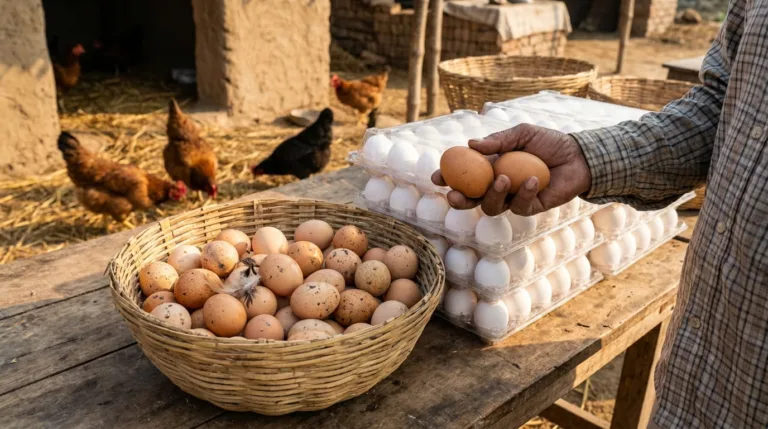
First things first, let’s clear up what “desi eggs” actually means. The word “desi” comes from the Urdu/Hindi word meaning “local” or “native.” So desi eggs are eggs laid by local, free-range hens, not the commercially raised chickens you find in big poultry farms.
These desi hens roam around freely in backyards, fields, and villages. They eat natural food like insects, seeds, grains, and whatever they find while scratching around in the dirt. Think of it like the difference between a home-cooked meal made with fresh ingredients versus fast food, both fill you up, but one feels a lot more natural.
Commercial farm eggs (sometimes called “farmi eggs”) come from hens that live in cages and eat specially formulated feed. They’re designed to lay eggs quickly and in large quantities. Desi hens, on the other hand, lay fewer eggs but many people believe those eggs taste better and are more nutritious.
The Current Desi Egg Rate: What Are You Actually Paying?
Now let’s talk numbers. The desi egg rate in Pakistan varies depending on where you live and the time of year. Generally, here’s what you can expect:
- Desi eggs: Rs. 35 to Rs. 50 per egg (or Rs. 400 to Rs. 600 per dozen)
- Farm eggs (farmi): Rs. 15 to Rs. 25 per egg (or Rs. 180 to Rs. 300 per dozen)
That’s almost double the price! In cities like Multan, Lahore, and Karachi, the desi egg rate tends to be on the higher side because demand is strong but supply is limited. In rural areas where people keep their own chickens, you might find them a bit cheaper.
Compared to global prices, Pakistan actually has some of the lowest egg prices in the world, with the average being around $1.15 per dozen for regular eggs. But desi eggs are a premium product everywhere they’re sold.
Why Is the Desi Egg Rate So High?
You might be thinking, “It’s just an egg! Why does it cost so much more?” That’s a fair question. Here are the main reasons:
1. Lower production: A desi hen lays only about 80 to 120 eggs per year. A commercial farm hen? She can lay 250 to 300 eggs per year! Since desi hens produce fewer eggs, each one naturally costs more. It’s like comparing handmade shoes to factory-made ones, less quantity means higher price.
2. Higher raising costs: Desi chickens roam freely and need more space. Farmers can’t keep thousands of them in a small building like commercial operations do. More space and more time equals more expense.
3. Natural feeding: These hens eat natural food instead of cheap commercial feed. Better food for the chicken means a more expensive egg for you.
4. High demand, low supply: Everyone wants desi eggs because of their taste and perceived health benefits, but there simply aren’t enough to go around. When lots of people want something that’s hard to find, the price goes up. It’s basic supply and demand!
Desi Eggs vs. Farm Eggs: Is There Really a Difference?
This is where things get interesting. People have strong opinions about this! Let’s look at what science actually says:
Appearance: Desi eggs are usually smaller with a darker, brownish shell. The yolk inside is typically a deep orange or golden color, compared to the pale yellow yolk of farm eggs. If you crack both into a pan, you’ll notice the difference immediately.
Taste: Most people agree that desi eggs have a richer, more flavorful taste. It’s like comparing a tomato from your garden to one from the supermarket, technically the same thing, but the flavor is on another level.
Nutrition: Here’s where it gets tricky. Some studies suggest that free-range desi eggs contain higher nutrient density, including better fats and vitamins. However, other research shows that the basic protein, vitamin, and mineral content is quite similar between both types. The main difference lies in the breed of the hen and what it eats, not necessarily a massive nutritional gap.
Size: Commercial eggs are noticeably bigger (around 59 grams on average) compared to desi eggs (which can be as small as 40 grams). So you’re getting less egg per piece, but many people feel the quality makes up for the smaller size.
What Makes the Desi Egg Rate Go Up and Down?
The desi egg rate isn’t fixed, it changes throughout the year. Here’s what affects it:
- Seasons: In winter, hens lay fewer eggs, so prices go up. In spring and summer, production increases and prices may drop slightly.
- Festivals and events: During Ramadan and wedding season, demand for desi eggs skyrockets because people use them in special dishes and desserts. More demand means higher prices.
- Feed costs: When grain prices increase, it costs more to keep chickens, and that cost gets passed on to you.
- Location: Urban areas like Multan, Islamabad, and Karachi have higher rates because eggs need to be transported from rural farms, adding delivery costs.
- Disease outbreaks: If bird flu or other diseases hit poultry populations, supply drops dramatically and prices can spike overnight.
How to Make Sure You’re Getting Real Desi Eggs
Here’s a problem many shoppers face: some sellers label regular farm eggs as “desi” to charge higher prices. That’s not cool! Here are some tips to spot the real thing:
- Check the size: Real desi eggs are noticeably smaller than farm eggs.
- Look at the shell: Desi egg shells are often slightly rougher and have a more natural, uneven color.
- Crack it open: The yolk should be deep orange, not pale yellow. A rich golden yolk is a good sign.
- Buy from trusted sources: This is the most reliable method. Purchase from local farmers you know, trusted village suppliers, or reputable stores like Multan Farms that source directly from verified local farms.
- Ask questions: Don’t be shy! Ask the seller where the eggs come from and how the hens are raised.
Tips for Getting the Best Desi Egg Rate
Nobody wants to overpay, right? Here are some smart shopping tips:
- Buy in bulk: Many sellers offer a better per-egg rate if you buy a full dozen or more.
- Go directly to farmers: Cut out the middleman and buy straight from someone who raises desi chickens. You’ll often get fresher eggs at a lower price.
- Shop seasonally: Prices tend to be lower in warmer months when hens are laying more.
- Compare prices: Don’t just buy from the first seller you see. Check a few options, whether it’s local markets or online stores.
- Consider subscriptions: Some suppliers, including online platforms like Multan Farms, offer regular delivery options that can save you money over time.
Why Understanding the Desi Egg Rate Matters
You might think, “Why should I care about egg prices?” Well, here’s the thing: understanding how food prices work helps you become a smarter consumer. When you know why something costs what it does, you can make better decisions about what to buy and where to buy it.
Plus, the desi egg market supports small-scale farmers and traditional farming practices. When you buy genuine desi eggs at a fair rate, you’re supporting local families who raise chickens the natural way, without hormones or artificial shortcuts.
So next time you’re at the breakfast table enjoying a perfectly fried egg with a golden orange yolk, you’ll know exactly why that little egg is worth what your family paid for it. And here’s something to think about: would you rather have two cheap eggs or one really good one? The answer might just depend on your taste buds!