Have you ever eaten a fish fillet at a restaurant and wondered where that fish actually came from? You might picture a fisherman on a boat out in the ocean, casting a net into the waves. But here’s a surprising fact: nearly half of all the fish people eat around the world today didn’t come from the ocean at all. They were raised on a farm, just like chickens, cows, and vegetables. Welcome to the world of commercial fish farming, one of the fastest-growing food industries on the planet.
It might sound a little unusual at first. A fish farm? How does that even work? But once you dig into it, you’ll realize it’s actually a fascinating blend of science, nature, and smart business. And as the world’s population keeps growing, it’s becoming more important than ever before.
In this article, we’ll explore what commercial fish farming really is, how it works, why it matters, and what the future might look like for this incredible industry.
So, What Exactly Is Commercial Fish Farming?
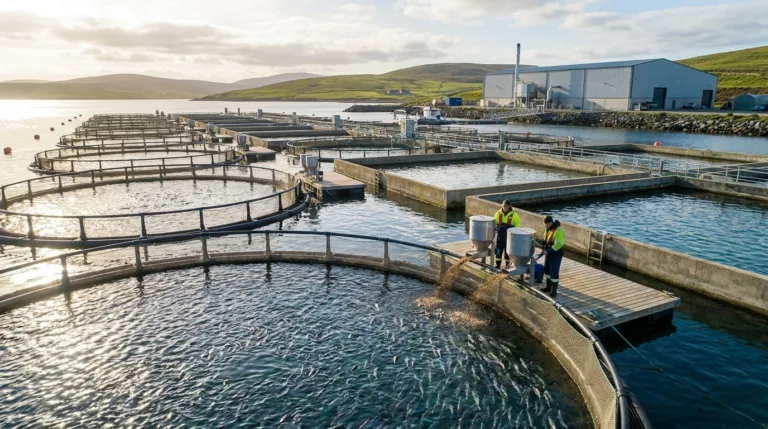
Commercial fish farming, also called aquaculture, is the practice of raising fish in controlled environments specifically to sell them as food. Instead of going out to catch fish from rivers, lakes, or the ocean, farmers breed and grow fish in specially designed tanks, ponds, or enclosed areas of water.
Think of it like this: just as a dairy farmer doesn’t go out hunting for cows but instead raises them on a farm, a fish farmer raises fish from eggs all the way to market size, right there in a controlled setting. It sounds simple, but there’s a lot more going on behind the scenes.
How Does Commercial Fish Farming Actually Work?
The process starts with breeding. Fish farmers select healthy adult fish to produce eggs, which are then carefully hatched in a nursery area. The tiny baby fish, called fry, are kept in special tanks where water quality, temperature, and oxygen levels are carefully monitored. It’s a bit like taking care of a nursery full of newborns, every little detail matters.
As the fish grow, they’re moved into larger tanks or ponds and fed a controlled diet to make sure they grow healthy and strong. Farmers track their growth closely, making sure the fish aren’t overcrowded and that the water stays clean.
Here’s a quick look at the main stages:
- Spawning, breeding adult fish to produce eggs
- Hatching, carefully incubating eggs until they hatch into fry
- Nursery stage, growing fry in protected tanks
- Grow-out phase, raising fish to their full marketable size
- Harvesting, collecting the fish and preparing them for sale
Every stage requires attention and expertise, and that’s what makes commercial fish farming such a skilled profession.
What Kinds of Fish Are Raised on Commercial Farms?
You might be surprised by just how many species are farmed commercially around the world. Some of the most common ones include:
- Salmon, one of the most popular farmed fish globally, especially in Norway and Chile
- Tilapia, a mild, affordable fish widely farmed in Asia, Africa, and Latin America
- Catfish, hugely popular in South Asia and the southern United States
- Trout, often farmed in cold, freshwater environments
- Shrimp, technically not a fish but farmed in massive quantities across coastal regions
In Pakistan, fish farming is growing rapidly too. Species like Rohu, Catla, and Grass Carp are commonly farmed in ponds across Punjab and Sindh. At Multanfarms.com, the focus on agricultural development connects directly to this growing movement toward sustainable food production right here at home.
Why Does Commercial Fish Farming Matter So Much?
Here’s a big-picture question: did you know that over 3 billion people in the world rely on fish as one of their main sources of protein? That’s nearly half the planet. Wild fish populations in oceans and rivers simply can’t keep up with that kind of demand, especially as overfishing continues to deplete natural fish stocks.
Commercial fish farming steps in as a solution. Think of wild fishing like withdrawing money from a bank account without ever putting any back. Eventually, the account runs dry. Fish farming, on the other hand, is like making controlled, responsible withdrawals while constantly replenishing the supply.
The benefits of commercial fish farming go beyond just feeding people:
- Reduces pressure on wild fish populations, giving natural ecosystems a chance to recover
- Creates jobs in rural and coastal communities
- Provides affordable protein to millions of families who might not otherwise afford seafood
- Supports economic growth, especially in developing countries like Pakistan
- Allows for consistent supply throughout the year, regardless of weather or seasonal changes
Are There Any Challenges to Commercial Fish Farming?
Of course, no system is perfect. Commercial fish farming does come with some challenges that farmers and scientists are actively working to solve.
Water quality is one of the biggest concerns. Fish produce waste, and if water isn’t properly cleaned and filtered, it can become toxic to the fish living in it. Many modern farms use advanced filtration systems to tackle this, but it takes investment and expertise.
Disease is another challenge. When fish are kept in close quarters, illnesses can spread quickly, similar to how a cold moves through a classroom fast when everyone is sitting close together. Farmers use careful monitoring and sometimes preventive treatments to keep their fish healthy.
There’s also the question of environmental impact. Poorly managed fish farms can sometimes release pollutants into nearby waterways. That’s why responsible, well-regulated fish farming practices are so critical to making the industry sustainable in the long run.
The Future of Commercial Fish Farming
Here’s where things get really exciting. Scientists and farmers are developing new technologies that are making commercial fish farming smarter, cleaner, and more efficient every year.
Recirculating Aquaculture Systems (RAS), which basically means closed-loop water systems that filter and recycle water continuously, are becoming more popular. These systems waste almost no water and can be set up almost anywhere, even in the middle of a city.
Integrated Fish Farming is another innovation gaining traction, especially in South Asia. In this system, fish ponds are combined with crop farming or poultry, so the waste from one becomes fertilizer or food for another. It’s nature’s own recycling system, redesigned for modern agriculture.
With growing interest in food security and sustainable agriculture at platforms like Multanfarms.com, commercial fish farming represents a huge opportunity for farmers, entrepreneurs, and communities across Pakistan and beyond.
The Big Picture
Commercial fish farming is so much more than just raising fish in a pond. It’s a powerful answer to one of the world’s biggest challenges: how do we feed a growing population without destroying the planet in the process?
From the tiny fry hatching in a nursery tank to the fresh fish fillet on someone’s dinner plate, every step in the process reflects careful planning, science, and a deep understanding of nature. Whether it’s a massive salmon farm in Norway or a modest carp pond in Punjab, fish farming is shaping the future of food.
So the next time you sit down to a meal with fish on the plate, think about the incredible journey it took to get there. And here’s a question worth pondering: with all the land and water available in Pakistan, what role do you think local fish farming could play in solving food shortages in your own community?