Imagine waking up every morning to the sound of cheerful bleating and the sight of curious, friendly animals climbing on everything in sight. That’s what life looks like on a goats farm, and it’s way more exciting than you might think! Goats are some of the most interesting animals on the planet, and the farms that raise them are full of activity, hard work, and amazing products.
Did you know that goats were one of the very first animals humans ever domesticated? That happened around 10,000 years ago in the mountains of Iran. Since then, people all over the world have been raising goats for food, fiber, and so much more. Today, goats farms are a vital part of agriculture everywhere, from small family operations to large commercial setups.
In this article, we’re going to take a behind-the-scenes tour of a goats farm. You’ll discover what kinds of goats are raised, what they eat, what they produce, and why goat farming is so important. Get ready, because you might just fall in love with these amazing animals!
What Exactly Is a Goats Farm?
A goats farm is a place where goats are raised in a managed environment to produce useful products for people. Just like how a dairy farm focuses on cows and milk, a goats farm can focus on several different things depending on what the farmer wants to produce.
There are three main types of goats farms. Dairy goat farms focus on producing milk, meat goat farms raise goats for their meat, and fiber goat farms keep goats for their wool and hair. Some farms even do all three! Think of it like a convenience store that sells snacks, drinks, and household items all under one roof.
Each type of farm has its own routines, breeds, and challenges. But no matter what kind of farm it is, one thing stays the same: goats need daily care, attention, and the right environment to thrive.
Getting to Know the Goats: Breeds That Farmers Love
Not all goats are the same, and that’s actually one of the coolest things about goat farming. There are over 300 breeds of goats in the world, and each one has its own special traits.
The Nubian goat is one of the most popular dairy breeds. It’s known for producing rich, creamy milk that’s perfect for making cheese and yogurt, and its long, floppy ears make it look almost like a little dog! Then there’s the Boer goat, which is a top choice for meat farms. Originally from South Africa, Boer goats are large, sturdy, and grow quickly, making them very efficient to raise.
If you’re into fashion, you’ll appreciate the Angora goat. This breed produces mohair, a silky, shiny fiber used to make luxury clothing and blankets. And in colder parts of the world, Cashmere goats are prized for producing the incredibly soft fiber you’ve probably seen in warm sweaters and scarves.
What’s on the Menu? How Goats Really Eat
You’ve probably heard the myth that goats will eat absolutely anything, even tin cans! The truth is a little different. Goats are actually browsers, not grazers. Unlike cows, which stick close to the ground chewing grass, goats prefer to nibble on leaves, shrubs, bark, and a variety of plants at different heights. Think of them like the adventurous eaters of the animal world.
On a goats farm, the animals are usually fed a balanced diet that includes hay, fresh grass, and grain. Hay is like the bread and butter of a goat’s diet, providing essential nutrients and fiber. Grain adds extra energy, especially for pregnant or nursing goats that need a little more fuel.
Fresh, clean water is just as important as food. A goat can drink anywhere from half a gallon to four gallons of water per day, depending on its size and the weather. Keeping goats healthy is a lot like taking care of an athlete, you need to make sure they’re eating right and staying hydrated every single day!
The Amazing Products That Come From a Goats Farm
Here’s where things get really interesting. A goats farm produces a surprising variety of useful products that you probably use or enjoy more often than you realize.
Goat milk is one of the most popular products. It’s easier to digest than cow’s milk for many people, and it’s used to make delicious cheeses like feta and chèvre. In countries like Pakistan, India, and across the Middle East, goat milk has been a staple food for thousands of years. The next time you enjoy a slice of feta on your salad, there’s a good chance a goat had something to do with it!
Goat meat, also known as chevon in many regions, is actually the most widely consumed meat in the world. Many cultures, including South Asian, African, and Middle Eastern cuisines, use goat meat as a key ingredient in traditional dishes. And of course, goat fiber like mohair and cashmere ends up in some of the softest, most luxurious clothing on the market.
A Day in the Life on a Goats Farm
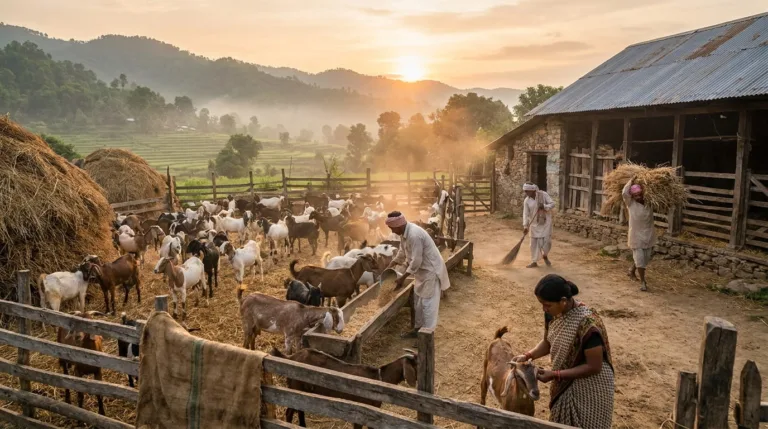
Running a goats farm isn’t just about the animals, it’s a full-time commitment that requires planning, patience, and a lot of energy. Farmers typically start their day before sunrise, feeding the animals, checking their health, and making sure the pens are clean.
Milking is one of the most important daily tasks on a dairy goat farm. Most dairy goats are milked twice a day, once in the morning and once in the evening. Each goat needs to be milked at roughly the same time every day, just like how you probably function better when you stick to a routine!
Goats are also incredibly social animals. They form strong bonds with each other and even with their human caretakers. A lonely goat is often an unhappy goat, so farmers make sure the animals always have company. It’s a bit like how most people feel better when they’re surrounded by friends rather than left alone.
Why Goat Farming Matters More Than You Think
Goat farming plays a huge role in global food security and local economies. In many communities, a single goat can be a family’s most valuable resource, providing milk, meat, and steady income. Goats also adapt well to harsh environments where other livestock struggle, making them perfect for regions with dry climates or limited resources.
At Multanfarms.com, the focus is on sustainable and responsible goat farming practices that benefit both the animals and the community. Good farming isn’t just about profit, it’s about creating a system that works for people, animals, and the environment together.
Goat farming also supports local businesses, from feed suppliers and veterinarians to cheesemakers and textile producers. The ripple effect of one thriving farm can reach much further than you’d expect.
The Big Picture
So the next time you see a goat, don’t just think of a funny animal that headbutts things. Think about the incredible world that surrounds it, the farmers who wake up at dawn, the products that reach your table, and the communities that depend on these remarkable animals.
Goats farms are proof that dedicated, thoughtful farming can have a massive impact on the world. Whether it’s a cold glass of goat milk, a warm cashmere sweater, or a hearty dish of goat curry, these animals have been serving humanity for thousands of years, and they’re not slowing down anytime soon.
So here’s something to think about: if you could run your own goats farm, what would you focus on, dairy, meat, or fiber? The answer might say a lot about your future!