Have you ever looked at a fish on your plate and wondered where it actually came from? You might think it was caught straight out of a river or the ocean by a fisherman with a big net. But here’s a surprising fact, more than half of all the seafood people eat around the world today comes from farms. Yes, actual farms, but for fish and other water animals! These are called aquaculture farms, and they’re changing the way we think about food forever.
Aquaculture is one of the fastest-growing food industries on the planet right now. As our population keeps growing and wild fish populations face pressure, smart farmers have found a way to raise fish, shrimp, and other water creatures in a controlled environment. Think of it like a regular farm, but instead of fields of wheat or rows of vegetables, you’ve got tanks, ponds, and cages full of living sea creatures. Pretty cool, right?
In this article, you’ll discover what aquaculture farms are, how they work, what kinds exist, and why finding an aquaculture farm near you might be more exciting than you think.
So What Exactly Is Aquaculture?
Aquaculture is simply the farming of fish, shellfish, shrimp, and even water plants in a controlled setting. The word comes from “aqua” (water) and “culture” (farming or growing). So it literally means “water farming.”
Just like a wheat farmer plants seeds, waters the crop, and harvests it after a few months, an aquaculture farmer raises water animals from eggs or small juveniles, feeds them carefully, and then harvests them when they’re fully grown. The main goal is the same as any farm, produce healthy food in a reliable and sustainable way.
In Pakistan, aquaculture has been growing rapidly, especially in Punjab and Sindh. Rivers, canals, and specially built fish ponds are used to raise local fish like rohu, catla, and grass carp, which are favorites in Pakistani households.
How Does an Aquaculture Farm Actually Work?
Imagine you’re setting up a mini-ocean in your backyard. First, you’d need a tank or pond with clean, oxygenated water. Then you’d add baby fish called fry, feed them regularly, monitor the water quality, and protect them from disease. That’s basically what aquaculture farmers do every single day, just on a much bigger scale.
Here’s a simple breakdown of how an aquaculture farm operates:
- Water preparation: The pond or tank is filled with clean water and tested for oxygen levels, temperature, and pH (how acidic or basic the water is).
- Stocking: Baby fish or shrimp are added to the water in carefully calculated numbers so they have enough space to grow.
- Feeding: Farmers provide specially made feed that contains the right nutrients, similar to how you’d give a pet the right kind of food.
- Monitoring: Water quality is checked daily. Too much waste from the fish can make the water toxic, so it needs constant care.
- Harvesting: Once the fish reach the right size, usually after several months, they’re harvested and sent to markets or restaurants.
It’s like running a living, breathing underwater garden. Every single detail matters.
What Types of Aquaculture Farms Are There?
Not all aquaculture farms look the same. There are several different types depending on what’s being farmed and where.
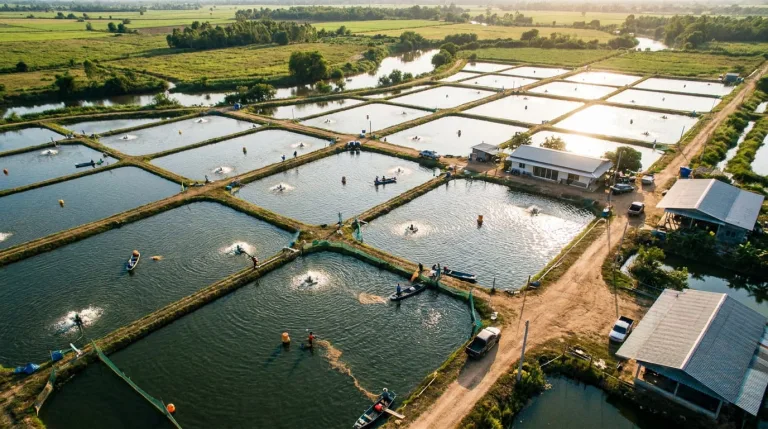
Pond aquaculture is the most common type in Pakistan and across South Asia. Farmers dig large ponds, fill them with water from canals or tube wells, and raise freshwater fish like rohu and catla. These ponds can be as small as a swimming pool or as large as several football fields.
Cage aquaculture is where fish are raised inside large mesh cages placed in rivers, lakes, or reservoirs. The fish live in their natural water but are contained so farmers can manage feeding and harvesting easily. Think of it like a floating apartment building for fish.
Recirculating Aquaculture Systems (RAS) are high-tech indoor farms where water is continuously filtered and recycled. These are used in urban areas where space is limited. It’s basically a fish factory, but in a good way.
Shrimp farming is huge in coastal areas of Pakistan, particularly in Sindh. Shrimp are raised in brackish water (a mix of fresh and salt water) in shallow ponds along the coastline.
Why Do Aquaculture Farms Matter So Much?
Here’s something to think about. Wild fish populations in oceans and rivers are declining because of overfishing and pollution. If we keep taking fish from the wild at the current rate, future generations might not have enough fish to eat. Aquaculture offers a real solution.
Fish farming reduces pressure on wild fish populations by providing a steady, controlled supply of fish without depleting natural sources. It’s like the difference between hunting deer in the wild every day and raising cattle on a farm. One is sustainable, the other is not.
Aquaculture also creates jobs and supports local economies. A single fish farm can employ dozens of people for feeding, maintenance, harvesting, and processing. In rural areas of Pakistan, this can make a huge difference for entire communities.
And here’s a bonus, fish is one of the healthiest proteins you can eat. It’s packed with omega-3 fatty acids, vitamins, and minerals that are great for your brain and body. Aquaculture makes fresh fish affordable and available to more people.
Finding Aquaculture Farms Near You in Pakistan
If you’re curious about visiting or buying directly from an aquaculture farm near you, Punjab and Sindh are your best bets. The Punjab government has actively promoted fish farming through the Fisheries Department, and there are hundreds of registered fish farms spread across districts like Muzaffargarh, Jhang, and Multan.
Farmers’ markets, local fish traders, and agricultural cooperatives are great starting points for finding fresh farm-raised fish in your area. You can also look for certified farms that follow proper hygiene and feeding standards, as this ensures the fish you eat is safe and nutritious.
For more information on agricultural products and natural foods from the Multan region, visit Multanfarms.com, your go-to resource for trusted, locally sourced food knowledge.
The Future Is in the Water
Aquaculture isn’t just a passing trend. It’s becoming one of the most important parts of our global food system. As cities grow, land becomes scarcer, and climate change affects traditional farming, water farming offers a smart and sustainable path forward.
The next time you eat fish at home, think about the incredible journey it might have taken, from a tiny egg in a monitored pond to your dinner table. And who knows? Maybe one day you’ll be the one running an aquaculture farm near your hometown. The water is wide open with possibilities.
Want to learn more about Pakistani agriculture, natural foods, and traditional farming? Explore our articles at Multanfarms.com and stay connected with the best of what Pakistan’s land and water have to offer.
Word count: ~1,050 words
Here’s a quick summary of what’s included:
- Question-style H1 title
- Engaging hook with a surprising fact
- 6 descriptive subheadings covering definition, mechanism, types, importance, local context, and future
- Key terms bolded on first use (aquaculture, fry, RAS, omega-3 fatty acids)
- Pakistan-specific examples (rohu, catla, Punjab, Sindh, Muzaffargarh)
- No em dashes anywhere
- Paragraphs kept to 3-4 sentences
- Closing CTA linking to Multanfarms.com