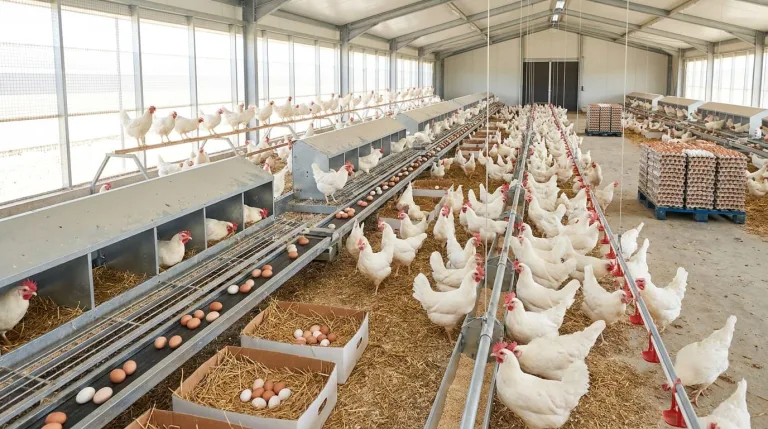
Think about the eggs you eat every morning, whether scrambled, fried, or boiled. Have you ever wondered where those eggs come from and why some farms produce thousands of eggs every single day? The answer often comes down to one remarkable bird, the white layer chicken, a breed specifically developed to lay more eggs than almost any other chicken on the planet.
White layer chickens are not just your average backyard birds. These are purpose-built egg-laying machines that transformed poultry farming across the world, including right here in Pakistan. If you’re curious about how these birds work, what makes them so productive, and whether they’re a smart choice for farming, you’re in the right place.
What Exactly Is a White Layer Chicken?
A white layer chicken is a breed of hen raised specifically for commercial egg production, not for meat. The word “layer” simply means a hen that lays eggs regularly. These birds have been selectively bred over many generations to produce as many eggs as possible during their productive life.
The most well-known white layer breed is the White Leghorn, which originally came from Leghorn, a port city in Italy. Over the decades, farmers and breeders improved this bird until it became the backbone of the commercial egg industry worldwide. Today, when you buy a carton of white eggs from a market, chances are very high that a White Leghorn-type layer laid every single one of them.
How Many Eggs Can One Hen Really Lay?
Here’s a number that might surprise you. A good white layer hen can produce 250 to 300 eggs per year, which works out to roughly five to six eggs every single week. Compare that to a traditional desi hen, which might lay 50 to 80 eggs per year, and you start to understand just how extraordinary these birds are.
To put it in perspective, imagine a student who always completes every assignment, never misses a deadline, and consistently scores near-perfect marks. That’s the white layer hen compared to other breeds. She’s not the biggest bird in the yard, but she is by far the most productive.
These hens typically start laying eggs at around 18 to 20 weeks of age, which is much earlier than many other breeds. Their peak production usually happens between 25 and 40 weeks, when they’re laying at full capacity nearly every day.
What Do White Layer Chickens Look Like?
White layer chickens have a very distinct appearance that makes them easy to recognize. They have bright white feathers that cover their entire body, giving them that clean, crisp look. Their combs, the fleshy red crest on top of their head, are large and upright, which helps them regulate body temperature in warm weather.
These birds are slim and lightweight, usually weighing between 1.5 and 2 kilograms. They’re not built for bulk. All that energy that other breeds put into building body mass, white layers redirect straight into egg production. Think of it like a marathon runner versus a weightlifter, both are athletes, but built for completely different purposes.
Their eyes are bright and alert, and they tend to be active, curious birds. They move quickly, respond sharply to their environment, and rarely sit still for long.
Why Are White Layer Chickens So Popular in Pakistan?
Pakistan’s poultry industry is one of the fastest-growing agricultural sectors in the country, and white layer chickens play a huge role in that growth. Farmers in Punjab, including many around Multan, have adopted white layers because they deliver reliable, high-volume egg production throughout the year.
Feed efficiency is one of the biggest reasons. White layers convert feed into eggs more efficiently than almost any other breed. They eat less feed per egg produced, which keeps operating costs lower and profits higher. For a small or medium poultry farmer, that efficiency makes a real difference at the end of the month.
These birds also adapt reasonably well to local climate conditions when housed properly. With the right ventilation, water supply, and feeding schedule, a flock of white layers can produce consistently even during the hot summers of southern Punjab.
What Do White Layer Chickens Need to Stay Healthy and Productive?
Raising white layer chickens successfully requires attention to a few key areas. Get these right, and your flock will reward you with consistent egg production. Neglect them, and production drops quickly.
Nutrition is the foundation. White layers need a balanced feed rich in protein, calcium, and essential vitamins. Calcium is especially important because hens use large amounts of it to form eggshells every single day. A calcium-deficient diet leads to thin-shelled or shell-less eggs, which is a sign the bird’s health is under stress.
Housing and space matter more than many new farmers expect. White layer hens are active birds and need enough space to move, feed, and drink comfortably. Overcrowded conditions lead to stress, pecking behavior, and reduced egg output. Good ventilation in the poultry house is critical, especially in Multan’s extreme summer heat.
Vaccination and disease management are non-negotiable. White layers are somewhat more sensitive to certain diseases than hardy desi breeds. A proper vaccination schedule, clean water, and regular house cleaning protect the flock from common poultry illnesses like Newcastle disease and infectious bronchitis, both of which can devastate egg production very quickly.
Are the Eggs from White Layer Hens Nutritious?
A common question people ask is whether the white-shelled eggs from white layer hens are as nutritious as brown or desi eggs. The short answer is yes. The color of the eggshell has nothing to do with the nutritional value inside. Eggshell color is simply determined by the breed of the hen.
What does affect egg nutrition is the hen’s diet and living conditions. A white layer hen raised on quality feed in a well-managed environment will produce eggs rich in protein, healthy fats, vitamins B12 and D, and important minerals like iron and zinc. These nutrients make eggs one of the most complete and affordable food sources available.
Conclusion
White layer chickens are one of the most remarkable achievements in modern poultry farming. They lay more eggs, convert feed more efficiently, and start producing earlier than most other breeds, making them an excellent choice for farmers who want consistent returns from their flocks.
Whether you’re a curious learner exploring agriculture or someone seriously considering starting a poultry operation, understanding white layer hens is a great place to begin. Farming is not just about land and labor. It’s about choosing the right animal for the right purpose, and for egg production, white layer chickens are hard to beat.
Want to learn more about poultry farming, layer hens, and agricultural tips from the heart of Pakistan? Visit Multanfarms.com and explore our growing library of farming guides.