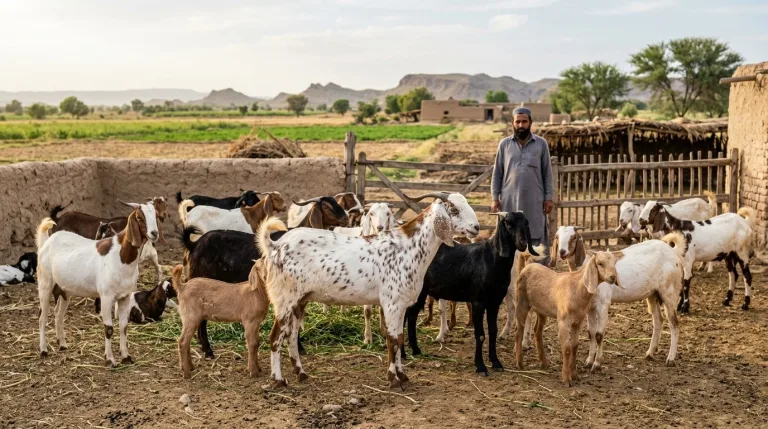
Have you ever walked through a village in Punjab and spotted a sleek, long-eared goat grazing peacefully near a wheat field? Or watched a Nachi goat do its famous dancing walk at a livestock show? If you have, you already know that goats in Pakistan aren’t just ordinary farm animals. They’re a living part of the country’s culture, economy, and food heritage.
Pakistan is home to some of the most impressive goat breeds on the planet. From the lush farmlands of Punjab to the sun-baked plains of Sindh, Pakistan goats come in all shapes, sizes, and personalities. In this article, you’ll discover what makes these animals so remarkable, which breeds are the most celebrated, and why they matter so much to millions of families across the country.
What Makes Pakistan’s Goat Breeds So Special?
Pakistan has one of the largest goat populations in the world, with over 80 million goats spread across its provinces. That’s a staggering number, and it tells you something important: goats are deeply woven into Pakistani life. They provide milk, meat, fiber, and a reliable source of income for countless farming families.
What sets Pakistani goat breeds apart is the sheer variety. Centuries of selective breeding across different climates and terrains have produced animals that are strong, adaptable, and incredibly productive. Whether you need a goat that gives rich, nutritious milk or one that grows quickly for meat, Pakistan’s diverse breeds have you covered. Think of it like a lineup of specialists, each one bred to do a particular job exceptionally well.
The Star Players: Popular Goat Breeds in Pakistan
Let’s get to know some of the most famous faces in Pakistan’s goat world.
The Beetal goat is probably the most recognized breed in Punjab. It has a sleek, glossy coat, long drooping ears, and a proud, upright posture. Beetal goats are prized for both milk and meat, which makes them a true all-rounder on the farm. A single high-quality Beetal can sell for tens of thousands of rupees at livestock markets, especially before Eid ul Adha.
The Barbari goat is smaller but equally impressive. Originally from the Barbera coast of Africa, it found a lasting home in Pakistan centuries ago. Barbari goats are compact, quick to reproduce, and exceptionally well-suited to dry, hot conditions. If you’ve ever seen a goat with a distinctive spotted white and brown coat roaming the streets of a market town, there’s a good chance it was a Barbari.
The Nachi goat, found mostly in the districts of Jhang and Multan, is in a league of its own. This breed is celebrated for its unique gait, a rhythmic, almost dance-like walk that makes it look like it’s strutting to music. Nachi goats are so prized for this trait that farmers enter them in competitions, and the top performers fetch extraordinary prices. A champion Nachi is a source of genuine pride for its owner.
The Kamori goat from Sindh is another head-turner. Dark brown or chocolate-colored with distinctive lighter patches, Kamori goats are tall, elegant, and widely considered a status symbol in the region. They’re among the most expensive goat breeds in Pakistan, and serious collectors travel long distances to acquire the finest specimens.
What Do Pakistan Goats Eat and How Are They Raised?
Goats are famously easy eaters, and Pakistani goats are no different. They graze on grasses, leaves, shrubs, and crop residue. In villages, you’ll often see them wandering freely and nibbling on whatever the land offers. On more organized farms, goats receive a balanced diet of green fodder like berseem and sorghum, mixed with dry feed such as wheat bran and cottonseed cake.
Goat farming in Pakistan ranges from small backyard setups to large commercial operations. Most rural families keep a handful of goats as a reliable source of daily nutrition and quick income. Larger farms rear hundreds of animals for meat, especially in the weeks leading up to Eid ul Adha, when demand surges across the entire country.
Housing is simple but critical. Clean, dry shelter protects goats from rain and extreme heat. Good ventilation keeps diseases from spreading. Farmers also follow vaccination schedules to guard against serious illnesses like PPR, short for Peste des Petits Ruminants, a viral disease that can devastate entire herds if left unchecked. A well-managed goat farm runs like a well-organized household: routine, cleanliness, and attention to detail make all the difference.
Why Pakistan Goats Matter to Every Household
Think about the last time you enjoyed a plate of karahi gosht or a bowl of rich paya. Chances are, goat meat played the starring role. Goat meat, commonly called mutton in Pakistan, is the most widely consumed red meat in the country. It’s leaner than beef, packed with protein, and deeply embedded in the cuisine of every province, from Balochistan to Khyber Pakhtunkhwa.
Beyond meat, goat milk is a nutritional powerhouse. It’s easier to digest than cow’s milk and is often recommended for young children, elderly people, and those with sensitive stomachs. In many rural areas, keeping a goat is like having a mini dairy right on your property, fresh milk every morning without the expense of maintaining a buffalo.
Goat farming also serves as a financial safety net for millions of families. A goat is relatively affordable to buy, inexpensive to feed, and quick to reproduce. For small farmers, selling a couple of goats at the right time can cover school fees, medical costs, or seasonal farming expenses. In this sense, the humble goat is one of the most valuable economic assets a rural household can own.
Fun Facts About Pakistan Goats You Probably Didn’t Know
- The Nachi goat’s dancing walk is caused by a natural genetic trait that affects leg coordination. No training required, it’s completely innate.
- Pakistan exports live goats and goat products to countries in the Middle East, contributing to the national economy.
- Beetal goats are sometimes crossbred with imported Swiss breeds like Saanen to improve milk output on modern dairy farms.
- A champion Kamori has reportedly sold for over one million rupees at livestock exhibitions.
- Goat droppings are one of the best organic fertilizers available, meaning even their waste contributes to healthier crops and richer soil.
Goats, Heritage, and the Future of Farming in Pakistan
Pakistan’s goat breeds are more than livestock. They’re a living record of the country’s agricultural heritage, shaped by the land, the people, and generations of careful selective breeding. As modern farming practices evolve, there’s a growing commitment to preserving native breeds while improving their productivity through better nutrition, veterinary care, and scientific research.
Whether you’re a farmer planning to expand your herd, a food enthusiast curious about where your mutton karahi comes from, or simply someone who wants to understand Pakistan’s rich farming traditions, learning about Pakistan goats connects you to a story that spans centuries. The next time you see a Beetal at the livestock market or hear someone raving about a dancing Nachi, you’ll know exactly what makes these animals so extraordinary and why they deserve every bit of the attention they get.
Want to explore more about Pakistan’s agricultural heritage, traditional food culture, and natural farming wisdom? Visit Multanfarms.com and discover the knowledge rooted in the heart of Multan.