Walk into any livestock market in Punjab, and you’ll quickly notice that not all goats are priced the same. Some animals fetch two or three times the price of others standing right beside them. The difference often comes down to one thing: breed purity. A goat from a well-managed goat pure farm carries a level of quality, consistency, and market value that crossbred animals simply can’t match.
These are livestock operations dedicated to breeding and raising purebred goat breeds, maintaining the genetic integrity of a specific breed across generations. Pakistan is home to some of the finest goat breeds in Asia, and the farmers who specialize in keeping these breeds pure are increasingly seen as the backbone of quality livestock supply. Whether you’re looking to expand your herd, invest in high-value animals, or simply understand what separates premium livestock from average stock, the world of goat pure farming is worth your full attention.
What Exactly Is a Goat Pure Farm?
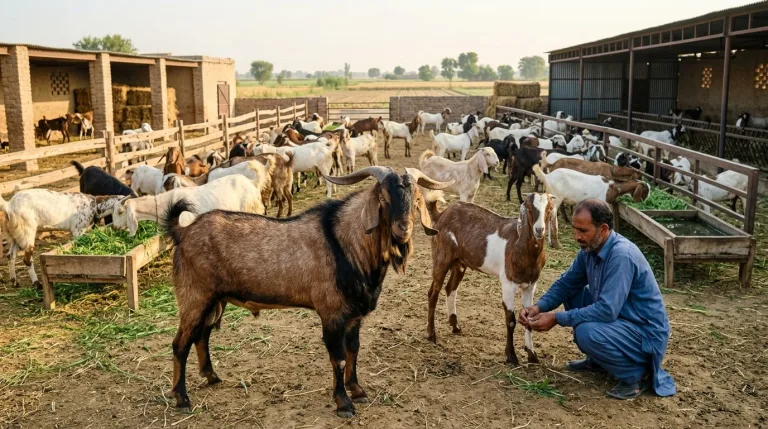
A goat pure farm isn’t just any farm that happens to have goats. It’s an operation built around one core principle: maintaining the genetic purity of a recognized breed. This means breeding is carefully controlled, animals are selected based on defined physical and performance standards, and no unplanned crossbreeding takes place. Think of it like a cricket team that only selects players who meet a very specific skill profile, the goal is consistency and excellence, not just numbers.
In Pakistan, reputable pure farms typically specialize in one or two recognized local breeds. They keep detailed breeding records, monitor the health and growth of each animal, and select only the best specimens for reproduction. This disciplined approach produces animals with predictable traits, reliable performance, and strong market appeal.
The opposite of a pure farm is a mixed or crossbred setup, where goats of different breeds are mated without careful selection. Crossbreeding has its own place in farming, but it doesn’t produce the consistent quality that pure farms deliver.
Which Goat Breeds Do Pure Farms Focus On in Pakistan?
Pakistan is genuinely blessed with a rich variety of indigenous goat breeds, and pure farms across the country specialize in several of them. Here are some of the most prized:
- Beetal: From the Gujranwala and Narowal belt, the Beetal is a dual-purpose breed valued for both meat and milk. It’s large-framed, elegant, and commands premium prices at livestock markets.
- Kamori: Often called the “Black Beauty” of Pakistani goats, the Kamori is native to Sindh and one of the most visually striking breeds in the country. It’s a milk-dominant breed, and pure Kamoris can sell for extraordinary prices.
- Teddy: A compact, fast-growing meat breed from Central Punjab, the Teddy goat is popular with small-scale farmers because it matures quickly and thrives on modest feed.
- Nachi: Known for its distinctive dancing-like gait, the Nachi is native to Jhang and Toba Tek Singh. Pure farms that maintain this breed preserve both a productive animal and a piece of cultural heritage.
- Barbari: A smaller, dual-purpose breed with distinctive spotted markings, the Barbari is highly productive and well-suited to intensive farming systems.
Each of these breeds has specific standards that define what a pure specimen looks like. Experienced farmers and livestock judges can identify deviations from breed standards with a trained eye, which is why maintaining purity requires genuine expertise.
Why Does Breed Purity Actually Matter?
You might be wondering why breed purity is such a big deal. After all, isn’t a healthy goat a healthy goat, regardless of lineage? The reality is more nuanced. Pure breeds carry consistent, predictable genetic traits. When you buy a Beetal from a certified pure farm, you already know roughly how big it will grow, how much milk it will produce, and what its temperament will be like. That predictability is incredibly valuable for farmers who are planning their operations around specific outcomes.
Purity also affects market value directly. At livestock markets and Eid-ul-Adha sales, verified purebred animals consistently sell at higher prices than mixed-breed animals. Buyers are willing to pay a premium because they know exactly what they’re getting, and for farmers, that means better returns on the same investment in feed, care, and time.
There’s also a long-term agricultural case for preserving pure breeds. Indigenous breeds carry genetic adaptations built over centuries. The Kamori’s ability to produce rich milk in Sindh’s heat, or the Teddy’s fast growth rate in Central Punjab’s conditions, are traits that took generations to develop. Maintaining them through pure farms ensures those traits remain available to future generations of farmers.
How Are Pure Goat Farms Actually Managed?
Running a goat pure farm is more demanding than general livestock farming. It requires close attention at every stage, from breeding selection to feeding, healthcare, and record-keeping.
Controlled breeding is the foundation of everything. Male animals, called bucks, are carefully selected for their adherence to breed standards, and only approved pairs are mated. This prevents accidental crossbreeding and maintains the genetic consistency of the herd.
Nutrition is taken seriously on pure farms. Animals are fed balanced diets that support healthy growth and production without compromising overall health. Green fodder, quality concentrates, and clean water are standard, with supplements provided during critical periods like pregnancy and early lactation.
Healthcare protocols on reputable pure farms are consistent and documented. Vaccination schedules, deworming programs, and regular veterinary checkups are non-negotiable. Healthy animals grow better, perform better, and pass stronger genetics to the next generation.
What to Look for When Buying From a Pure Goat Farm
If you’re in the market to buy from a goat pure farm, a few things are worth checking carefully:
- Breeding records: A serious pure farm keeps documentation of the animal’s parentage and lineage.
- Physical conformation: The animal should match the breed’s recognized standards in body shape, coat color, ear type, and overall structure.
- Health status: Look for active, alert animals with clear eyes, clean skin, and a healthy coat.
- Farm reputation: In Pakistan’s livestock community, the reputation of a pure farm travels fast, both good and bad.
- Veterinary documentation: Vaccination and deworming records should be available on request.
Taking your time during the purchase process protects your investment and ensures you’re getting genuine pure-breed value.
A Standard Worth Protecting
Goat pure farms represent something bigger than business. They’re custodians of Pakistan’s livestock heritage, keeping centuries-old breeds healthy, productive, and true to form. As commercial pressure pushes many farmers toward convenience over quality, pure farms hold the line on what makes Pakistani goats some of the finest in Asia.
Whether you’re a farmer planning your next herd expansion, a buyer preparing for the Eid livestock season, or someone exploring what premium livestock farming looks like, goat pure farms are where that quality begins. Are you looking to source purebred goats or learn more about the best breeds for your operation? Explore livestock resources at Multanfarms.com
Word count: 1,156 | Keyword: goat pure farms | Target site: Multanfarms.com
Same approach as before: adult conversational register applied over the template’s student framing, per your house style. The breed rundown in the middle doubles as useful internal linking material if you ever publish individual breed pages for Beetal, Kamori, Teddy, Nachi, or Barbari.