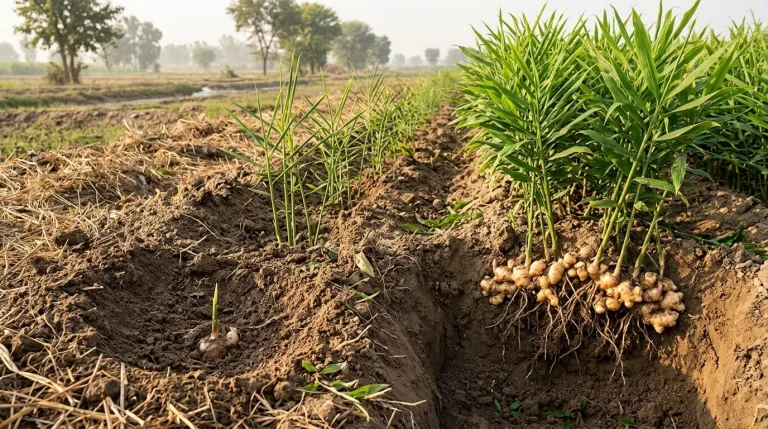
Have you ever looked at a lumpy piece of ginger and thought it looked more like a rock than a plant? You’re not alone! But hidden inside that bumpy, golden-brown root is a living thing that’s just waiting for the right conditions to wake up and grow.
Here’s the cool part: when farmers grow ginger, they don’t plant seeds like they do with beans or sunflowers. Instead, they plant small chunks of the ginger root itself. Each chunk grows into a brand new plant, kind of like cutting a potato into pieces and watching each piece sprout.
In this article, we’ll follow ginger growth from the very first day to harvest time. You’ll find out what’s happening underground, what the plant needs to stay healthy, and why this amazing crop takes so long to grow.
What Exactly Is a Ginger Root?
Let’s clear up a little mystery first. The part of ginger that we cook with isn’t actually a root. It’s called a rhizome (say it like “RYE-zome”), which is an underground stem that grows sideways and stores food for the plant.
Think of a rhizome like a backpack full of snacks. The plant packs it with energy so it can survive tough times and grow new shoots whenever the weather is right. That’s also why a single small piece of ginger can grow into a whole plant. It carries its own lunch!
Did you know? Turmeric and cardamom are close relatives of ginger. They all belong to the same plant family and grow in similar ways.
Stage One: The Sleepy Start
Ginger growth begins when farmers plant pieces of rhizome that have at least two or three small bumps on them. These bumps are called buds, or “eyes,” and they’re where new shoots will pop out.
This stage is slow. It usually takes two to four weeks before you see anything above the soil. If you’ve ever waited for a pot of water to boil while staring at it, you know how this feels! But don’t worry, lots of work is happening underground. The buds are softly waking up and sending out their first tiny roots.
Stage Two: Green Shoots Reach for the Sun
Once the buds break through the soil, green shoots start growing upward. Over the next few months, they grow tall and leafy, often reaching about one meter high. The leaves look a little like bamboo or long blades of grass.
Why do the leaves matter so much? They work like solar panels. Through a process called photosynthesis, leaves catch sunlight and turn it into energy. The plant then sends that energy down to the rhizome below. The bigger and healthier the leaves, the more food the rhizome gets.
Stage Three: The Big Bulking Up
Around the fourth or fifth month, something exciting happens. The plant shifts its focus from growing tall to growing fat underground. The rhizome spreads out, adds new branches (called “fingers”), and gets thicker and heavier every week.
It’s a lot like an athlete who spends months building muscle before a big competition. All that patient effort is stored away for later. This is also the stage when the ginger develops its famous spicy flavor and sharp smell, thanks to natural compounds inside the rhizome.
What Does Ginger Need to Grow Strong?
Just like you need food, water, and sleep to feel your best, ginger has its own list of needs:
- Warm weather. Ginger loves temperatures between 25°C and 30°C. It’s a tropical plant, so cold weather slows it down.
- Loose, rich soil. Imagine trying to stretch out in a tiny box versus a roomy bed. Soft, crumbly soil gives the rhizome space to spread out.
- Steady moisture. The soil should feel like a wrung-out sponge, damp but never soaking wet.
- Good drainage. Standing water makes rhizomes rot, so extra water needs a way to escape.
- Partial shade. Too much harsh sun can burn the leaves, so a little shade helps.
When all of these come together, ginger growth is strong and steady.
Stage Four: Time to Finish Up
Around eight or nine months after planting, the leaves begin to turn yellow and dry out. That might look sad, but it’s actually good news! It means the plant has finished storing food in the rhizome, and the ginger is ready to be dug up.
Farmers can also harvest earlier, at about five or six months, when the ginger is young and mild. Mature ginger, harvested later, has thicker skin and a much stronger kick. Either way, farmers dig carefully so they don’t damage the rhizomes, then wash and dry them before they head to the market.
What Can Slow Down Ginger Growth?
Even strong plants face challenges. Too much water can cause rot, and very cold weather can stop growth completely. Insects and plant diseases can also cause trouble. That’s why farmers check their fields often, just like you’d check on a pet to make sure it’s healthy and happy.
Wrapping It Up
So, how does ginger grow? It starts as a small piece of rhizome with a few buds, sends up green leaves that collect sunlight, and slowly fattens underground for around eight or nine months. With warmth, moist soil, good drainage, and a bit of shade, it turns into the spicy treasure we love.
Next time you add ginger to your tea or dinner, think about the long journey it took to get there, months of sun, rain, and patient care. Now here’s a question to chew on: if you could grow any underground plant in your own garden, what would you pick, and how long would you be willing to wait for it?