Have you ever noticed that a bunch of grapes costs one price in June and a totally different price a few weeks later? It can feel confusing, even a little unfair! But there’s a good reason behind it, and once you understand it, you’ll feel like a market detective.
The grapes price in Pakistan isn’t fixed like the price of a notebook. It moves up and down depending on the variety, the city, the season, and even the weather. In this article, we’ll explore what the numbers look like, why they shift, and how you can spot a fair price the next time you shop.
What Do Grapes Actually Cost?
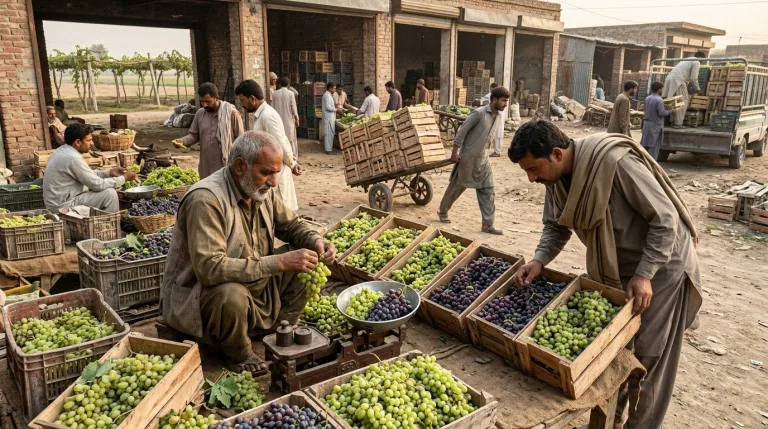
Let’s start with some real numbers. Market data from July 2025 showed that Sundekhani grapes in Multan were priced at about USD 1.20 per kg, while Gola grapes in Dera Ghazi Khan were around USD 0.81 per kg. In Pakistani rupees, that works out to roughly Rs 340 per kilo for Sundekhani and about Rs 230 per kilo for Gola. tridge
These are wholesale prices, which means the price shopkeepers pay when they buy in big amounts. By the time grapes reach a fruit stall, the price is usually higher. Think of it like a school bake sale. The baker pays for flour and sugar, then adds a little extra to the cookie price so there’s something left over.
Why Are Some Grapes More Expensive Than Others?
Imagine two kinds of ice cream. One is a plain vanilla and the other has fancy toppings. Which one costs more? The fancy one, right? Grapes work in a similar way.
Here’s what makes one type pricier:
- Taste and sweetness: Customers pay more for grapes they love.
- Size and look: Big, plump, evenly colored grapes catch the eye.
- Demand: If everyone wants one variety, sellers can charge more.
- Supply: Fewer grapes in the market means a higher price.
That’s why Sundekhani, a popular local favorite, often sells for more than Gola in the same market reports.
Does the City Make a Difference?
Absolutely! The same grape can have different prices in different cities. In that same July 2025 report, grapes labeled “Other” in Bahawalpur were selling for just USD 0.48 per kg, which is much lower than Sundekhani in Multan. tridge
Why? Part of it is the variety, but part of it is distance. Fruit that has to travel a long way needs fuel, packing, and time. Those costs get added to the price. It’s like ordering a toy from a faraway country. The toy might be cheap, but shipping makes the final bill bigger.
What Is the Farmer’s Price, and Why Is It Lower?
Here’s a fun twist. The price you pay at a shop and the price a farmer receives are two very different things. The farmer’s price is called the farmgate price, which means the price paid right at the farm gate, before the fruit travels anywhere.
One recent report said the farmgate price of grapes in Pakistan was about US$0.35 per kg, or around 99.83 rupees, as of August 2026. That’s quite a bit lower than the wholesale prices we saw earlier. The gap pays for packing, trucks, storage, and the people who move the fruit from the farm to your neighborhood. selinawamucii
Think of a relay race. The farmer runs the first leg, then others carry the baton to the finish line. Each runner needs to be paid for their part.
Why Do Prices Go Up and Down So Much?
Remember that confusing price change we talked about? Here are the biggest reasons for it:
- Harvest season: When lots of grapes are ready at once, the market fills up and prices drop.
- Weather: Too much rain or heat can damage the crop, leaving fewer grapes to sell.
- Crop size: The same report noted that Pakistan’s grape production in 2024 was about 125,885 tonnes, down 35.8% from the year before. When a harvest shrinks that much, prices can swing. selinawamucii
- Imports: Some grapes come from other countries, which affects what local growers can charge.
It’s just like a game of supply and demand. If a rare trading card is hard to find, its price jumps. If everyone has one, the price falls.
Did You Know? Pakistan Buys Lots of Grapes From Abroad
Here’s something surprising. Pakistan grows plenty of grapes, but it also buys a lot from other countries. One report said that Pakistan spends around Rs 11 billion on grape imports every year, and most grape farming happens in Quetta and Kalat in Balochistan. freshplaza
Grapes love warm, dry weather with lots of sunshine. That’s why dry regions are such good places to grow them. It also means there’s room for more local farmers to grow quality grapes, which could one day help keep prices steady.
How Can You Spot a Fair Price?
You don’t need to be an economist to shop smartly. Try these simple tips:
- Compare shops. Ask at two or three places before you buy.
- Check the variety. Make sure you’re comparing the same type of grape.
- Look at freshness. Firm, green stems and plump grapes are signs of quality.
- Buy in season. Fruit is usually cheaper when it’s plentiful.
- Ask where it’s from. Locally grown fruit often travels less and stays fresher.
So, What’s the Big Picture?
The grapes price in Pakistan depends on the variety, the city, the season, the weather, and how many grapes are available. Farmers, truck drivers, and shopkeepers each play a part, which is why the farm price and the shop price are so different. Once you know these clues, those changing prices start to make a lot more sense.
At Multanfarms.com, we love helping people understand where their food comes from. So here’s a question to think about: the next time you hold a bunch of grapes, can you guess how many hands helped bring it to you?