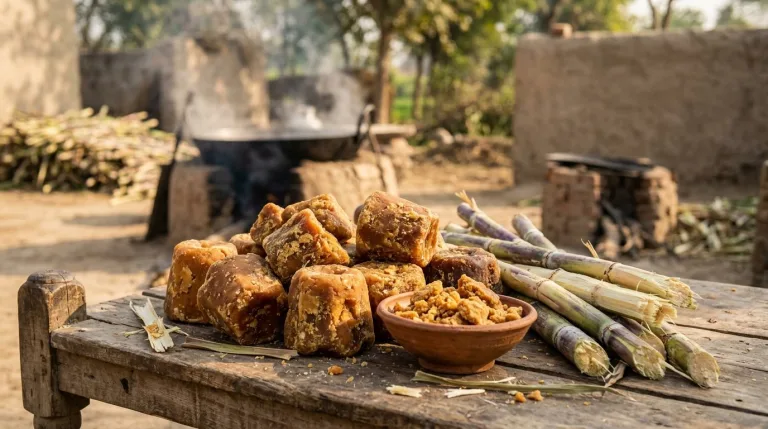
Have you ever tasted something so sweet and earthy that it felt like a little piece of the countryside melted in your mouth? If you’ve grown up in Pakistan, chances are you’ve enjoyed a chunk of gurr after a big meal, or maybe your grandmother tucked a piece into your hand on a chilly winter evening.
Gurr is a traditional sweetener made from sugarcane juice, and it’s been around for hundreds of years. It looks like a golden-brown block, and it tastes a bit like caramel with a hint of smoky richness. Unlike the white sugar you see in most kitchens, gurr keeps much of its natural flavor and color.
So how is it made, why do people love it, and what makes it different from regular sugar? Let’s find out together.
What Exactly Is Gurr?
Gurr (also called jaggery in English) is a natural sweetener made by boiling fresh sugarcane juice until it thickens and turns into a solid or semi-solid block. That’s really all there is to it. Nothing fancy gets added, and farmers don’t need big factories to make it.
Think of it like making fudge at home. You heat a sweet liquid, stir it again and again, and then let it cool until it sets. Gurr works the same way, except the sweet liquid comes straight from the sugarcane plant.
Gurr comes in different forms too. Some is hard and sold in big blocks, some is soft and crumbly, and some is poured into small round shapes called bheli.
From Sugarcane Field to Your Plate
The journey of gurr starts on a farm. Here’s how it happens, step by step:
- Harvesting: Farmers cut tall, thick stalks of sugarcane, which can grow taller than a grown-up.
- Crushing: The stalks are pressed through a machine that squeezes out the sweet, green-yellow juice.
- Boiling: The juice goes into a huge, wide pan and is heated over a fire. Workers stir it constantly and scoop off the dirt and bubbles that rise to the top.
- Thickening: After a few hours, the juice becomes thick and sticky, turning a deep golden brown.
- Cooling and shaping: The hot syrup is poured into molds or spread out to cool, and it hardens into the gurr you know.
Did you know? It can take around 10 liters of sugarcane juice to make just 1 kilogram of gurr! That’s like squeezing about ten big water bottles of juice down into one small block.
Gurr vs. White Sugar: What’s the Difference?
Here’s where things get interesting. White sugar goes through a lot of steps in a factory. It’s heavily processed, bleached, and refined until only plain sweetness is left. Gurr skips most of that.
Imagine two slices of bread. One is a fluffy white slice, and the other is a whole-grain slice packed with seeds. Both are bread, but the second one keeps more of its natural goodness. Gurr is like that whole-grain slice, while white sugar is the plain white one.
Because gurr is less refined, it keeps small amounts of minerals like iron and potassium. Iron helps your blood carry oxygen around your body, and potassium helps your muscles work. That said, gurr is still a sweet food, so it’s best enjoyed in small amounts, just like any other treat.
Why Do People Eat More Gurr in Winter?
Walk through any Pakistani market in December and you’ll spot piles of gurr everywhere. There’s a reason for that. Many families believe gurr is a “warming” food, one that helps your body feel cozy when the weather turns cold.
Whether it’s a sweet snack or part of a traditional dish, gurr shows up a lot in the colder months. Here are some favorites:
- Gurr with peanuts or sesame seeds: a crunchy, sweet winter snack
- Gurr ke chawal: sweet rice cooked with gurr
- Gurr with hot milk or tea: a classic way to add natural sweetness
- Gurr with roti and ghee: a simple village-style treat
It’s a bit like how some families have hot chocolate on snowy days. Gurr is the winter comfort food for millions of people across South Asia.
How Can You Tell If Gurr Is Good Quality?
Not every block of gurr is the same, so it helps to know what to look for. Here are a few easy tips:
- Color: Good gurr is usually a rich golden or light brown. Very dark, almost black gurr might be overcooked.
- Smell: It should smell sweet and a little smoky, never sour or strange.
- Texture: Fresh gurr is firm but not rock hard, and it shouldn’t feel overly wet or sticky.
- Taste: It should taste naturally sweet and caramel-like, without any bitter aftertaste.
It’s the same idea as picking a ripe mango. You use your eyes, nose, and sense of touch to find the best one. Buying from trusted farm-based sellers like Multanfarms.com is another smart way to get fresh, authentic gurr that’s made the traditional way.
Storing Gurr So It Stays Fresh
Gurr can last for months if you store it well. Keep it in a dry, airtight container away from moisture and direct sunlight. Damp air can make it sticky or even grow mold, so always close the lid tightly.
If your gurr gets a bit hard, don’t worry. You can grate it or break it into small pieces with a clean spoon, which makes it easier to melt into drinks or recipes.
Why Gurr Still Matters Today
Gurr is more than just a sweet snack. It’s a piece of farming history, made by hardworking farmers using methods passed down through generations. Every block tells a story of sugarcane fields, warm fires, and families gathering together.
Next time you take a bite, you’ll know exactly where it came from and how much care went into making it. So here’s something to think about: what other traditional foods in your home have a story as interesting as gurr’s?