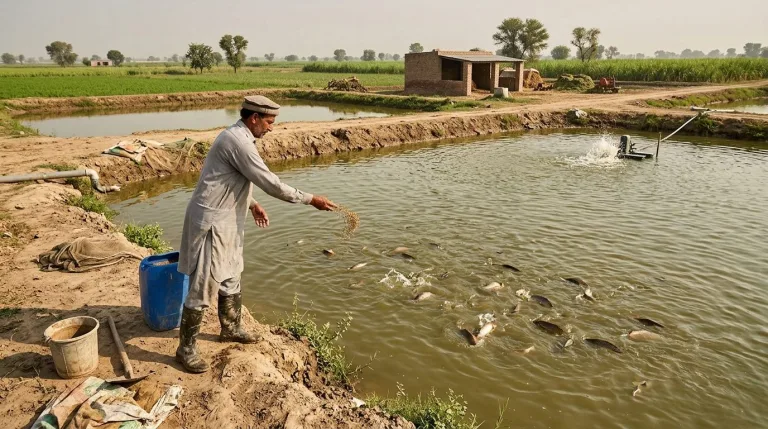
Imagine owning a pond where hundreds of fish swim around, grow bigger every week, and one day end up on dinner tables across the country. Sounds like a cool job, right? That’s exactly what fish farming is, and it’s becoming a popular way to earn money in Punjab.
Fish farming, also called aquaculture, simply means raising fish in a controlled place like a pond or tank. Just like a farmer grows wheat in a field, a fish farmer grows fish in water. Punjab has plenty of canals, rivers, and warm weather, which makes it a great place to try.
At Multanfarms.com, we love sharing how farming works in our region. In this article, you’ll learn how to pick a spot, build a pond, choose the right fish, feed them, and keep them healthy. Let’s dive in!
Why Is Punjab Good for Fish Farming?
Think of fish like guests at a party. They need the right place, the right food, and the right temperature to be happy. Punjab offers a lot of what they need.
The province has a good supply of canal water, wide open land, and a warm climate for most of the year. Warm water helps fish grow faster, just like warm weather helps tomatoes ripen quicker.
Did you know? Fish are a fantastic source of protein, and people all over Pakistan love eating them. That means there’s always a market for fresh fish, especially in big cities like Lahore, Faisalabad, and Multan.
Step One: Pick the Perfect Spot
Choosing your location is like choosing where to build a house. A bad spot causes trouble later, so take your time.
Here’s what to look for:
- Clean, steady water. You need a reliable source like a canal, tube well, or channel.
- Clay soil. Clay holds water well. Sandy soil leaks like a bucket with a hole in it.
- Flat land. It’s much easier to dig a pond on level ground.
- Easy road access. You’ll need to move fish, feed, and supplies without a headache.
It’s also smart to test your water before you begin. A local fisheries office can often help you check it.
Step Two: Build Your Pond
Now comes the digging part! Most beginner ponds are shaped like a rectangle, and a size of about one acre is common for small commercial farms. You can start smaller if you’re just learning.
A good pond is usually 4 to 6 feet deep. Why? Because shallow water heats up too fast in summer, and fish can get stressed. Deep water stays cooler, like the shady side of a tree on a hot day.
Make the pond walls (called embankments) strong and slightly slanted so they don’t collapse. Add a pipe to bring in fresh water and another to let old water out. Before adding fish, fill the pond and let it sit for a few days so tiny natural food, like plankton, can grow. Plankton are tiny plants and animals that baby fish love to snack on.
Step Three: Choose the Right Fish
Not every fish suits every pond. In Punjab, farmers often raise fish that handle warm water well.
Some popular choices include:
- Rohu, a favorite in Pakistani kitchens that eats food from the middle of the water.
- Catla, which feeds near the surface.
- Mrigal, which hunts for food near the bottom.
- Grass carp and silver carp, which are hardy and grow quickly.
Here’s a clever trick many farmers use. They raise several types together, called polyculture. Since each fish eats in a different part of the pond, they don’t fight over food. It’s like a school cafeteria with separate counters, so nobody gets crowded out.
Always buy small baby fish, called fingerlings, from a trusted hatchery. Healthy fingerlings are active and look bright and clean.
Step Four: Feed and Care for Your Fish
Fish need good meals to grow. You can use ready-made fish feed from the market, and you can also add natural food like rice bran or oil cakes in small amounts.
Feed them once or twice a day, but don’t overdo it. Extra food that sinks and rots makes the water dirty, a bit like leaving old lunch in your school bag. Dirty water makes fish sick.
Check your pond often. Watch for fish swimming near the top and gasping for air, because that’s a warning sign. It usually means the water has low oxygen, and you might need to add fresh water or use a small aerator, a machine that adds air to the pond.
Step Five: Harvest and Sell
Most fish take around 8 to 12 months to reach a good selling size, depending on the type and how well you care for them. Patience is a big part of this job, just like waiting for a plant to flower.
When harvest day arrives, farmers usually use nets to gather the fish. You can sell them to local markets, restaurants, or fish traders. Selling fresh fish quickly gets you the best price.
Before you begin, it’s wise to talk to the Punjab Fisheries Department or an experienced local farmer. They can guide you on rules, training, and any support available, since details can change over time.
Ready to Make a Splash?
Starting a fish farm takes planning, but the steps are simple. Pick a good spot, build a strong pond, choose healthy fish, feed them well, and keep a close eye on the water. Do these things, and you’re on your way.
Fish farming shows us that farming isn’t only about fields and crops. Water can be a farm too! So here’s something to think about: if you had your own pond tomorrow, which fish would you raise first?