Most people picture fish farming and think of ponds, nets, and full-grown fish ready for market. But the real story starts much earlier, with something far smaller. The quality of your baby fish, and the decisions you make around sourcing and raising them, determines almost everything that comes after. Get this foundation right and your fish farm runs smoothly. Cut corners here and you’ll pay for it months down the line.
Whether you’re setting up your first pond or expanding an existing operation, understanding baby fish for farming is one of the most practical investments of time you can make. This guide breaks it all down clearly.
Understanding the Stages: Fry, Fingerlings, and Juveniles
Not all baby fish are the same age or size, and the terminology matters when you’re buying or raising them. Fry are the earliest stage after hatching, typically just a few millimetres long and only days or weeks old. They’re incredibly delicate at this point and need controlled conditions to survive.
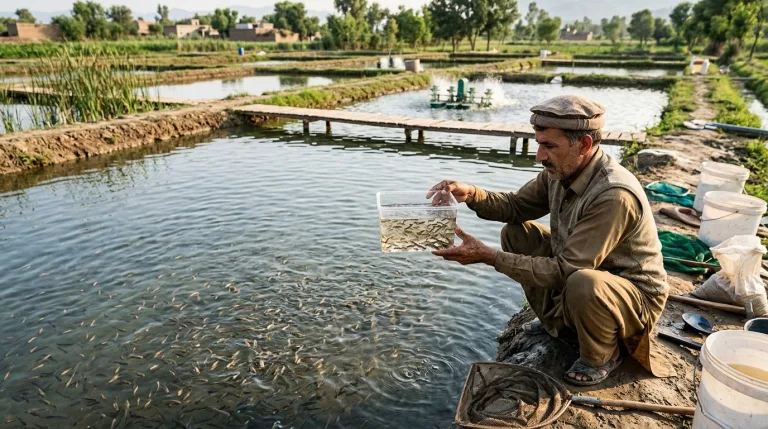
Fingerlings are the next stage, roughly the size of a finger, as the name suggests. They’re several weeks to a few months old and significantly hardier than fry. Most fish farmers in Pakistan prefer to stock their ponds with fingerlings rather than fry, because the survival rate is far better once the fish have passed that fragile early window.
Juvenile fish come after fingerlings and are approaching the look of adult fish, just smaller. By this stage, the fish are relatively robust and can handle standard pond conditions without intensive monitoring.
Which Fish Species Are Best for Farming in Pakistan?
Pakistan’s freshwater fish farming scene is dominated by a handful of proven species, each with different growth rates, feeding habits, and market demand.
Rohu (Labeo rohita) is the most popular choice across Punjab and Sindh. It grows quickly, commands a good market price, and adapts well to pond farming. Rohu fingerlings are widely available through government hatcheries and private suppliers.
Catla (Catla catla) is often farmed alongside Rohu in a polyculture system, which simply means raising multiple species together in the same pond. Catla feeds near the surface while Rohu feeds in the middle of the water column, so they don’t compete directly, and together they make far better use of the available space.
Common carp and silver carp are also popular, particularly for farmers who want fast growth and a species that’s tolerant of lower water quality. Tilapia is gaining ground as well, especially among farmers looking for a species with strong export potential.
Where to Source Quality Baby Fish
The source of your fingerlings matters enormously. Poor-quality stock from unreliable hatcheries brings disease, weak genetics, and disappointing survival rates into your pond before you’ve even begun.
Government fisheries departments in Punjab and other provinces run certified hatcheries and sell fingerlings at subsidised rates. This is often the best starting point for new farmers because the stock is quality-controlled and disease-screened. Private hatcheries are also a solid option if you can verify their practices, ask about their broodstock (the parent fish used for breeding), and ideally visit the facility before purchasing.
When buying fingerlings, check that the fish are active and swimming normally. Listless fish that hover near the surface, show unusual markings, or have clamped fins are signs of disease or stress, and introducing sick stock into your pond can wipe out everything you have.
Setting Up Your Pond Before Stocking
Dropping fingerlings into an unprepared pond is one of the most common and costly mistakes in fish farming. The pond needs to be ready before the fish arrive, not after.
Pond preparation starts with drying and liming. After the previous crop is harvested, drain the pond, let the bottom dry out under the sun for a week or two, and then apply lime to disinfect the soil and balance the pH. Refill the pond and allow it to fertilise naturally by adding organic matter like cow dung or compost. This encourages the growth of plankton, the microscopic organisms that serve as the first food source for young fish.
Stock your pond at the right density. Overcrowding is a major cause of slow growth, disease outbreaks, and oxygen depletion. For a mixed polyculture system with Rohu and Catla, a general starting point is around 4,000 to 6,000 fingerlings per acre, though this varies based on your water quality, aeration setup, and feeding plan.
Feeding and Care During the Early Weeks
Baby fish are at their most vulnerable right after stocking. Their immune systems are still developing, they’re adjusting to a new environment, and any stress during this period, whether from handling, temperature changes, or competition for food, can cause significant losses.
For the first few weeks, supplementary feeding with a mixture of rice bran and oil cake is standard practice in Pakistan. As the fish grow, you can shift to formulated pellet feed for faster growth rates. Feed once or twice daily and only provide what the fish can consume within about 30 minutes. Leftover feed sinks and decays, which degrades water quality and invites disease.
Monitor your water regularly. Dissolved oxygen levels are especially important because fish need adequate oxygen to feed efficiently and stay healthy. In warmer months, early morning oxygen levels dip, which is when fish are most stressed. Mechanical aerators solve this problem in intensive operations.
The Economics Behind Getting Baby Fish Right
Here’s the reality of fish farming as a business: your biggest returns come from the percentage of fish that survive from stocking to harvest. A batch of 5,000 fingerlings where 80% survive to market size is far more profitable than a batch of 8,000 where only 50% make it.
Investing in quality fingerlings, proper pond preparation, and attentive management during the early weeks is not an extra cost. It’s the core of your profitability. Every fish you lose to disease, stress, or poor stocking conditions is revenue that never materialises.
The farmers who treat baby fish farming with the same seriousness they give to harvest season are the ones who build sustainable, growing operations year after year.
For more practical guides on fish farming and agriculture rooted in Pakistan’s conditions, visit Multanfarms.com. Real knowledge, grown right here.