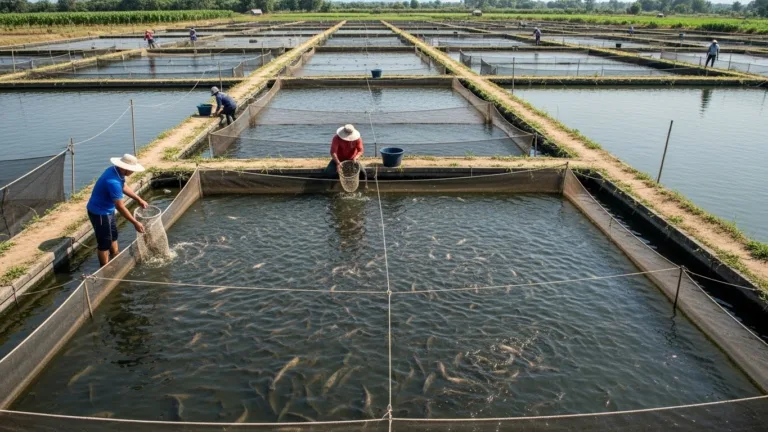
When you think of farming, you probably picture fields of wheat swaying in the breeze, rows of vegetables, or maybe cows grazing in a pasture. But what if I told you that fish can be farmed too, and it’s becoming one of the fastest-growing types of farming in the world? Yep, you read that right! Fish farming is a real thing, and it’s pretty incredible when you think about it.
Fish farming, also called aquaculture, is the practice of raising fish in controlled environments like ponds, tanks, or ocean enclosures. Instead of catching wild fish from rivers and oceans, farmers actually grow fish from eggs or baby fish (called fry) all the way to full-grown adults ready for your dinner plate. It’s kind of like how regular farmers plant seeds and nurture them into full-grown plants, except with fish! Operations like Multanfarms.com are exploring innovative ways to bring this sustainable practice to more communities.
But why would anyone want to farm fish instead of just catching them from the wild? And how does it even work? In this article, we’ll dive deep (pun intended!) into the fascinating world of fish farming, exploring everything from how these underwater farms operate to why they might be crucial for feeding our planet’s growing population. Trust me, by the end of this, you’ll never look at your fish dinner the same way again!
How Does Fish Farming Actually Work?
Fish farming might sound complicated, but the basic idea is pretty straightforward. Farmers create controlled environments where fish can grow safely and efficiently, kind of like how you might keep goldfish in an aquarium at home, except on a much, much larger scale!
There are several different types of fish farming systems. Pond farming is one of the oldest and most common methods, especially in countries like China, India, and Vietnam. Farmers dig large ponds or use natural water bodies, stock them with baby fish, and then manage the water quality, temperature, and food supply to help the fish grow. It’s like creating a perfect ecosystem in a controlled space. These ponds can range from small family-run operations to massive commercial ventures covering several acres!
Tank and raceway systems are another popular method, especially for raising fish like trout and salmon. These are basically large containers or channels where water continuously flows through, keeping it fresh and oxygen-rich. Imagine a really long swimming pool with fish instead of people, and you’ve got the basic idea! The flowing water carries away waste and brings in fresh, clean water, creating a healthy environment for the fish to thrive.
Then there’s cage farming, which happens in natural water bodies like lakes or oceans. Farmers place large net cages in the water and raise fish inside them. The fish get the benefit of being in their natural environment with natural water currents, but they’re still contained and protected. It’s kind of like a floating apartment building for fish! This method is super popular for raising salmon in places like Norway and Scotland.
What Kinds of Fish Can You Farm?
Not all fish are equally easy to farm, and some species are way more popular in aquaculture than others. The most commonly farmed fish might surprise you because they’re probably ones you’ve eaten before!
Tilapia is the rockstar of fish farming. These fish are incredibly hardy, meaning they can survive in all sorts of conditions that would stress out other fish. They grow fast, don’t require super expensive food, and taste pretty good too! Tilapia farming is huge in countries across Asia, Africa, and Central America. Think of tilapia as the chickens of the fish world, they’re reliable, efficient, and perfect for farming.
Salmon is another massive player in fish farming, even though it’s way more challenging to raise than tilapia. Salmon need cold, clean water and very specific conditions to thrive. Most farmed salmon comes from countries like Norway, Chile, and Canada. Despite the challenges, salmon farming is a multi-billion dollar industry because people love eating salmon, and wild populations can’t keep up with demand.
Catfish are super popular in the southern United States, particularly in states like Mississippi and Arkansas. These bottom-dwelling fish are tough, adaptable, and grow well in warm water ponds. Plus, they taste delicious when fried (if you’ve ever had fish and chips, there’s a good chance it was catfish!).
Other commonly farmed fish include carp (extremely popular in Asia and Europe), trout, sea bass, and even shrimp, which aren’t technically fish but are raised using similar methods. Each species has its own specific needs, and successful fish farmers need to become experts in the biology and behavior of whatever they’re raising.
Why Fish Farming Matters More Than Ever
You might be wondering, if we can catch fish from the ocean, why bother farming them at all? Well, there are some pretty important reasons why fish farming has become so crucial in recent years.
First up, wild fish populations are in trouble. Humans have been catching fish from oceans, rivers, and lakes for thousands of years, but in the last century, we’ve gotten way too good at it. Modern fishing boats use technology like sonar and massive nets that can catch tons of fish at once. The problem? We’ve been taking fish out of the ocean faster than they can reproduce. Many fish species are now overfished, meaning their populations are dangerously low. If we keep fishing them at the current rate, some species could disappear entirely!
Fish farming offers a solution by taking pressure off wild populations. Instead of catching wild fish, we can raise them in controlled environments. It’s similar to how farming cows and chickens has allowed wild animal populations to recover, we don’t hunt wild buffalo anymore because we can raise cattle on farms.
Second, the world’s population keeps growing, and all those people need protein to stay healthy! Fish is an incredibly important protein source for billions of people worldwide, especially in coastal and island communities. The United Nations estimates that by 2050, we’ll need to produce 70% more food than we do today. Fish farming can help meet that demand in a relatively efficient way compared to raising land animals like cattle.
Third, fish farming can be more environmentally sustainable than other types of meat production when done correctly. Fish convert food into body mass more efficiently than cows or pigs. For example, it takes about 1.1 pounds of feed to produce one pound of fish, while it takes about 7 pounds of feed to produce one pound of beef! That’s a huge difference in resource efficiency.
The Challenges Fish Farmers Face
Of course, fish farming isn’t perfect, and farmers face plenty of challenges. Understanding these problems helps us appreciate the complexity of raising fish and shows us where the industry needs to improve.
Water quality is probably the biggest challenge. Fish are super sensitive to the water they live in, kind of like how you’d feel sick if you had to breathe polluted air all day. Farmers need to constantly monitor oxygen levels, temperature, pH (how acidic or basic the water is), and waste buildup. Too much fish waste can poison the water, while too little oxygen can suffocate the fish. Modern fish farms use sophisticated equipment to monitor and maintain water quality, but it requires constant attention and can be expensive.
Disease is another major concern. When you pack lots of fish together in a confined space, diseases can spread quickly, just like how colds spread faster in a crowded classroom than in a wide-open park. Fish farmers have to be vigilant about preventing diseases, which sometimes means using antibiotics or other treatments. However, overusing these treatments can lead to antibiotic-resistant bacteria, which is a serious concern for both fish and human health.
Feed costs and sustainability present another challenge. Fish need to eat, and feeding thousands or millions of fish isn’t cheap! Traditionally, farmed fish were fed fish meal and fish oil made from, you guessed it, wild-caught fish. This created a weird situation where we were catching wild fish to feed farmed fish, which kind of defeats the purpose of farming them in the first place! Thankfully, scientists are developing alternative feeds made from plants, insects, and even algae that can reduce our dependence on wild-caught fish for feed.
Environmental impact is also a hot topic. When fish farming is done poorly, it can pollute surrounding waters with excess nutrients and waste. Escaped farmed fish can also interbreed with wild populations, potentially weakening the wild gene pool. Responsible fish farms work hard to minimize these impacts through better waste management, secure enclosures, and careful site selection.
The Future of Fish Farming Looks Pretty Cool
Despite the challenges, the future of fish farming is actually pretty exciting! Scientists and farmers are developing innovative technologies and methods that could make fish farming even more sustainable and efficient.
Recirculating aquaculture systems (RAS) are like the ultimate fish farm of the future. These indoor systems recycle and filter water continuously, using up to 99% less water than traditional pond farming. The fish live in large tanks, and sophisticated filtration systems clean the water and remove waste before pumping it back to the fish. It’s kind of like having a super-advanced aquarium the size of a warehouse! RAS farms can be built almost anywhere, even in cities, bringing fresh fish production closer to where people actually live.
Integrated multi-trophic aquaculture (try saying that five times fast!) is another cool innovation. This fancy term basically means farming different species together in a way that benefits everyone. For example, farmers might raise fish in cages, then grow seaweed and shellfish nearby. The seaweed and shellfish absorb the nutrients from fish waste, cleaning the water naturally while also producing their own crops. It’s like creating a mini-ecosystem where everyone helps everyone else, nature’s ultimate team effort!
Scientists are also working on genetically improving farmed fish, not through genetic modification necessarily, but through selective breeding (choosing the best fish to breed, just like how we’ve bred different dog breeds over thousands of years). This can create fish that grow faster, resist diseases better, or need less food, making fish farming more efficient and sustainable.
Some farms are even experimenting with automated feeding systems and artificial intelligence to monitor fish health and behavior. Imagine robots and computers taking care of the day-to-day monitoring while human farmers focus on the big-picture decisions. It sounds like science fiction, but it’s already happening in some cutting-edge facilities!
What Can You Do With This Knowledge?
Now that you know all about fish farming, you might be wondering what to do with this information. Well, you’re now equipped to make smarter choices when it comes to seafood!
When you’re at the grocery store or a restaurant, you might notice labels saying whether fish is wild-caught or farm-raised. Neither is automatically better, they both have pros and cons. Some farmed fish, especially from well-managed farms that follow strict environmental standards, can actually be more sustainable than overfished wild species. Look for certifications like the Aquaculture Stewardship Council (ASC) or Best Aquaculture Practices (BAP) labels, which show that the farm follows responsible practices.
You can also think about fish farming as a potential career path! As the world’s population grows and wild fish stocks decline, we’re going to need more smart, dedicated people working in aquaculture. Fish farming combines biology, environmental science, technology, and business, making it a fascinating field that’s only going to become more important in the future.
Understanding fish farming also helps you appreciate where your food comes from and the complex systems that bring it to your plate. That piece of fish on your dinner plate represents someone’s hard work, scientific knowledge, and careful management of natural resources. Pretty amazing when you think about it, right? Next time you eat fish, whether it’s farmed or wild-caught, you’ll know the fascinating story behind how it got there. And who knows? Maybe you’ll be inspired to learn even more about sustainable food production and how we can feed our planet without destroying it in the process!