Picture this: you’re biting into a juicy, sweet grape on a hot summer day, and the burst of flavor makes you close your eyes in pure bliss. Now, what if I told you that some of the most delicious grapes in the world might be growing right here in Pakistan? You might be surprised to learn that Pakistan isn’t just famous for mangoes and citrus fruits. This country has been quietly becoming a serious player in the grape-growing game, and the story of how that happened is pretty fascinating.
Pakistan’s climate and soil create the perfect conditions for growing grapes that can stand shoulder-to-shoulder with varieties from California, Italy, or France. From the sun-soaked valleys of Balochistan to the fertile plains of Punjab, Pakistani farmers have been perfecting the art of grape cultivation for generations. Let’s dive into the sweet world of Pakistani grapes and discover what makes them so special.
Where Do Pakistan’s Best Grapes Actually Grow?
When you think of grape-growing regions, you probably imagine rolling vineyards in France or sunny California. But Pakistan has its own amazing grape-growing zones that might surprise you. The country’s diverse climate zones create unique opportunities for different grape varieties to thrive.
Balochistan leads the pack as Pakistan’s grape capital, especially areas around Quetta, Pishin, and Kalat. The high altitude and cool nights in these regions give grapes the perfect conditions to develop intense sweetness and amazing flavors. It’s kind of like how some people study better with background music, grapes actually grow better when they experience warm days followed by cool nights. This temperature swing helps them develop more sugar and better taste.
Punjab, particularly around Multan and Bahawalpur, also produces excellent grapes. The region’s hot, dry climate during the growing season means less disease and healthier vines. Farmers in these areas have become experts at managing irrigation and timing their harvests perfectly. Multan, known as the “City of Saints,” could just as easily be called the “City of Sweet Grapes” because of the quality fruit that comes from this region.
What Grape Varieties Grow in Pakistan?
Pakistan grows several grape varieties that each have their own personality and flavor profile. Think of it like ice cream flavors, there’s something for everyone’s taste preferences.
The Sundar Khani variety is like the superstar of Pakistani grapes. These are seedless, crispy, and have a beautiful golden-green color that makes your mouth water just looking at them. They’re perfect for eating fresh and have become incredibly popular in local markets. If grapes had a popularity contest, Sundar Khani would definitely win prom queen.
Perlette is another favorite, especially for those who like their grapes super crispy and refreshing. These light green beauties are seedless and have a slightly tart taste that balances out their natural sweetness. They’re like the friend who’s reliable and consistent, you always know what you’re getting.
The Hussaini variety (also called Angoor Shahi) is the opposite of seedless grapes. These guys have seeds, but don’t let that fool you. They’re incredibly sweet and have a unique oval shape that makes them stand out. Some people actually prefer grapes with seeds because they believe the flavor is more intense and complex.
Why Are Pakistani Grapes Getting More Popular?
Here’s the thing: Pakistani grapes are becoming more popular both locally and internationally for some really good reasons. First off, farmers have been getting smarter about how they grow their crops. They’re using better irrigation techniques, improving their soil quality, and learning from agricultural experts about the best practices.
The government has also stepped up its game by providing support to grape farmers. This includes things like better access to quality seedlings, training programs on modern farming techniques, and help with exporting to other countries. When farmers get the support they need, the quality of their produce shoots up.
Another cool factor is that Pakistani grapes are often grown using more traditional, sustainable methods compared to mass-produced grapes from huge commercial farms. Many Pakistani farmers still rely on natural fertilizers and traditional knowledge passed down through generations. This often results in grapes that taste more authentic and flavorful.
How Does the Growing Season Work?
Grape farming isn’t as simple as planting seeds and waiting for fruit to appear. It’s actually a year-round commitment that requires patience, knowledge, and a lot of hard work. Understanding the growing season helps you appreciate that sweet grape even more.
The cycle typically starts in early spring when the vines wake up from their winter sleep. Farmers carefully prune the vines, cutting away old growth to make room for new, productive branches. This is super important because it’s like giving the plant a fresh start and telling it where to focus its energy.
During late spring and early summer, tiny flowers appear on the vines. These flowers eventually transform into baby grapes, a process called fruit set. This is a critical time because weather conditions need to be just right. Too much rain or unexpected cold can damage the developing fruit.
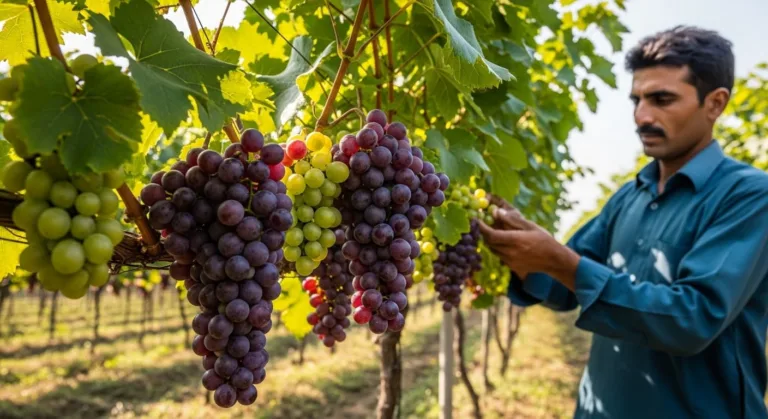
The actual grape harvest in Pakistan usually happens between June and September, depending on the variety and location. Farmers carefully monitor their grapes, checking sugar levels and taste to determine the perfect moment for picking. Harvesting too early means sour grapes, while waiting too long can lead to overripe fruit that won’t store well. It’s all about timing, kind of like knowing exactly when to take cookies out of the oven for that perfect golden-brown finish.
What Challenges Do Grape Farmers Face?
Growing grapes in Pakistan isn’t all sunshine and sweet fruit. Farmers face some serious challenges that they have to overcome every season. Water scarcity is probably the biggest issue, especially in regions like Balochistan where rainfall is limited. Grape vines need consistent watering, but not too much and not too little. It’s a delicate balance that farmers have to master.
Pests and diseases can also wreak havoc on grape crops. Tiny insects and fungal infections can destroy entire vineyards if not managed properly. The tricky part is controlling these problems without using too many chemicals, since consumers increasingly want pesticide-free, organic fruit.
Climate change has added a whole new layer of difficulty. Unpredictable weather patterns, unexpected frosts, or heat waves can damage crops and reduce yields. Farmers are having to adapt by trying new varieties that are more resilient or adjusting their planting schedules.
What’s the Future Looking Like for Pakistani Grapes?
The future of grape farming in Pakistan looks pretty bright, actually. More young people are getting interested in agriculture, especially when they see how technology can make farming more efficient and profitable. Imagine using drones to monitor your vineyard or apps that tell you exactly when to water your plants. That’s not science fiction anymore, it’s happening right now.
Export opportunities are expanding too. Pakistani grapes are finding their way into markets in the Middle East, Central Asia, and even Europe. As quality continues to improve and farmers get better at meeting international standards, these export numbers will likely grow.
There’s also growing interest in value-added products made from grapes. We’re talking about grape juice, raisins, and even grape seed oil. These products can fetch higher prices and give farmers more income stability throughout the year, not just during harvest season.
Wrapping It All Up
So, can Pakistani grapes compete with the world’s best? Absolutely! With the right combination of ideal growing conditions, dedicated farmers, and improving agricultural practices, Pakistan is carving out its own special place in the global grape market. The country’s diverse climate zones allow for different varieties to flourish, each with its own unique characteristics.
Whether it’s the crispy sweetness of Sundar Khani grapes from Balochistan or the refreshing tartness of Perlette grapes from Punjab, Pakistani grapes have something special to offer. As farmers continue to innovate and adapt to challenges, the quality keeps getting better. Next time you bite into a grape, think about the journey it took to get to you, the farmers who carefully tended the vines, the perfect timing of the harvest, and the ideal weather conditions that made it all possible.
What do you think? Would you be curious to try different Pakistani grape varieties and discover which one becomes your favorite?