Imagine waking up every morning to the sound of cheerful bleating, knowing that your small herd of goats could be your ticket to financial independence. Sounds pretty cool, right? In Pakistan, thousands of people have turned goat farming from a simple backyard hobby into a thriving business that supports their families and builds their futures. But here’s the catch: you can’t just buy a few goats and hope for the best. You need a solid plan!
Goat farming is one of the fastest-growing agricultural businesses in Pakistan, and for good reason. Goats are relatively easy to care for, they don’t need massive amounts of space, and the demand for goat meat (especially during Eid-ul-Adha) is huge. Plus, goats provide milk, leather, and even fiber, making them incredibly versatile animals. Whether you’re in bustling Lahore, agricultural Multan, or a small village in Punjab, goat farming can work for you.
In this article, we’ll walk through everything you need to know about creating a goat farming business plan in Pakistan. From choosing the right breeds to understanding costs and profits, you’ll discover exactly what it takes to turn this ancient practice into a modern, money-making venture. Let’s dive in and explore how farms like MultanFarms.com have mastered the art of goat farming!
Why Goat Farming Makes Sense in Pakistan
Before we get into the nitty-gritty of business planning, let’s talk about why goat farming is such a smart choice in Pakistan. First off, goats are tough animals. They can handle Pakistan’s hot summers and relatively mild winters better than many other livestock. They’re not picky eaters either, they’ll munch on grass, leaves, crop residues, and even kitchen scraps!
Here’s another awesome fact: Pakistan is already one of the top goat-producing countries in the world. We’re talking about over 78 million goats nationwide! This means there’s already a well-established market, experienced farmers to learn from, and buyers who understand the value of quality goats. You’re not starting from scratch, you’re joining a proven industry.
The cultural and religious significance of goats in Pakistan also works in your favor. During Eid-ul-Adha, the demand for healthy, well-fed goats skyrockets, and prices can increase by 50% or more. Smart farmers at operations like MultanFarms.com plan their breeding cycles so they have prime goats ready for sale during these peak seasons. It’s like a store stocking up before the holiday rush!
Choosing Your Goats: Picking the Right Breed for Your Goals
Not all goats are created equal! Pakistan has several excellent goat breeds, and choosing the right one depends on what you want to achieve with your farm. Are you focused on meat production? Milk? Or maybe you want to breed and sell quality animals to other farmers?
Beetal goats are one of the most popular breeds in Punjab and are known for their impressive size and good meat production. These goats can weigh up to 90 kg when fully grown, making them perfect for meat sales. They also produce decent amounts of milk, so you get two benefits from one animal. Think of Beetal goats as the SUVs of the goat world, big, versatile, and reliable!
Teddy goats are another fantastic option, especially if you’re near Multan or surrounding areas. These goats are famous for their compact, muscular bodies and are highly sought after during Eid. They’re like the sports cars of goats, smaller than Beetals but incredibly valuable for their meat quality and appearance.
For those interested in milk production, Kamori and Barbari goats are excellent choices. Kamori goats can produce up to 3 liters of milk per day, which you can sell fresh or use to make cheese, yogurt, and other dairy products. This creates multiple income streams from your farm, always a smart business move!
The Numbers Game: Understanding Startup Costs
Let’s get real about money because that’s what business planning is all about. How much does it actually cost to start a goat farm in Pakistan? The answer depends on your scale, but we can break down some realistic numbers.
For a small-scale operation starting with 10 to 15 goats, you’re looking at an initial investment of around 200,000 to 300,000 Pakistani Rupees. This includes purchasing your goats (which can cost anywhere from 15,000 to 40,000 rupees each, depending on breed and quality), building basic shelter, buying feeding equipment, and covering initial veterinary costs.
A medium-scale farm with 30 to 50 goats might require an investment of 500,000 to 800,000 rupees. At this level, you’ll need more sophisticated housing, better feeding systems, and probably some hired help during busy seasons. You might also want to invest in proper fencing and water systems to make daily management easier.
Here’s the breakdown of major costs you need to plan for:
- Animals: 50-60% of your initial budget
- Housing and fencing: 20-25%
- Equipment and feeders: 10-15%
- Initial feed and medicine: 10-15%
Professional farms like MultanFarms.com recommend keeping an emergency fund of at least 20% extra for unexpected expenses. Goats can get sick, equipment breaks, and you’ll definitely face surprises along the way!
Housing and Infrastructure: Creating a Comfortable Home
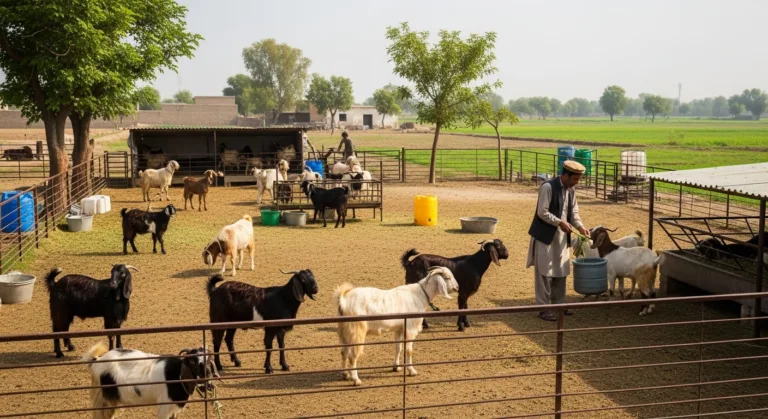
Your goats need a proper place to live, but the good news is that goat housing doesn’t have to be super fancy or expensive. The key is making sure it’s clean, dry, and well-ventilated. In Pakistan’s climate, protection from extreme heat is more important than protection from cold.
Each adult goat needs about 10 to 15 square feet of space in the shelter. So if you’re starting with 20 goats, you’ll need a shed that’s at least 200 to 300 square feet. The roof should be high enough (at least 8 to 10 feet) to allow good air circulation, which helps prevent respiratory diseases and keeps the goats cool during summer.
The flooring is super important too! A slightly sloped concrete floor with drainage channels makes cleaning much easier and prevents the buildup of waste, which can cause health problems. Some farmers add a layer of sand or wood shavings on top for extra comfort. Think of it like giving your goats a nice carpet to walk on!
You’ll also need separate areas for different purposes: a main housing area, a feeding zone, a kids’ section for baby goats, and an isolation area for sick animals. Planning these spaces from the beginning makes managing your farm way more efficient. It’s like organizing your school locker, everything has its place, and life is so much easier!
Feeding Strategy: Keeping Your Goats Healthy and Growing
A huge part of your business plan revolves around feeding because this is one of your biggest ongoing expenses. The good news? Goats are browsers (not grazers like cows), which means they naturally prefer to eat leaves, bushes, and plants at different heights. This makes them cheaper to feed than many other livestock!
Your feeding strategy should include three main components. Green fodder like berseem (Egyptian clover), lucerne, and seasonal grasses should make up the bulk of their diet. Many farmers grow their own fodder to cut costs. It’s like having a vegetable garden, except you’re growing salad for your goats!
Dry feed like wheat straw, corn stalks, and hay provides roughage that helps their digestive system work properly. You’ll use more dry feed during winter when green fodder is scarce. Finally, concentrated feed (a mixture of grains, protein supplements, and minerals) gives goats the extra nutrition they need for growth, milk production, or preparing for breeding.
Here’s a money-saving tip from experienced farmers: each adult goat needs about 1.5 to 2 kg of green fodder and 200 to 300 grams of concentrate daily. Planning your feed budget based on these numbers helps you avoid overspending while keeping your animals in top condition.
Marketing and Sales: Turning Goats into Profit
This is where your business plan really comes to life! You can have the healthiest, best-looking goats in Pakistan, but if you don’t know how to sell them, your business won’t succeed. Let’s talk about making money!
The most obvious sales opportunity is Eid-ul-Adha, when prices peak and demand is enormous. Smart farmers plan their breeding so that kids are born about 10 to 12 months before Eid, giving them time to grow to ideal market size. Some farmers at operations like MultanFarms.com report that 60-70% of their annual sales happen during the two weeks before Eid!
But don’t put all your eggs (or goats!) in one basket. Year-round sales to butcher shops, restaurants, and individual customers provide steady income. Building relationships with regular buyers means you’ll have guaranteed sales even during off-peak seasons. It’s like having loyal customers who keep coming back to your lemonade stand!
Breeding stock sales are another lucrative option. If you focus on raising high-quality, purebred goats, other farmers will pay premium prices for breeding males and females. Some champion breeding bucks can sell for 100,000 rupees or more! Plus, if you have dairy goats, selling fresh milk to local customers or dairy shops creates daily cash flow.
Many successful farmers now use social media, especially Facebook and WhatsApp groups, to advertise their goats. Posting clear photos, sharing feeding practices, and building a reputation for honesty can dramatically expand your customer base.
Health Management: Protecting Your Investment
Here’s something you absolutely must include in your business plan: a health management strategy. Sick goats don’t grow well, don’t produce milk, and definitely won’t sell for good prices. Prevention is way cheaper than treatment!
Your plan should include regular vaccination schedules for common diseases like Enterotoxemia, PPR (Peste des Petits Ruminants), and Anthrax. Work with a local veterinarian to create a calendar of when each vaccine is due. It’s like getting your yearly checkup at the doctor, except goats need theirs more often!
Deworming every 2 to 3 months prevents internal parasites that can seriously harm your goats’ health and growth. External parasite control (for ticks, lice, and mites) is equally important. Many farmers do a monthly inspection of their entire herd to catch problems early.
Setting aside 5-10% of your monthly budget for veterinary care and medicine is smart planning. Some months you won’t need it, but when problems arise (and they will), you’ll be grateful to have funds ready.
Conclusion: Your Roadmap to Goat Farming Success
So, could goat farming really be your path to success in Pakistan? Absolutely! But as you’ve learned, success doesn’t happen by accident. It comes from careful planning, smart breed selection, proper housing, strategic feeding, effective marketing, and diligent health management. These aren’t just fancy words, they’re the building blocks of every successful goat farming business in the country.
Whether you’re inspired by established farms like MultanFarms.com or dreaming of starting your own agricultural venture, remember that every big farm started small. The key is having a solid business plan that guides your decisions and helps you avoid costly mistakes. Start with a manageable number of goats, learn as you go, and gradually expand as your experience and profits grow.
The opportunity is real, the market is there, and with dedication and smart planning, goat farming can transform from a simple idea into a thriving business that supports your dreams. So, are you ready to take the first step toward building your own goat farming success story? What part of the business plan excites you most?