Imagine waking up every morning to rows and rows of beautiful mango trees stretching as far as your eyes can see. The sweet smell of ripe mangoes fills the air, and you know that each piece of fruit represents not just a delicious snack, but also a chance to earn money and build a future. Sound like a dream? Well, in Multan, Pakistan, this dream can actually become reality!
Multan is famous for being one of the best places in the world to grow mangoes. The city’s hot, sunny climate and rich soil create the perfect recipe for growing some of the juiciest, most flavorful mangoes you’ve ever tasted. That’s why people call Multan the “City of Mangoes,” and it’s why mango farms in this region are so special and valuable.
If you’ve ever wondered what it takes to own a mango farm, or why someone would want to buy one in the first place, you’re in the right spot. We’re going to explore everything about mango farms in Multan, from why they’re such a big deal to what makes them a smart choice for people looking to invest their money. Get ready to discover a world where agriculture meets opportunity!
Why Is Multan the Mango Capital?
Let’s start with a really cool fact: Multan produces some of the most sought-after mangoes in the entire world. We’re talking about varieties like Chaunsa, Sindhri, and Anwar Ratol that people literally travel across countries to taste. But what makes Multan so special for growing these golden fruits?
First, the climate is absolutely perfect. Mangoes love heat and sunshine, and Multan has plenty of both! The long, hot summers give mango trees exactly what they need to produce sweet, juicy fruit. Think of it like this: if you were a mango tree, Multan would be your favorite vacation spot, except you’d want to stay there forever.
Second, the soil in this region is incredibly rich and fertile. Over thousands of years, the Chenab River has deposited nutrients into the land, creating the perfect growing conditions. It’s like having the world’s best fertilizer already mixed into the ground naturally. When you combine this amazing soil with Multan’s climate, you get mangoes that are simply unbeatable in taste and quality.
What Does a Mango Farm Actually Include?
When someone talks about buying a mango farm, what exactly are they getting? It’s not just a bunch of trees scattered randomly across a field! A proper mango farm is actually a well-organized agricultural business with several important components.
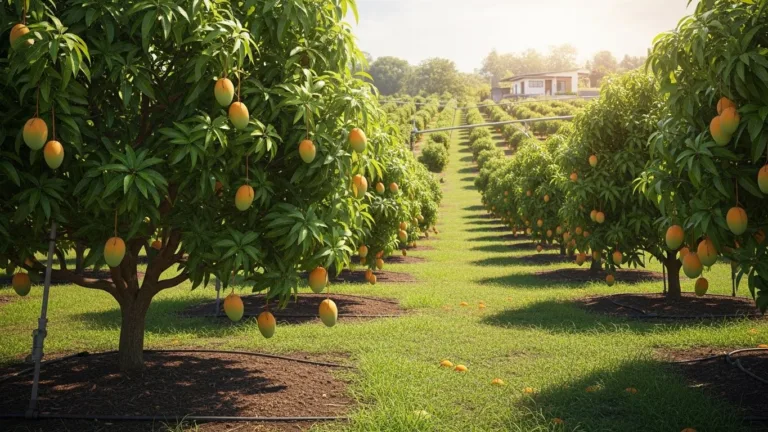
The most obvious part is the mango orchard itself, which is the area where all the mango trees are planted in neat rows. Depending on the size of the farm, you could have anywhere from a few dozen trees to thousands of them! These trees are carefully spaced so they have room to grow and produce the maximum amount of fruit.
Most farms also include an irrigation system, which is basically a network of pipes, channels, or wells that bring water to the trees. Mango trees need regular watering, especially during the hot summer months, so a good irrigation system is super important. Some modern farms even have drip irrigation, which delivers water directly to each tree’s roots, kind of like giving each tree its own personal water bottle!
You’ll also usually find storage facilities on a mango farm. These are buildings or sheds where farmers can keep their harvested mangoes cool and fresh before selling them. There might also be living quarters for workers, equipment storage for tractors and tools, and sometimes even processing facilities where mangoes are sorted, graded, and packed for shipping.
Why Would Someone Want to Buy a Mango Farm?
Here’s where things get really interesting. You might be thinking, “Why would anyone want to own a mango farm?” Well, there are actually tons of great reasons, and they go way beyond just loving mangoes (although that definitely helps!).
First up is the income potential. A well-managed mango farm can be incredibly profitable. Think about it: mangoes are in super high demand, not just in Pakistan but all around the world. People are willing to pay good money for high-quality mangoes, especially the famous varieties that come from Multan. Some farm owners make enough money from just a few months of mango season to support themselves for the whole year!
Another big reason is long-term investment value. Unlike some businesses that can disappear overnight, agricultural land tends to hold its value really well. In fact, good farmland often becomes more valuable over time, especially in a prime location like Multan. It’s like buying a piece of real estate that also happens to produce delicious fruit and income!
There’s also something called agricultural diversification, which is a fancy way of saying “not putting all your eggs in one basket.” Many people who buy mango farms already have other businesses or investments, and they want to add farming to their portfolio. It’s a smart way to spread out risk and have multiple income sources.
What Should You Know Before Buying a Mango Farm?
Okay, so buying a mango farm sounds pretty amazing, right? But before anyone jumps in, there are some important things to consider. Running a farm isn’t like playing a farming game on your phone, it requires real knowledge, work, and planning!
The first thing to think about is water availability. Remember how we talked about irrigation being super important? Well, you need to make sure the farm has a reliable water source. This could be a well, access to canal water, or a river nearby. Without enough water, those mango trees aren’t going to produce much fruit, no matter how good the soil is.
Next, you need to consider the age and health of the trees. Mango trees can live for over 100 years, but they don’t produce fruit right away. A young tree might take 3 to 5 years before it starts giving you mangoes, while a mature tree that’s 10 to 20 years old will be producing lots of fruit. When you’re looking at a farm, you want to know: Are these trees already producing? Are they healthy? Have they been well cared for?
You also need to think about labor and management. Mango farming isn’t something you can do all by yourself, especially if you have a large orchard. You’ll need workers to help with pruning, harvesting, pest control, and general maintenance. This means you either need to plan on hiring people or working with an experienced farm manager who knows what they’re doing.
How Much Does a Mango Farm Cost?
This is the million-dollar question, well, sometimes it actually is close to a million dollars! The cost of a mango farm in Multan can vary hugely depending on several factors, and understanding these can help make sense of the prices you might see.
Location is probably the biggest factor. A farm that’s close to main roads, markets, or cities will usually cost more than one that’s out in a more remote area. Why? Because it’s easier and cheaper to transport your mangoes to buyers. It’s like how a house near your school costs more than one that’s an hour away, convenience matters!
The size of the farm obviously makes a big difference too. You could find small farms with just a few acres, or massive operations covering 50, 100, or even more acres. Generally, bigger farms cost more total money, but the price per acre might actually be lower. It’s kind of like buying in bulk at the store, the more you buy, the better deal you might get per unit.
The condition and age of the orchard also affects the price. A farm with mature, productive trees that are already making money will cost more than bare land or a farm with young trees. But remember, you’re also getting the benefit of immediate income, so sometimes paying more upfront can be worth it. Farm facilities like wells, irrigation systems, storage buildings, and roads all add value too.
What Makes a Good Mango Farm Investment?
Let’s say you’re seriously thinking about mango farms (or maybe you’re just really curious). How do you know if a particular farm is a good choice? There are some key things that separate an okay farm from a great one.
A well-maintained orchard is absolutely crucial. The trees should look healthy, with good leaf coverage and no major signs of disease. The farm should be clean and organized, with clear paths between tree rows and evidence of regular care. It’s like the difference between a garden that someone tends every day and one that’s been neglected for years, you can usually tell right away!
Good soil quality is another must-have. Even though Multan generally has great soil, some areas are better than others. The soil should be dark and rich, not pale or rocky. Ideally, you’d want to get a soil test done to know exactly what nutrients are present and what might need to be added.
Finally, look for farms with proven productivity. This means asking about harvest records from previous years. How many mangoes did the farm produce? What varieties? What prices did they sell for? A farm with a solid track record of good harvests is way less risky than one where the history is unknown. It’s like buying a used car, you want to see the maintenance records to know it’s been running well!
The Future of Mango Farming in Multan
Here’s something exciting to think about: mango farming in Multan isn’t just stuck in the past, it’s actually evolving and getting more high-tech! Modern farmers are using all sorts of cool innovations to make their orchards more productive and sustainable.
Some farms are now using precision agriculture, which involves technology like sensors and drones to monitor tree health, soil moisture, and even predict when mangoes will be ripe. It’s like having a super-smart computer assistant helping you take care of your trees! This technology helps farmers use water and fertilizers more efficiently, which is good for both the environment and their profits.
There’s also growing interest in organic mango farming. More and more people around the world want to buy fruit that’s grown without synthetic pesticides or chemicals. Organic Multani mangoes can sell for premium prices in international markets, making them an attractive option for farm owners who are willing to put in the extra effort.
Plus, the demand for Multan’s mangoes just keeps growing. As more people discover how amazing these fruits taste, markets in Europe, the Middle East, and other regions are eager to buy them. This means the future looks bright for anyone involved in mango farming in this region!
Wrapping It All Up
So, could owning a mango farm in Multan be a sweet deal? Absolutely! With the right knowledge, resources, and dedication, a mango farm can be both a profitable business and a connection to one of the most important agricultural traditions in Pakistan. From the perfect climate to the world-famous fruit varieties, Multan offers something truly special for mango farming.
Whether you’re dreaming of owning your own orchard someday or you’re just fascinated by where your favorite fruit comes from, understanding mango farms helps you appreciate the hard work and natural beauty that goes into every juicy bite. The combination of rich soil, dedicated farmers, and centuries of agricultural expertise makes Multan’s mango farms some of the most valuable agricultural properties in the region.
What about you? If you could own any type of farm, would you choose mangoes, or would you want to grow something else? Either way, the next time you bite into a delicious mango, you’ll know just how much thought, work, and natural wonder went into producing that perfect piece of fruit!