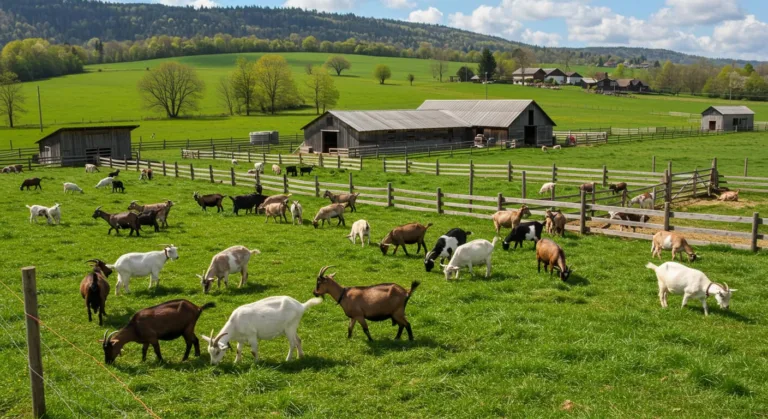
Picture this: you’re walking through a farm and suddenly hear a chorus of “baaa, baaa, baaa” coming from a nearby field. You look over and see dozens of goats jumping around, climbing on rocks, and munching on grass. What you might not realize is that you’re looking at one of the world’s fastest-growing agricultural businesses, commercial goat farming!
You might think of goats as just cute, funny animals that eat everything in sight (including your homework if you’re not careful!). But goats are actually incredible business partners for farmers around the world. From providing milk for your favorite cheese to producing meat for dinner tables, goats are helping farmers build successful businesses while feeding millions of people.
So what exactly makes commercial goat farming such a big deal? Let’s dive into this fascinating world and discover why more and more people are saying “I goat to try this business!”
What Exactly Is Commercial Goat Farming?
Think of commercial goat farming like running a restaurant, but instead of serving food, you’re producing it! Commercial goat farming means raising goats specifically to make money by selling their products. It’s not just about having a few goats in your backyard for fun, it’s about creating a real business that can support a family or even employ lots of people.
Unlike hobby farming where someone might keep two or three goats just for their own family’s milk, commercial goat farmers might have hundreds or even thousands of goats. These farmers treat their goats like employees in a company, each one has a job to do whether it’s producing milk, having babies to grow the herd, or eventually becoming meat for the market.
The coolest part? Goats are like the Swiss Army knife of farm animals. While a dairy cow mainly gives milk and a chicken mainly gives eggs, goats can provide milk, meat, fiber (for making clothes), and even help clear land by eating unwanted weeds and bushes!
Why Are Goats Such Smart Business Partners?
Have you ever noticed how some of your classmates seem to excel at everything they try? Well, goats are kind of like those super-talented kids, but in the animal world! They’re incredibly adaptable and can thrive in places where other farm animals might struggle.
Goats are like the ultimate survivors. They can live in hot deserts, cold mountains, and everything in between. While cows need lots of green, grassy pastures and specific weather conditions, goats are happy eating shrubs, weeds, and plants that other animals won’t even touch. It’s like they have superpowers when it comes to finding food!
Here’s another amazing fact: goats reproduce faster than almost any other farm animal. A female goat can have babies when she’s just one year old, and she often has twins or even triplets! Compare that to cows, which usually have just one baby and take longer to mature. For a business owner, this means more products to sell in less time.
Plus, goats don’t need fancy, expensive equipment or huge amounts of space. You could fit about 10 goats in the same space needed for one cow. For farmers just starting out or those without huge budgets, goats offer a way to begin their agricultural journey without breaking the bank.
The Amazing Products That Come from Goats
When you think about what goats produce, you might immediately think of goat cheese (which, by the way, is delicious on pizza!). But goats are like a one-stop shop for all kinds of valuable products that people want to buy.
Goat milk is probably the most popular product from commercial goat farms. It’s easier to digest than cow’s milk, which makes it perfect for people who can’t drink regular milk. Some people say it tastes sweeter and creamier too. Farmers can sell fresh milk, or they can turn it into cheese, soap, ice cream, and even cosmetics. Imagine telling your friends that your face wash is made from goat milk!
Goat meat, also called chevon or cabrito, is actually the most consumed meat in the world, even though it’s not as common in some countries. It’s lean, healthy, and tastes similar to lamb. In many cultures, goat meat is considered a delicacy and can sell for high prices, especially during holidays and special celebrations.
Then there’s goat fiber, which comes from special breeds like Angora goats (they produce mohair) and Cashmere goats (they produce cashmere wool). These fibers are used to make some of the most expensive and luxurious clothing in the world. A single cashmere sweater can cost hundreds of dollars!
Getting Started: What Does It Really Take?
Starting a commercial goat farm is like starting any business, you need a solid plan, some money to invest, and lots of dedication. But the good news is that goat farming doesn’t require as much upfront investment as many other types of farming.
First, you need land, but not as much as you might think. About 5-10 goats can live comfortably on one acre of land, depending on the grass and vegetation available. The land needs good fencing because goats are notorious escape artists, they’re like the Houdinis of the farm world! They can jump, climb, and squeeze through spaces you wouldn’t believe possible.
You’ll also need shelter for your goats, but it doesn’t have to be fancy. A simple three-sided shelter that protects them from rain, wind, and extreme temperatures is usually enough. Goats are pretty tough and don’t need heated barns like some other animals.
The most important investment is in healthy, good-quality goats to start your herd. Buying goats from reputable breeders might cost more upfront, but it saves money and heartache later by avoiding sick animals or poor producers.
The Business Side: Show Me the Money!
Here’s where commercial goat farming gets really interesting from a business perspective. Unlike many businesses that take years to show a profit, goat farming can start generating income relatively quickly.
A good dairy goat can produce 1-3 quarts of milk per day for about 10 months of the year. If you’re selling that milk for $8-12 per gallon (which is typical for goat milk), one goat could potentially earn $1,000-2,000 per year just from milk sales. Now multiply that by 50 or 100 goats, and you can see how the numbers start to add up!
Meat goats can also be quite profitable. Depending on the market and the quality of the goats, farmers can earn $200-400 per animal. Since goats reproduce quickly and often have multiple babies, a small herd can grow into a large operation within just a few years.
The key to success is understanding your local market. Some areas have high demand for goat milk and cheese, while others might have more demand for meat. Smart farmers often diversify, selling multiple products to maximize their income and reduce risk.
Challenges Every Goat Farmer Faces
Of course, like any business, commercial goat farming isn’t all sunshine and rainbows. There are real challenges that farmers need to be prepared to handle.
Predators are probably the biggest worry for goat farmers. Goats are relatively small and can’t defend themselves against wolves, coyotes, wild dogs, or even large birds of prey. Farmers need to invest in good fencing, guard dogs, or other protection methods to keep their goats safe.
Health management is another crucial aspect. While goats are generally hardy animals, they can get sick just like any living creature. Farmers need to learn about goat health, work with veterinarians, and keep detailed records of vaccinations and treatments.
Market fluctuations can also impact profits. Just like the stock market goes up and down, so do prices for agricultural products. A successful goat farmer needs to be flexible and possibly have multiple income streams to weather tough times.
The Future Looks Bright for Goat Farming
As our world changes, commercial goat farming is actually becoming more important and profitable. More people are interested in healthy, natural foods, and goat products fit perfectly into this trend. Goat milk is often seen as a healthier alternative to cow’s milk, and goat meat is lean and environmentally friendly to produce.
Climate change is also making goats more valuable. As some areas become drier or less suitable for traditional cattle farming, goats’ ability to thrive in harsh conditions makes them an attractive option for farmers looking to adapt.
Additionally, small-scale and sustainable farming is becoming more popular. People want to know where their food comes from and how it’s produced. Goat farms are often smaller and more personal than huge industrial operations, which appeals to consumers who care about animal welfare and environmental impact.
The growing popularity of artisanal foods, from handcrafted cheeses to specialty soaps, has created new markets for goat products. Farmers who learn to add value to their raw products by making cheese, soap, or other specialty items can significantly increase their profits.
So, Is Goat Farming Right for You?
Commercial goat farming offers an exciting opportunity to build a business while working with amazing animals. It combines the satisfaction of caring for living creatures with the challenge of running a profitable enterprise. For young people thinking about their future careers, goat farming represents a chance to be your own boss, work outdoors, and contribute to feeding the world.
The relatively low startup costs, quick reproduction rates, and multiple income streams make goat farming accessible to people who might not be able to afford other types of agricultural businesses. Plus, there’s something pretty cool about being able to tell people you’re a professional goat farmer!
Whether you’re dreaming of your own farm someday or just curious about where your food comes from, commercial goat farming shows us how traditional agriculture is evolving to meet modern needs. Who knows? Maybe the next time you see a field full of goats, you’ll think, “That could be my future business!” What do you think, are you ready to join the goat farming revolution?