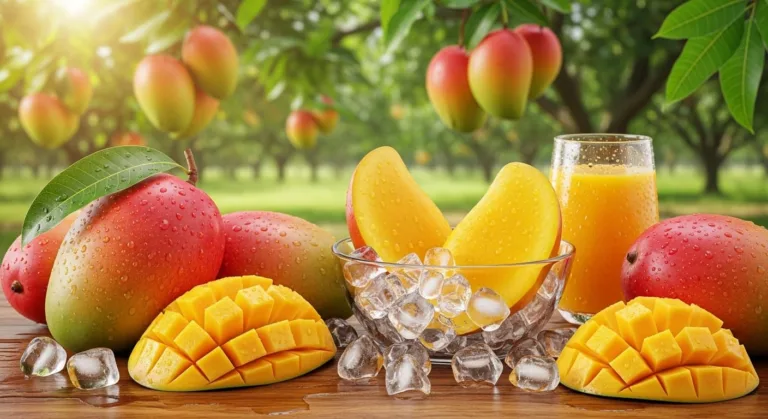
Picture this: it’s a hot summer day, and you’re biting into a juicy, sweet mango that drips down your chin. Delicious, right? But here’s something wild, that mango you’re enjoying has been around for over 4,000 years and has some seriously amazing secrets hiding beneath its colorful skin! Most people think mangoes are just another tasty fruit, but they’re actually one of the most fascinating foods on the planet.
From being India’s national fruit to having the power to improve your eyesight, mangoes are packed with surprises that’ll make you appreciate them way more than you already do. Whether you love them in smoothies, eat them plain, or have never even tried one, you’re about to discover some mind-blowing facts about this tropical superstar.
Get ready to become the mango expert in your friend group! We’re diving into ten incredible facts about mangoes that’ll make you see this fruit in a whole new light. And who knows? After reading this, you might just find yourself craving a fresh mango from Multanfarms.com!
Fact #1: Mangoes Are Ancient Royalty
Here’s something that’ll blow your mind, mangoes have been around for more than 4,000 years! That means people were enjoying mangoes before the pyramids in Egypt were even finished. The fruit originated in South Asia, particularly in India, Myanmar, and Bangladesh, where it grew wild in forests long before humans started farming.
But here’s where it gets really interesting. In ancient India, mangoes weren’t just food, they were considered royal treasures! Kings and emperors had their own private mango orchards, kind of like having a personal candy store, except way healthier. The Mughal emperors were so obsessed with mangoes that they planted over 100,000 mango trees in a garden called Lakh Bagh. Imagine an orchard so huge you could get lost in it for days!
Even today, mangoes are treated like royalty in India because they’re the country’s national fruit. It’s basically like how the bald eagle represents America, except you can eat mangoes. That’s definitely a win!
Fact #2: There Are Over 1,000 Different Types of Mangoes
If you thought all mangoes were the same, prepare to have your mind expanded! Scientists estimate there are somewhere between 1,000 to 1,500 different varieties of mangoes growing around the world. That’s more varieties than there are Pokémon in the original game!
Each type has its own unique flavor, texture, color, and size. Some mangoes are as small as plums, while others can weigh over five pounds, that’s heavier than a newborn kitten! The Alphonso mango from India is considered the “king of mangoes” because of its incredibly rich, creamy taste. Then there’s the Honey mango, which is super sweet and almost has no fiber. The Keitt mango stays green even when it’s ripe, which can trick people into thinking it’s not ready to eat yet.
At farms like Multanfarms.com, growers carefully select which varieties to plant based on the local climate and what tastes best. It’s like being a fruit DJ, mixing different varieties to create the perfect lineup!
Fact #3: Mangoes Are Nutrition Superheroes in Disguise
Okay, so mangoes taste amazing, but did you know they’re also incredibly good for you? One cup of mango gives you 100% of your daily vitamin C needs. That’s the same vitamin that helps you fight off colds and keeps your skin healthy. It’s like having a delicious bodyguard protecting you from getting sick!
But vitamin C is just the beginning. Mangoes are loaded with vitamin A, which is super important for keeping your eyes sharp. If you spend a lot of time staring at screens (and let’s be honest, who doesn’t?), eating mangoes can help keep your vision strong. They also contain over 20 different vitamins and minerals, including folate, which helps your body make new cells.
Here’s a fun comparison: eating a mango is like taking a multivitamin, except it tastes a thousand times better and doesn’t leave that weird chalky feeling in your mouth. Plus, mangoes have natural fiber that helps your digestive system work smoothly. It’s basically a win-win-win situation!
Fact #4: Mango Trees Can Live Longer Than Your Great-Great-Grandparents
Ready for something crazy? Mango trees can live for over 300 years and still produce fruit! That means a mango tree planted before the United States even existed could still be giving people delicious mangoes today. Talk about staying productive!
These trees don’t just live long, they also grow absolutely massive. A fully grown mango tree can reach heights of 100 feet, that’s about as tall as a ten-story building! Their root systems spread out wide and deep, searching for water and nutrients. It’s like the tree is throwing out hundreds of underground ropes to anchor itself to the Earth.
What’s even cooler is that a single mature mango tree can produce anywhere from 200 to 1,000 mangoes in one season. Imagine having a tree in your backyard that basically runs its own fruit stand! Some historical mango trees in India are considered sacred and protected by law because they’ve been feeding communities for centuries.
Fact #5: Mangoes Are Related to Cashews and Pistachios
This one sounds weird, but it’s totally true! Mangoes belong to the same plant family as cashews and pistachios. They’re all part of the Anacardiaceae family, which also includes poison ivy (but don’t worry, mangoes won’t give you a rash when you eat them!).
If you’ve ever noticed that mango skin sometimes makes people’s lips tingle or causes a mild reaction, that’s because mango skin contains a substance called urushiol, the same compound found in poison ivy. But here’s the thing, the fruit inside is totally safe! It’s kind of like how pineapple skin is rough and spiky, but the inside is sweet and delicious.
This family connection explains why some people who are allergic to cashews or pistachios might also react to mangoes. It’s like how cousins in a family might share similar features. The plants share similar chemical compounds even though they look and taste completely different!
Fact #6: Mangoes Can Ripen After They’re Picked
Unlike some fruits that need to ripen on the tree (I’m looking at you, strawberries!), mangoes continue to ripen even after they’re picked. This is super convenient because it means farmers can harvest mangoes before they’re fully soft and ship them around the world without them getting mushy during the trip.
Here’s a cool trick: if you buy a hard, unripe mango, just leave it on your kitchen counter at room temperature for a few days. It’ll gradually soften up and become sweeter. Want to speed things up? Put it in a paper bag with a banana or apple. These fruits release a gas called ethylene that tells the mango, “Hey, time to get ripe!”
Farms like Multanfarms.com time their harvests perfectly so mangoes arrive at markets with just the right amount of ripeness left to go. It’s basically fruit science in action! You’ll know a mango is ready to eat when it gives slightly when you squeeze it gently and smells sweet near the stem.
Fact #7: India Produces Nearly Half the World’s Mangoes
When it comes to mango production, India is absolutely dominating the game! This country grows almost 50% of all the mangoes in the world. That’s nearly 20 million tons of mangoes every single year. To put that in perspective, if you lined up all those mangoes, they’d probably stretch to the moon and back, well, maybe not quite that far, but you get the idea!
Why is India so good at growing mangoes? It’s a combination of perfect climate, thousands of years of farming experience, and genuine cultural love for the fruit. Mango season in India is treated like a national celebration, with people eagerly waiting for their favorite varieties to hit the markets.
Other major mango-producing countries include China, Thailand, Mexico, and Pakistan. Each region has developed its own special varieties adapted to local growing conditions. It’s like how different countries have their own versions of pizza, everyone does it a bit differently, but it’s all delicious!
Fact #8: Mangoes Can Help You Sleep Better
Here’s a fact that might surprise you: mangoes contain a compound called pyridoxine, which is basically vitamin B6, and it helps your brain produce serotonin and melatonin. Those are the chemicals that regulate your sleep cycle and mood. So eating mangoes might actually help you sleep better at night!
But that’s not all. Mangoes also have natural sugars that give you a nice energy boost without the crash you get from candy or soda. It’s like nature’s energy drink, except it tastes way better and won’t make you jittery. Athletes sometimes eat mangoes before competitions because they provide steady, long-lasting energy.
The magnesium in mangoes also helps your muscles relax, which is another reason they’re great for bedtime snacking. Just don’t eat too many right before bed, or you might spend the night running to the bathroom instead of sleeping peacefully!
Fact #9: The Mango Leaf Pattern Is Sacred in Many Cultures
Have you ever noticed that distinctive shape of a mango leaf? It’s long, pointed, and slightly curved, kind of like a spear. In Indian culture, these leaves are considered sacred and are used in religious ceremonies and celebrations. People hang strings of mango leaves above doorways during festivals and weddings because they believe it brings prosperity and good luck.
The leaf pattern has become so iconic that it’s inspired art, jewelry, and fashion design around the world. That teardrop shape you see on fabrics and decorations? It’s called a “paisley” pattern, and many historians believe it was originally inspired by the mango leaf!
In some cultures, mango leaves are even used in traditional medicine. People boil them to make tea that’s supposed to help with various health conditions. While science is still catching up on whether these remedies actually work, it shows just how deeply mangoes are woven into different cultures around the world.
Fact #10: Mangoes Can Actually Improve Your Skin
Last but definitely not least, here’s a fact that beauty enthusiasts love: mangoes can make your skin look better! The high vitamin C content helps your body produce collagen, which is the protein that keeps your skin firm and youthful. It’s like having an anti-aging cream that you can eat!
The vitamin A in mangoes helps clear up acne and can give your skin a natural glow. Some people even make face masks out of mashed mango, though honestly, it seems like a waste of perfectly good mango when you could just eat it instead! The antioxidants in mangoes also protect your skin from sun damage, though you should definitely still wear sunscreen.
Beauty companies have caught on to this, which is why you’ll see mango extract in all sorts of skincare products, from lotions to shampoos. But here’s a secret: eating the actual fruit gives you way more benefits than just rubbing it on your skin. Plus, it’s way more delicious!
The Sweet Conclusion
So there you have it, ten amazing facts about mangoes that prove this fruit is way more than just a tasty snack! From ancient royal orchards to modern nutrition science, mangoes have been impressing people for thousands of years. They’re basically the overachievers of the fruit world, being delicious AND nutritious AND historically significant all at once.
Next time you bite into a juicy mango from a quality source like Multanfarms.com, you’ll know you’re not just eating fruit. You’re participating in a 4,000-year-old tradition, fueling your body with incredible nutrients, and enjoying one of nature’s most perfect creations. Whether you prefer them in smoothies, on top of ice cream, or straight from the skin, mangoes have earned their spot as one of the world’s favorite fruits.
Now here’s a question for you: with over 1,000 varieties out there, how many different types of mangoes do you think you can try in your lifetime? Maybe it’s time to start a mango adventure and see which variety becomes your personal favorite!