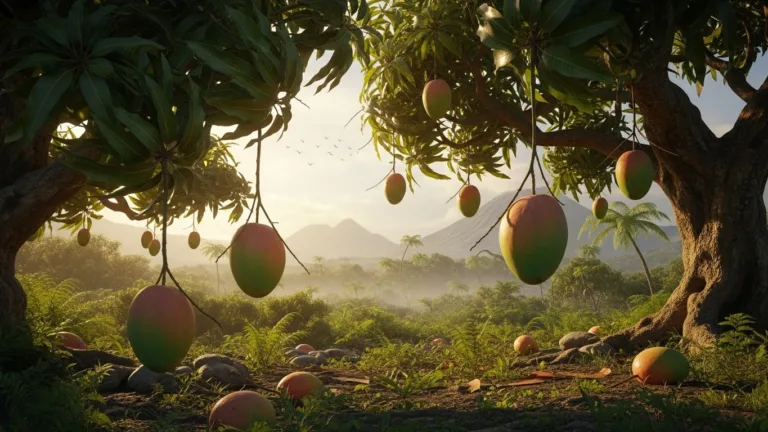
Okay, maybe that’s stretching it a bit, but mangoes really are ancient! Imagine biting into a sweet, juicy mango on a hot summer day. That delicious fruit you’re enjoying has an incredible story that goes back thousands of years. Mangoes aren’t just tasty snacks, they’re packed with fascinating history, surprising science, and some seriously cool facts that might make you appreciate them even more.
You’ve probably eaten mangoes before, maybe in a smoothie, as a snack, or even in a salsa. But did you know that mangoes are related to cashews and pistachios? Or that there are actually over a thousand different types of mangoes in the world? Get ready to dive into some mind-blowing fun facts about this amazing tropical fruit that’ll make you the most interesting person at your next lunch table conversation!
In this article, we’re going to explore everything from where mangoes come from to why they’re called the “king of fruits.” We’ll discover some wild facts about mango trees, learn about the fruit’s journey around the world, and even find out why some people get a rash from mango skin. Trust me, by the end of this, you’ll never look at a mango the same way again!
Mangoes Are Seriously Old, Like Really Old
Here’s a fun fact that’ll blow your mind: mangoes have been cultivated (that means grown by humans on purpose) for more than 4,000 years! That’s right, people were enjoying mangoes when the pyramids in Egypt were still being built. The fruit originated in South Asia, specifically in the region that includes India, Myanmar, and Bangladesh.
Ancient Indian texts and Buddhist writings mention mangoes all the time, which tells us just how important they were to people back then. In fact, mango trees were considered sacred in some cultures. Imagine if your favorite fruit was so special that people wrote poems and stories about it thousands of years ago!
The crazy part is that mango trees can live for hundreds of years. Some mango trees in India are over 300 years old and still producing fruit! That’s like having a tree that was around when pirates were sailing the seas, and it’s still giving people delicious mangoes today. At Multanfarms.com, we understand this rich heritage and work to bring you the finest mangoes with that same ancient tradition of quality.
The Journey of Mangoes Around the World
So how did mangoes get from Asia to every corner of the globe? That’s where things get really interesting! Portuguese explorers discovered mangoes in the 1400s and 1500s and were totally amazed by them. They started taking mango seeds with them on their ships and planting them wherever they traveled.
By the 1700s, mangoes had made it to Brazil and the Caribbean. From there, they spread to Mexico and eventually made their way to Florida in the United States. Think of it like a delicious chain reaction, one person tries a mango, loves it, and wants to share it with everyone they know. That happened on a global scale!
Today, mangoes are grown in tropical and subtropical regions all over the world. India is still the biggest producer of mangoes, growing about 40% of the world’s supply. That’s like if one student in your class had 40% of all the pizza at a party! Other major mango-growing countries include China, Thailand, Indonesia, and Mexico. The fact that this fruit traveled across oceans and continents shows just how much people love mangoes.
Why Mangoes Are Called the “King of Fruits”
In many countries, especially in India and Pakistan, mangoes are known as the “king of fruits.” But why? What makes them so royal? Well, it’s not just because they taste amazing, although that definitely helps!
Mangoes earned this title because of their incredible variety, rich flavor, and nutritional value. There are literally over 1,000 different varieties of mangoes in the world! Each type has its own unique taste, texture, and appearance. Some are super sweet, while others have a slight tang. Some are small enough to fit in your palm, while others can weigh up to five pounds, that’s heavier than a brick!
The nutritional benefits also contribute to this royal status. Mangoes are packed with Vitamin C, which helps your immune system fight off colds and infections. They also contain Vitamin A, which is great for your eyes and skin. Plus, they have fiber that helps with digestion. It’s like getting a natural multivitamin that actually tastes good! When you get quality mangoes from sources like Multanfarms.com, you’re getting all these benefits in the freshest, most flavorful form.
The Surprising Science Behind Mango Trees
Here’s something you might not know: mango trees are actually related to poison ivy! Yep, they’re both part of the same plant family called Anacardiaceae. This is why some people get a rash or allergic reaction when they touch mango skin or the sap from mango trees. The skin contains a chemical called urushiol, which is the same stuff that makes poison ivy so itchy.
Don’t worry though, the fruit inside is totally safe to eat! Just be careful when you’re peeling mangoes if you have sensitive skin. Some people wear gloves when handling mango skin, especially if they’re processing a lot of mangoes at once. It’s like how some people can pet a cat without any problems, while others start sneezing immediately.
Another cool fact about mango trees is that they can grow to be absolutely massive! A fully grown mango tree can reach heights of 100 feet tall, that’s as tall as a 10-story building! Their root systems are equally impressive, spreading out wide to collect water and nutrients from the soil. Mango trees also produce beautiful flowers before the fruit appears. These flowers are usually yellowish-white or pink and grow in clusters called panicles. Bees and other insects love these flowers, which helps with pollination.
Mangoes in Different Cultures and Traditions
Mangoes aren’t just food, they’re a big part of many cultures and traditions around the world. In India, mango leaves are used in religious ceremonies and celebrations. People hang strings of mango leaves outside their homes during festivals because they’re considered lucky and auspicious (that means they bring good fortune).
In the Philippines, there’s actually a variety of mango called the Carabao mango that’s so popular, it’s considered a national treasure! The country even has strict rules about exporting mango trees to protect this special variety. Imagine if your hometown had a fruit so special that it was protected by law!
Here’s a fun tradition: in Pakistan and India, the arrival of mango season (usually around April or May) is celebrated like a holiday. Families gather to share the first mangoes of the season, and there are even mango festivals where people can taste different varieties and vote for their favorites. It’s basically like a county fair, but focused entirely on one awesome fruit! Different regions have their own favorite varieties, and people are super passionate about which type is the best.
Wild Facts That’ll Make You Say “No Way!”
Ready for some rapid-fire fun facts that’ll impress your friends? A single mango tree can produce up to 100 kilograms (that’s about 220 pounds) of fruit in one season! That’s enough mangoes to make smoothies for your entire school.
Here’s another one: mangoes were considered so valuable in ancient times that wars were actually fought over mango groves! Can you imagine going to battle over fruit? It shows just how precious these trees were to people back then.
Did you know that eating mangoes can actually help improve your mood? They contain a compound that helps your brain produce more serotonin, which is sometimes called the “happy chemical.” So when you eat a mango and feel good, there’s actual science behind it! It’s like nature’s way of giving you a little boost when you need it.
Also, mango wood is used to make furniture and musical instruments because it’s strong and beautiful. So even when a mango tree stops producing fruit, it can still be useful. Talk about a multi-talented plant!
How to Pick and Enjoy the Perfect Mango
Now that you know all these amazing facts about mangoes, you’re probably wondering how to pick a good one at the store. Here’s the trick: don’t just look at the color! A lot of people think that red or yellow mangoes are ripe and green ones aren’t, but that’s not always true. Different varieties have different colors when they’re ripe.
The best way to tell if a mango is ready to eat is by gently squeezing it. A ripe mango should give slightly when you press it, kind of like a ripe peach or avocado. You can also smell the stem end, ripe mangoes have a sweet, fruity smell. If it doesn’t smell like anything, it probably needs more time to ripen.
Once you have a perfect mango, there are tons of ways to enjoy it! You can eat it fresh, add it to smoothies, make mango salsa, freeze it for a cool treat, or even grill it for a unique dessert. Some people like to sprinkle a little salt and chili powder on their mangoes for a sweet and spicy combo. At Multanfarms.com, we provide mangoes that are perfect for all these uses, carefully selected for peak ripeness and flavor.
The Bottom Line on These Tropical Treasures
So there you have it, mangoes are way more than just a delicious fruit! They’re ancient, they’ve traveled the world, they’re packed with nutrition, and they’re woven into cultures across the globe. From their surprising relationship to poison ivy to their status as the “king of fruits,” mangoes have earned their place as one of the world’s most beloved foods.
Next time you bite into a mango, think about all the incredible history behind it. You’re eating something that people have enjoyed for thousands of years, something that explorers carried across oceans, and something that brings joy to millions of people every day. That’s pretty special when you think about it!
Now here’s a question for you: with over 1,000 varieties of mangoes out there, how many different types do you think you’ve tried? Maybe it’s time to go on a mango-tasting adventure and discover some new favorites. Who knows, you might just find your new favorite fruit, or at least have some awesome fun facts to share!