Picture a hot summer afternoon. You’re at a fruit stall, and the seller hands you a cold bunch of grapes, green and shiny, still dripping from a rinse. You pop one in your mouth and it’s sweet, juicy, and a little bit crunchy. Now, have you ever wondered where those grapes actually came from?
Here’s a fun fact: grapes in Pakistan are grown in several parts of the country, and some of them travel hundreds of kilometers before they reach your table. From the cool hills of Balochistan to the warm plains of Punjab, grape vines are quietly working hard under the sun.
In this article, you’ll find out where grapes grow in Pakistan, which types you can taste, why the weather matters so much, and how these tiny fruits turn into raisins. Ready to explore?
Where Do Grapes Grow in Pakistan?
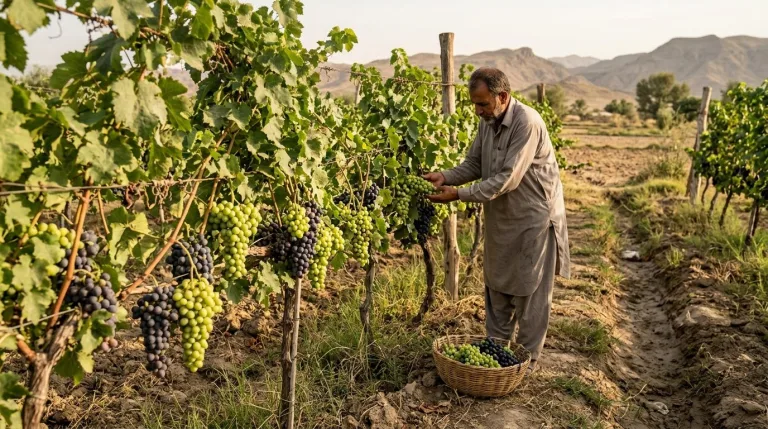
Most of Pakistan’s grapes come from Balochistan, especially areas around Quetta, Pishin, Mastung, and Kalat. Quetta is so famous for its fruit that people often call it the “Fruit Garden of Pakistan.” Apples, apricots, and grapes all grow well there.
Why Balochistan? Think of grapes like picky eaters who love a special menu. They like bright sunshine, dry air, and cool nights. The highlands of Balochistan serve exactly that menu.
Grapes also grow in parts of Khyber Pakhtunkhwa and in some areas of Punjab and Sindh, though in smaller amounts. In warmer places, farmers pick early-ripening varieties so the grapes are ready before the heat gets too extreme.
Meet the Different Types of Grapes
Not all grapes are the same, just like not all cricket players bat the same way. Pakistan grows many kinds, and each one has its own personality.
- Sundar Khani: These are long, pale green grapes that taste honey-sweet. They’re a favorite in Balochistan.
- Kishmish: These are small, seedless grapes, which means there are no seeds to spit out. They’re also the ones used to make raisins.
- Haita: These are round, juicy grapes that are often reddish or dark in color.
- Perlette and Flame Seedless: These are popular early varieties, often grown for fresh eating.
Next time you buy grapes, take a close look. Check the color, the shape, and the size. You might be able to guess the type before you even taste one!
Why Weather Matters So Much
Grapes are a bit like plants with strong opinions about weather. They need lots of sunshine, because sunlight helps the fruit make sugar. More sunshine usually means sweeter grapes.
They also like dry air. When the air is too damp, grapes can get fungus, which is a kind of tiny mold that spoils the fruit. That’s why dry, sunny places are perfect.
Cold winters help too. During winter, the vine takes a rest, a bit like how you recharge during a long weekend. When spring arrives, the vine wakes up full of energy and starts growing leaves, flowers, and later, fruit.
Did you know that a grape vine is actually a climber? In the wild, it wraps itself around trees to reach the light. Farmers copy this by building trellises, which are wooden or metal frames that hold the vines up high.
From Tiny Flower to Juicy Fruit
Here’s something that surprises most people: every grape starts as a tiny flower. In spring, the vine grows clusters of small, greenish flowers that are so little you might not even notice them.
After the flowers get pollinated, they slowly turn into tiny green berries. Over the next few months, those berries grow bigger, fill with juice, and turn sweet. It’s like watching a small seed of an idea grow into a finished project.
Farmers keep a close eye on the vines during this time. They water them carefully, trim extra leaves so sunlight can reach the fruit, and protect them from pests like birds and insects. It takes patience, because one wrong step can affect the whole harvest.
How Do Grapes Become Raisins?
Ever eaten a raisin and wondered what it used to be? Every raisin was once a grape! After harvest, grapes are spread out to dry, often in the sun or in special drying houses. As the water slowly leaves, the grape shrinks, wrinkles, and becomes sweeter and chewier.
Think of it like a wet sponge left out on a sunny day. The water disappears, but the sponge stays behind. With grapes, the sweetness stays behind.
Raisins are popular in many Pakistani kitchens. People add them to rice dishes, sweet treats, and traditional desserts, and they’re a tasty snack straight from the pack too. In fact, dried fruit from Balochistan is well known across the country.
Why Grapes Matter to Farmers and Families
Grapes aren’t just yummy. For many farming families, they’re an important source of income. A single vineyard can support a whole family, and the work often involves relatives and neighbors helping each other at harvest time.
Grapes are also good for you. They’re full of natural sugars for energy, along with water, which helps you stay hydrated on hot days. They make a great snack when you want something sweet that isn’t candy.
And when you buy fresh, locally grown fruit, you help local farmers keep doing what they do best. That’s a pretty sweet deal for everyone.
Wrapping It Up
So, what have we learned? Grapes in Pakistan grow mainly in the sunny, dry highlands of Balochistan, with smaller harvests in other regions. There are many different types, from sweet Sundar Khani to seedless Kishmish. Weather, patient farmers, and strong trellises all play a big part in getting that perfect bunch to your table. And with a little drying time, grapes can even turn into raisins!
The next time you grab a handful of grapes, take a moment to think about the long journey behind them, from a tiny flower on a vine to a sweet snack in your hand. Which type of grape will you try next?