Have you ever wondered where the fish on your dinner plate actually comes from? While you might imagine a fishing boat rocking on ocean waves, there’s a good chance your fish was actually raised on a farm, just like the vegetables in your garden or the chickens that lay your breakfast eggs. Sounds weird, right? Fish farming, or as the experts call it, aquaculture, is one of the fastest-growing food industries in the world, and it’s changing the way we think about seafood.
Imagine if you could grow fish the same way farmers grow corn or raise cattle. That’s exactly what fish farms do! Instead of wild fish swimming freely in oceans, rivers, and lakes, farm-raised fish live in carefully controlled environments where farmers feed them, protect them from predators, and help them grow until they’re ready to be harvested. It’s like having an underwater ranch.
In this article, we’re going to dive deep (pun intended!) into the fascinating world of fish farms. You’ll discover how they work, why they’re becoming so important, and what makes them different from traditional fishing. We’ll even explore how places like Multan, far from any ocean, are getting into the fish farming business. Trust me, by the end of this, you’ll never look at a fish stick the same way again!
What Exactly Is a Fish Farm?
A fish farm is basically what it sounds like, a place where fish are raised for food instead of being caught in the wild. But it’s way more high-tech than you might think! Fish farms can be set up in different ways, depending on what kind of fish are being raised and where the farm is located.
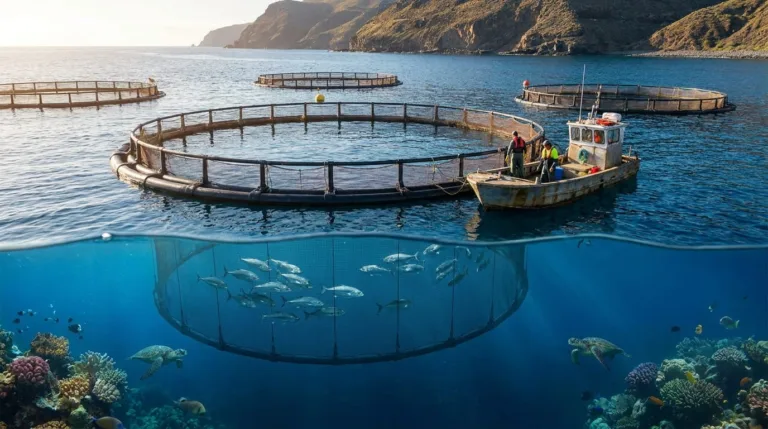
Some fish farms use big net pens that float in the ocean, rivers, or lakes. These are like underwater cages where thousands of fish swim around in a contained area. The fish get protection from big predators and regular meals, while still living in natural water. Other farms use large tanks or ponds built on land, which gives farmers even more control over the environment. These are called recirculating aquaculture systems (RAS), and they’re super cool because they clean and reuse the same water over and over again, kind of like a giant fish-friendly washing machine!
The fish raised on these farms include species you’ve probably heard of: salmon, tilapia, catfish, shrimp, and even fancy fish like sea bass. Each species needs different conditions to thrive, just like how a cactus needs different care than a fern. Farmers have to be experts at understanding what their fish need to stay healthy and grow properly.
Why Are Fish Farms Becoming So Popular?
Here’s a crazy fact: humans eat about 179 million tons of fish every year! That’s roughly the weight of 1.2 billion people. With the world population growing and more people wanting healthy protein sources, our oceans are getting emptied faster than fish can reproduce. It’s like trying to refill a bathtub while someone’s draining it even faster, eventually, you run out of water.
Fish farms help solve this problem by producing fish without depleting wild populations. Think of it this way: when you need milk, you don’t hunt down wild cows in a forest (that would be ridiculous!). You get it from dairy farms where cows are raised specifically for milk production. Fish farms work on the same principle. By farming fish, we can give wild fish populations a break and let them recover.
Another reason fish farms are booming is that they can be located almost anywhere, even in landlocked regions. In places like Multan, which is nowhere near an ocean, fish farms are popping up in ponds and tanks. Local farmers are discovering that fish farming can be a profitable business that provides fresh, healthy food to their communities. Plus, fish are actually pretty efficient at converting food into body mass, they need less feed than chickens or cows to produce the same amount of meat!
What Does a Day on a Fish Farm Look Like?
Running a fish farm isn’t as simple as tossing some fish in a pond and waiting for them to grow. It’s actually a super science-heavy job! Fish farmers start their day by checking water quality, which means testing for things like oxygen levels, temperature, pH balance, and ammonia. Fish are sensitive creatures, and if the water gets too warm, too cold, or too polluted, they can get stressed or sick.
Feeding time is a big deal on fish farms. Just like you need a balanced diet to grow strong and healthy, fish need the right nutrition too. Farmers use special fish food pellets that are packed with proteins, vitamins, and minerals. Some advanced farms even use automatic feeders that release food at specific times, or they watch the fish and only feed them when they’re hungry to avoid wasting food and polluting the water.
Health monitoring is another crucial part of the job. Farmers watch their fish carefully for signs of disease or parasites. When fish live close together, illnesses can spread quickly, kind of like how a cold can zip through your classroom in a week. That’s why prevention is so important. Some farms use vaccines for their fish (yes, fish vaccines are a real thing!), while others rely on keeping the environment super clean and stress-free.
The Cool Technology Behind Modern Fish Farms
Modern fish farms are like something out of a sci-fi movie! Many farms now use sensors and computers to monitor everything automatically. Imagine having a smart fish tank that knows exactly when to feed the fish, when to add oxygen, and when something’s going wrong. These systems can send alerts to a farmer’s phone if the water temperature drops suddenly or if oxygen levels get too low.
Some cutting-edge farms are even experimenting with vertical fish farming, where fish are raised in stacked tanks inside warehouse-like buildings. It’s similar to vertical gardens in cities, but underwater! This method saves space and gives farmers total control over the environment, meaning they can raise fish year-round regardless of weather or season.
There’s also exciting research into what fish eat. Scientists are working on creating fish food from insects, algae, and even food waste instead of relying on wild-caught smaller fish. This makes fish farming more sustainable and less dependent on ocean resources. It’s like creating a circular system where nothing goes to waste!
Fish Farming in Places Like Multan
You might be thinking, “Wait, how can you have a fish farm in Multan? Isn’t that in the middle of Pakistan, far from any ocean?” Great question! The beauty of modern fish farming is that you don’t need to be near the ocean at all. All you need is water, and that can come from wells, rivers, or even rainwater collection systems.
In regions like Multan, fish farming in ponds and tanks is becoming increasingly popular. Farmers are raising species that do well in freshwater, like tilapia and catfish. These fish are hardy, grow quickly, and taste great, making them perfect for local markets. A fish farm in Multan might consist of several large ponds dug into the ground, filled with clean water, and stocked with young fish called fingerlings.
Local fish farming has some awesome benefits for communities. Fresh fish doesn’t have to be transported from coastal areas, which means it’s fresher, cheaper, and has a smaller carbon footprint. It also creates jobs for people who become fish farmers, feed suppliers, or fish processors. Plus, when farmers integrate fish farming with other agriculture (like using fish waste as fertilizer for crops), it creates a super-efficient system where everything works together.
The Challenges Fish Farms Face
Of course, fish farming isn’t perfect. Like any form of agriculture, it comes with challenges that farmers and scientists are working hard to solve. One concern is water pollution. If farms aren’t managed carefully, fish waste and uneaten food can pollute the surrounding water. It’s like leaving your lunch trash in your backyard every day, eventually, it’s going to cause problems!
There’s also the question of fish welfare. Some people worry that fish in crowded pens might be stressed or uncomfortable. That’s why responsible fish farms focus on giving their fish enough space, clean water, and a healthy environment. It’s similar to how we’ve learned that free-range chickens are happier and healthier than ones kept in tiny cages.
Another challenge is disease management without overusing antibiotics or chemicals. Just like doctors try to avoid prescribing antibiotics for every little sniffle (because it can lead to antibiotic-resistant bacteria), fish farmers are learning to keep their fish healthy through good management practices rather than relying on medications.
Why This Matters for Your Future
Fish farming represents a glimpse into the future of food production. As our planet gets more crowded and climate change affects traditional fishing and farming, we need smart, sustainable ways to feed everyone. Fish farms, when done right, can provide healthy protein while protecting wild fish populations and ocean ecosystems.
The next time you eat fish, whether it’s at home or at a restaurant, you might want to ask where it came from. Was it caught in the wild, or was it raised on a farm? Both have their place in our food system, but understanding the difference helps you make informed choices about what you eat.
So here’s something to think about: with technology advancing and the world changing, could fish farming become as common as traditional farming? Could your town or city have a local fish farm providing fresh, sustainable seafood? And who knows, maybe one of you reading this will become a fish farmer one day, combining science, technology, and agriculture to help feed the world. What do you think, does the future of food swim in tanks and ponds rather than oceans and rivers?