Imagine biting into a cold, sweet slice of watermelon on a scorching summer day. That refreshing burst of juice is basically summer in fruit form, right? Well, if you’re eating watermelon in Pakistan or anywhere nearby, there’s a pretty good chance it came from a Pakistani farm. Pakistan is actually one of the world’s top watermelon producers, growing millions of tons of this amazing fruit every single year!
You might be wondering, “How does a country grow so many watermelons?” It’s not like they just plant some seeds and wait for magic to happen. There’s actually a whole science and art behind watermelon production, and Pakistan has gotten really good at it. From the hot plains of Punjab to the fields of Sindh, farmers have figured out the perfect recipe for growing these giant fruits.
In this article, we’re going to explore how Pakistan became such a watermelon powerhouse. You’ll learn about where these melons grow, what makes Pakistan’s climate perfect for them, and how farmers like those at Multanfarms.com work hard to bring this sweet treat from seed to your table. Get ready to discover that there’s way more to watermelons than just their delicious taste!
Why Pakistan’s Climate Is Like a Watermelon Paradise
Let’s start with the basics: watermelons are pretty picky about where they grow. They’re like that friend who only wants to hang out when the weather is absolutely perfect! Watermelons love hot temperatures, lots of sunshine, and just the right amount of water. Guess what? Pakistan’s got all of that in spades.
Pakistan’s climate, especially in the major farming regions, is ideal for watermelon cultivation. During the growing season from March to June, temperatures can soar pretty high, which watermelons absolutely love. Think of it like this: if watermelons could choose their dream vacation spot, they’d pick Pakistan every time! The hot days help the fruit grow big and sweet, while the cooler nights help concentrate all those sugars that make watermelons taste so good.
The country also gets plenty of sunshine throughout the year. Watermelons need tons of light to photosynthesize (that’s the process plants use to make food from sunlight), and Pakistan delivers. It’s like giving the plants an all-you-can-eat buffet of sunshine! This combination of heat and light creates the perfect environment for watermelons to thrive and produce that sweet, juicy flesh we all love.
The Main Watermelon-Growing Regions of Pakistan
Not all of Pakistan grows watermelons equally. There are certain areas where watermelon production really takes off, and understanding why helps us appreciate how farming works. The provinces of Punjab and Sindh are the real superstars when it comes to watermelon farming.
In Punjab, districts like Multan, Muzaffargarh, and Rahim Yar Khan are famous for their watermelon production. Multan, in particular, has earned a reputation for growing some seriously delicious melons. The soil in these areas is rich and well-drained, which means it doesn’t get waterlogged (watermelons hate having “wet feet” even though they’re mostly water themselves!). Places like Multanfarms.com in the Multan region benefit from generations of farming knowledge passed down through families.
Down in Sindh province, areas around Hyderabad and Thatta also produce massive quantities of watermelons. The Indus River runs through these regions, providing a reliable source of irrigation water. It’s like having a giant water fountain right next to your garden! Farmers can control exactly how much water their crops get, which is super important because too much or too little can ruin the harvest.
These regions have another secret weapon: experienced farmers who’ve been perfecting their techniques for decades. They know exactly when to plant, how much to water, when to fertilize, and when to harvest. That kind of knowledge doesn’t come from books alone, it comes from years of watching, learning, and sometimes making mistakes.
From Tiny Seed to Giant Fruit: The Growing Process
So how exactly do farmers turn a seed smaller than your fingernail into a watermelon that can weigh 20 pounds or more? It’s actually a pretty fascinating process that takes careful planning and lots of hard work.
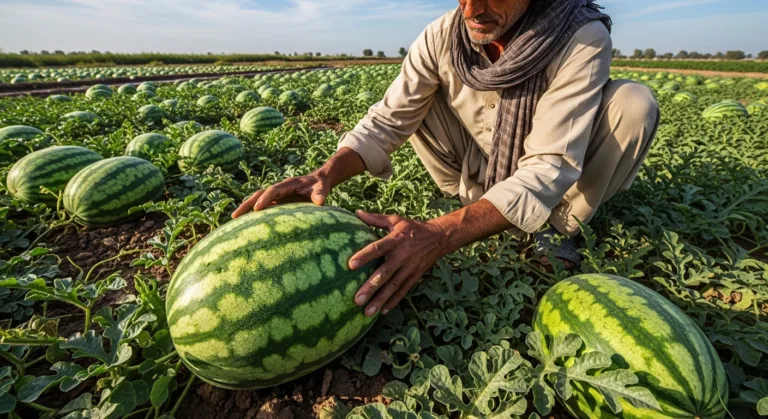
Planting season typically starts in late February or early March, right when the weather starts warming up. Farmers prepare the soil by plowing it and adding organic matter like compost or manure. Think of this like prepping a cake pan before you pour in the batter, you want everything just right before you start! The seeds are planted in small hills or mounds, which helps with drainage and keeps the roots from getting too wet.
Once the seeds sprout, the real work begins. Farmers need to make sure the plants get enough water, but not too much. It’s a delicate balance, kind of like trying to give a plant a drink without drowning it. The vines start spreading out, and farmers have to keep an eye out for weeds that might compete with the watermelons for nutrients. Some farms also use mulch (a covering of straw or plastic) to keep moisture in the soil and weeds out.
As the watermelons start forming, farmers watch them like hawks. They check for pests and diseases, make sure the irrigation is working properly, and even turn the fruits occasionally so they develop evenly. It takes about 80 to 100 days from planting to harvest, depending on the variety. That’s almost three whole months of careful attention! At harvest time, farmers look for signs that the melons are ripe: a creamy yellow spot where the fruit rested on the ground, a dull rather than shiny appearance, and a hollow sound when tapped.
The Economics: Why Watermelons Matter to Pakistani Farmers
Here’s something you might not think about when you’re chomping down on a watermelon slice: this fruit is actually a big moneymaker for Pakistani farmers. Watermelon production isn’t just about growing a tasty snack, it’s about supporting families and communities.
Pakistan produces roughly 700,000 to 800,000 tons of watermelons every year. That’s like filling up thousands of swimming pools with watermelons! Most of this stays within the country because Pakistanis love their watermelons, but some is also exported to nearby countries. During peak season, you’ll see watermelon trucks everywhere, hauling their sweet cargo to markets across the nation.
For farmers, watermelons are attractive because they grow relatively quickly compared to other crops. Instead of waiting months and months for a harvest, they can plant watermelons and have a product to sell in about three months. It’s like the difference between saving up for something over a whole year versus being able to buy it after summer break! This quick turnaround means farmers can earn money faster and even plant other crops afterward in the same field.
Small farms like Multanfarms.com benefit especially from watermelon cultivation. The startup costs aren’t as high as some other crops, and watermelons don’t require super fancy equipment. A farmer with a few acres of good land, access to water, and solid knowledge can produce a profitable watermelon crop. This makes watermelon farming accessible to people who might not have huge amounts of money to invest.
Challenges Pakistani Watermelon Farmers Face
Growing watermelons in Pakistan isn’t all sunshine and sweet success, though. Farmers face several challenges that can make or break their harvest, and understanding these difficulties helps us appreciate the work that goes into every slice.
Water scarcity is becoming a bigger issue each year. Even though watermelons need lots of water to grow (they’re 92% water, after all!), Pakistan has been dealing with water shortages in some areas. Farmers have to be super smart about irrigation, using drip systems and other efficient methods to make every drop count. It’s like trying to stay hydrated during sports practice when your water bottle is only half full, you’ve got to make it last!
Pests and diseases are another constant headache. Fruit flies, aphids, and various fungi love watermelons just as much as people do, but for all the wrong reasons! Farmers need to constantly monitor their fields and sometimes use pesticides to protect their crops. Finding the balance between protecting the plants and keeping the fruit safe to eat requires knowledge and careful management.
Market prices can also be unpredictable. When there’s a huge harvest and everyone’s selling watermelons at once, prices can drop really low. Imagine if everyone brought cupcakes to sell at the school bake sale, suddenly your cupcakes aren’t worth as much because there’s too much competition! Farmers sometimes struggle when market conditions aren’t in their favor, even if they grew a perfect crop.
Modern Techniques and the Future of Watermelon Farming
The good news is that Pakistani watermelon farming is getting better all the time. Farmers are adopting modern techniques that help them grow more melons with less waste and fewer problems.
Drip irrigation systems are becoming more common, especially on farms that can afford the investment. Instead of flooding entire fields with water, these systems deliver water directly to each plant’s roots through small tubes. It’s way more efficient and saves tons of water, which is super important in a country dealing with water stress.
Some farmers are also experimenting with different watermelon varieties that are resistant to diseases or can handle heat stress better. Plant scientists work to develop varieties that give farmers more options, kind of like how phone companies keep releasing new models with better features. These improved varieties can mean higher yields and fewer crop losses.
There’s also a growing movement toward sustainable farming practices. More farmers are using organic fertilizers, crop rotation (where you plant different crops in the same field each season to keep the soil healthy), and natural pest control methods. Operations like Multanfarms.com are learning that taking care of the land means it’ll take care of you in the long run.
The Sweet Conclusion: Why Pakistani Watermelons Matter
After learning all this, that juicy watermelon slice probably looks a little different, doesn’t it? Behind every piece is a farmer who carefully chose the right seeds, prepared the soil, monitored the weather, managed the water, fought off pests, and timed the harvest perfectly. Pakistani watermelon production represents thousands of farmers working hard to feed their country and make a living.
The watermelon industry in Pakistan shows us how agriculture adapts to local conditions and creates opportunities for people. From the sun-baked fields of Punjab to the markets bustling with fresh produce, watermelons are part of Pakistan’s agricultural story. They provide nutrition, create jobs, support families, and bring joy to people on hot summer days.
Next time you enjoy a cold watermelon slice, maybe take a second to think about the journey it took to get to you. Isn’t it amazing how much work and knowledge goes into something we sometimes take for granted? What other foods do you think have fascinating stories behind how they’re grown?