Picture this: you’re sitting down to enjoy a delicious plate of fried fish with your family. Have you ever stopped to wonder where that fish came from? Maybe it was caught in the Arabian Sea by hardworking fishermen, or perhaps it was raised in a fish farm right here in Pakistan! The journey from water to your plate involves an entire industry that feeds millions of people and provides jobs for countless families.
Fish production in Pakistan is way more important than most people realize. It’s not just about catching fish from the ocean anymore. Today, Pakistan has a thriving aquaculture industry, which is just a fancy word for fish farming. We’re talking about specially designed ponds, rivers, and even coastal areas where fish are raised from tiny fingerlings (baby fish) to market-sized swimmers ready for your dinner table!
In this article, we’ll dive deep into Pakistan’s fish production world. You’ll discover how much fish Pakistan actually produces, where it all comes from, why it matters for our economy, and what challenges the industry faces. Whether you love eating fish or you’re just curious about where your food comes from, you’re about to learn some fascinating facts about one of Pakistan’s most important food industries!
How Much Fish Does Pakistan Actually Produce?
Let’s start with some eye-opening numbers! Pakistan produces over 700,000 tons of fish every year. That’s roughly the weight of 140,000 elephants, if you can imagine that many elephants in one place! This massive amount of fish comes from two main sources: marine fisheries (catching fish from the ocean) and aquaculture (raising fish in farms).
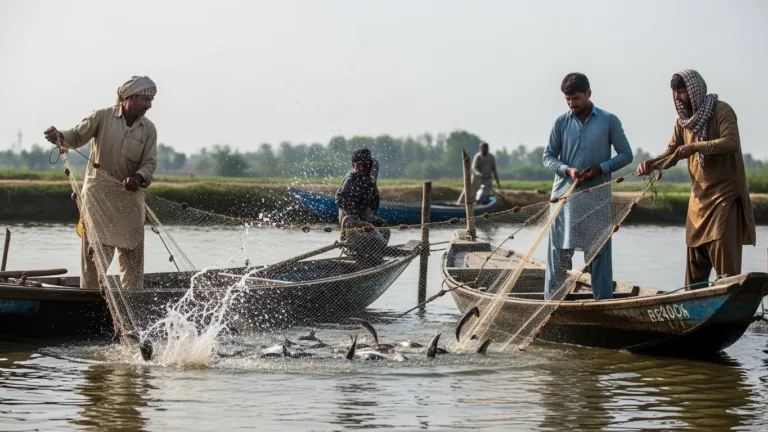
Marine fisheries account for the larger share, contributing around 450,000 to 500,000 tons annually. Pakistani fishermen head out into the Arabian Sea with their boats and nets, targeting popular species like pomfret, shrimp, mackerel, and tuna. The coastal areas of Karachi, Balochistan, and Sindh are hotspots for this activity. Imagine the Arabian Sea as a massive grocery store, and these fishermen are the shoppers gathering food for the whole country!
Aquaculture is the faster-growing sector, producing approximately 200,000 to 250,000 tons each year. This number keeps climbing as more farmers realize that fish farming can be incredibly profitable. The most popular farmed species include rohu, catla, mrigal (these are types of carp), and tilapia. Platforms like Multanfarms.com are helping farmers connect with buyers and learn modern techniques to increase their production even further.
Where Does All This Fish Production Happen?
Pakistan’s fish production isn’t concentrated in just one place. It happens across different regions, each with its own unique advantages and specialties. Let’s take a tour of Pakistan’s major fish-producing areas!
Sindh province is the absolute champion of fish production. The Indus River Delta provides perfect conditions for both wild fishing and fish farming. The freshwater ecosystem here supports numerous fish species, and the coastal areas near Karachi give access to rich marine resources. Many fish farms operate in districts like Thatta, Badin, and Hyderabad, where farmers have been raising fish for generations.
Punjab might surprise you as a major fish producer since it’s not on the coast! However, Punjab has extensive canal systems and rivers that are perfect for freshwater fish farming. Districts like Faisalabad, Multan, and Sheikhupura have developed successful aquaculture operations. Farmers here often integrate fish farming with their agricultural activities, creating what’s called polyculture systems where fish and crops support each other.
Balochistan’s coastline stretches for hundreds of kilometers along the Arabian Sea, making it crucial for marine fishing. While less developed than Sindh in terms of aquaculture, Balochistan’s fishing communities provide significant amounts of wild-caught fish. The cities of Gwadar and Pasni are particularly important fishing ports where you’ll see hundreds of colorful boats bringing in their daily catches.
What Types of Fish Are Most Commonly Produced?
Not all fish are created equal when it comes to production! Some species are rockstars in Pakistan’s fish industry, while others play supporting roles. Understanding which fish dominate the market helps explain why you see certain types more often in markets and restaurants.
Carp species (including rohu, catla, and mrigal) are the undisputed kings of freshwater fish farming in Pakistan. These fish grow quickly, adapt well to pond conditions, and are beloved in Pakistani cuisine. Rohu especially is a favorite for special occasions and everyday meals alike. Think of carp as the chicken of the fish world, affordable, versatile, and widely available!
Shrimp and prawns are Pakistan’s most valuable export fish products. The coastal waters and specially designed shrimp farms produce thousands of tons annually. These aren’t the tiny shrimp you might see in a salad, we’re talking about big, juicy prawns that fetch premium prices in international markets. Countries in the Middle East, Europe, and Asia love Pakistani shrimp!
Marine fish varieties like pomfret, mackerel, ribbonfish, and tuna are caught in huge quantities from the Arabian Sea. Pomfret is particularly prized for its delicate flavor and texture, making it one of the most expensive fish in local markets. These wild-caught species can’t be farmed easily, which is why fishermen continue to brave the ocean waves to catch them.
Why Does Fish Production Matter for Pakistan’s Economy?
You might be thinking, “Okay, Pakistan produces a lot of fish, but so what?” Well, fish production isn’t just about filling dinner plates, it’s a major economic engine that impacts millions of lives!
Employment opportunities created by the fishing industry are massive. Over one million people directly depend on fishing and fish farming for their livelihoods. This includes fishermen, fish farmers, people who process and package fish, truck drivers who transport it, and vendors who sell it in markets. It’s like a giant chain where everyone’s job depends on everyone else’s success.
Export earnings from fish and fish products bring in valuable foreign currency. Pakistan exports around 100,000 to 150,000 tons of fish annually, earning approximately $300 to $400 million. That money helps strengthen Pakistan’s economy and can be reinvested in education, healthcare, and infrastructure. Shrimp exports alone account for a huge chunk of these earnings!
Food security is perhaps the most critical benefit. Fish provides affordable, high-quality protein to millions of Pakistani families. It’s generally cheaper than chicken or mutton, making it accessible to people across different income levels. As Pakistan’s population continues growing, fish production becomes increasingly important for feeding everyone nutritiously and affordably.
What Challenges Does Pakistan’s Fish Industry Face?
Every industry has its problems, and fish production is no exception. Understanding these challenges helps us appreciate the hard work that goes into bringing fish to our tables and shows where improvements are needed.
Outdated fishing methods remain common, especially in marine fisheries. Many fishermen still use old boats and equipment that aren’t very efficient or safe. It’s like trying to compete in a race while everyone else has sports cars but you’re driving your grandfather’s old vehicle. Modern countries use GPS, sonar fish finders, and advanced nets, while many Pakistani fishermen rely on traditional knowledge and basic tools.
Water pollution and environmental damage threaten both wild fish populations and fish farms. Industrial waste, untreated sewage, and agricultural runoff contaminate rivers and coastal waters. Fish can’t survive in dirty water, just like you wouldn’t want to swim in a polluted pool! This pollution reduces catch sizes and makes some areas unsuitable for fish farming altogether.
Lack of modern infrastructure limits growth potential. Pakistan needs more cold storage facilities, better processing plants, and improved transportation networks to reduce fish spoilage. Imagine catching fresh fish in the morning, but by the time it reaches the market hours away, it’s no longer fresh because there wasn’t proper refrigeration. That’s lost money and wasted food! Platforms like Multanfarms.com are trying to address some of these issues by creating better connections between producers and buyers, but infrastructure remains a major hurdle.
How Can Pakistan’s Fish Production Grow in the Future?
The good news is that Pakistan’s fish production has enormous potential for growth! With the right investments and strategies, the industry could double or even triple in the coming decades. So what needs to happen?
Expanding aquaculture offers the quickest path to increased production. Pakistan has millions of acres suitable for fish farming that currently aren’t being used. By training more farmers, providing access to quality fingerlings (baby fish), and sharing modern farming techniques, production could skyrocket. It’s much easier to control production in farms than to depend on unpredictable wild catches.
Improving value addition means processing fish into products like fish fillets, fish fingers, canned fish, and dried fish. These products last longer, fetch higher prices, and open up new markets. Currently, Pakistan exports a lot of raw fish, but processing it before export could increase earnings significantly. Think about the difference between selling raw potatoes versus selling potato chips, the processed product is worth much more!
Technology adoption could revolutionize the industry. Using apps and websites to connect buyers and sellers, implementing better water quality monitoring systems, and adopting sustainable fishing practices would all boost production and profits. Young people growing up with smartphones and internet access could bring fresh ideas to an industry that’s often been slow to change.
The Big Picture
Fish production in Pakistan is so much more than just an industry, it’s about feeding families, creating jobs, protecting the environment, and building a stronger economy. From the fishermen casting their nets in the Arabian Sea to the farmers carefully managing their fish ponds, millions of people work hard to bring delicious, nutritious fish to markets across the country.
We’ve explored how Pakistan produces over 700,000 tons of fish annually, discovered the major production regions from Sindh’s delta to Balochistan’s coast, learned about popular species like carp and shrimp, and understood why this industry matters economically. We’ve also faced the reality of challenges like outdated methods and pollution, while remaining hopeful about future growth potential.
Next time you enjoy fish for dinner, you’ll know the incredible journey it took to reach your plate! So here’s a question for you: would you ever consider supporting local fish farmers by choosing Pakistani farmed fish over imported varieties? Small choices by consumers like you can make a huge difference in supporting this vital industry!