Have you ever thought about where your family’s milk comes from, or who raises the goats that provide meat for special occasions like Eid? Behind every glass of fresh milk and every delicious biryani, there’s often a hardworking farmer taking care of animals. In Pakistan, goat farming is actually one of the most popular ways people earn a living in rural areas, and it’s not as simple as just buying a few goats and letting them graze!
Starting a goat farm might sound like an interesting business idea, kind of like opening your own lemonade stand but way bigger and with a lot more “baaa-ing” involved. But here’s the real question: how much money does someone actually need to get started? Whether you’re curious about agriculture, thinking about your future career, or just want to understand how farms like Multanfarms.com operate, understanding the costs of goat farming gives you a peek into an important part of Pakistan’s economy.
Let’s break down the numbers and see what it really takes to start a goat farm in Pakistan. Trust me, some of these costs might surprise you!
The Initial Investment: Buying Your First Goats
The very first expense any goat farmer faces is actually buying the goats themselves! In Pakistan, the cost of goats varies wildly depending on the breed, age, and quality of the animal. It’s kind of like how a regular bicycle costs way less than a fancy mountain bike with all the cool features.
For local breeds like the Beetal, Teddy, or Kamori goats, you might pay anywhere from PKR 15,000 to PKR 40,000 per goat. These are popular breeds in Pakistan because they’re tough, adapted to the local climate, and produce good amounts of milk and meat. If you’re starting small (which most farmers do), you might begin with about 10 to 20 goats. Do the math, and that’s already PKR 150,000 to PKR 800,000 just for your starting herd!
Now, here’s where it gets interesting. Some farmers choose to buy pregnant females (called does) because you’re basically getting two goats for a slightly higher price. A pregnant doe might cost PKR 25,000 to PKR 50,000, but in a few months, you’ll have a baby goat (called a kid) without spending extra money. It’s like getting a bonus!
Premium breeds or champion bloodline goats can cost even more, sometimes reaching PKR 100,000 or higher per animal. These are the superstars of the goat world, kind of like how some people pay more for purebred puppies. Farms like Multanfarms.com carefully select their breeding stock to ensure healthy, productive animals that give farmers the best value for their investment.
Building a Home for Your Herd
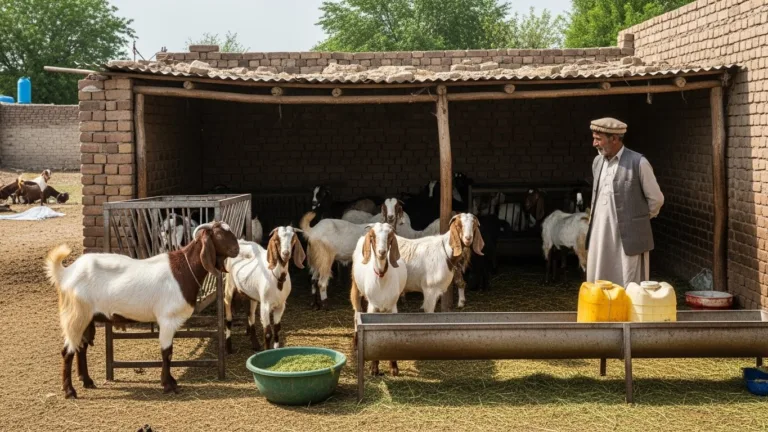
You can’t just let goats roam around anywhere, they need a proper shelter! Building a goat shed or barn is one of the major startup costs. Think of it as building a combination house, dining room, and nursery for your goats all in one place.
A basic goat shed for 20 goats typically costs between PKR 100,000 to PKR 300,000, depending on the materials you use and how fancy you want to get. The shed needs to protect goats from rain, extreme heat, and cold nights. It also needs proper ventilation (fresh air circulation) because goats can get sick if the air is too stuffy, just like how you’d feel uncomfortable in a room with no windows.
Inside the shed, you’ll need to set up separate areas for different purposes. Baby goats need their own space away from adult males, pregnant females need quiet corners, and sick goats need isolation areas. You’ll also need feeding troughs (containers where goats eat from), water stations, and storage space for food and supplies. These additional items can add another PKR 30,000 to PKR 50,000 to your costs.
Some farmers build simple structures using wood and tin sheets to save money, while others invest in concrete buildings that last longer. It’s like the difference between building a tree house versus a brick house, both work, but one costs more and lasts longer!
Feeding Your Furry Friends
Here’s something that surprises a lot of people: feeding costs are actually the biggest ongoing expense in goat farming! Goats might look like they’ll eat anything (and they’re pretty famous for trying to munch on everything from cardboard to clothes), but they actually need a balanced, nutritious diet to stay healthy and productive.
A single adult goat eats about 3 to 4 kilograms of food per day. That includes fresh grass, hay, and special concentrated feed that’s packed with nutrients. For a herd of 20 goats, you’re looking at roughly 60 to 80 kilograms of food daily! That’s like filling up about four large backpacks with food every single day.
Monthly feeding costs for 20 goats typically range from PKR 25,000 to PKR 40,000. This includes green fodder (fresh grass or plants), dry fodder (hay), and concentrated feed (special grain mixtures with added vitamins and minerals). During certain seasons when fresh grass is scarce, these costs can go even higher because farmers need to buy more expensive alternatives.
Water is another essential need, though thankfully it’s usually cheaper than food. Goats drink about 3 to 4 liters of clean water daily, especially in Pakistan’s hot climate. If you don’t have a natural water source on your farm, you might need to factor in water bills or the cost of digging a well.
Healthcare and Medical Expenses
Just like you need to visit the doctor for checkups and vaccinations, goats need regular healthcare too! Veterinary costs are super important and shouldn’t be ignored, even though some new farmers try to save money by skipping them (which is a big mistake!).
Regular vaccinations protect goats from dangerous diseases like PPR (Peste des Petits Ruminants, which sounds scary because it is!), foot-and-mouth disease, and various other infections. For a herd of 20 goats, annual vaccination costs run about PKR 5,000 to PKR 10,000. It’s like getting your flu shot, but for goats!
You’ll also need to budget for unexpected illnesses and injuries. Goats can catch colds, get stomach problems from eating the wrong things, or hurt themselves playing around. Having an emergency medical fund of about PKR 20,000 to PKR 30,000 per year is smart planning. Many successful farms like Multanfarms.com keep relationships with experienced veterinarians who can respond quickly when problems arise.
Don’t forget about deworming (removing internal parasites) and regular health checkups. These treatments cost about PKR 3,000 to PKR 5,000 annually for a small herd. Think of parasites as tiny unwanted guests that steal nutrients from your goats, you definitely want to get rid of them!
Labor and Daily Operations
Running a goat farm is a full-time job, which means you’ll either need to do all the work yourself or hire help. If you’re starting a small operation with your family, you might handle everything together. But for larger farms, hiring farm workers becomes necessary.
A farm worker’s monthly salary in Pakistan typically ranges from PKR 20,000 to PKR 35,000, depending on their experience and responsibilities. For a medium-sized goat farm with 50 to 100 animals, you might need at least one or two full-time workers. Their daily tasks include feeding the goats, cleaning the shed, monitoring for sick animals, helping with births, and maintaining the farm facilities.
There are also other operational costs to consider. Electricity for lighting and fans during hot summer months might cost PKR 3,000 to PKR 5,000 monthly. Transportation costs for taking goats to market or bringing supplies to the farm add another expense. And don’t forget about basic equipment like wheelbarrows, buckets, feeding tools, and cleaning supplies, which might cost PKR 15,000 to PKR 25,000 initially.
The Hidden Costs You Might Not Expect
Here’s where goat farming gets really interesting! There are several hidden expenses that new farmers often forget about until they’re already running their operation. It’s like when you buy a new video game but forget you’ll need to pay for online subscriptions or extra content!
Breeding costs are one example. If you don’t have your own male goat (called a buck), you’ll need to pay for breeding services when you want your female goats to have babies. This can cost PKR 1,500 to PKR 5,000 per breeding, depending on the buck’s quality.
Insurance is becoming more popular among smart farmers who want to protect their investment. While not mandatory, goat insurance can protect you if your animals get sick, die, or if natural disasters strike. Annual insurance premiums might cost around 2-3% of your total herd value.
You might also need to budget for farm registration, licenses, and permits if you’re running a commercial operation. These legal requirements vary by region but can add PKR 10,000 to PKR 30,000 to your startup costs. It’s like getting a business license for any company, farms need proper paperwork too!
Adding It All Up: The Real Numbers
So, what’s the bottom line? For a small goat farm starting with about 20 goats in Pakistan, here’s a rough breakdown of first-year costs:
Initial Investment:
- Buying goats: PKR 300,000 to PKR 600,000
- Building shelter: PKR 100,000 to PKR 300,000
- Equipment and setup: PKR 30,000 to PKR 50,000
Annual Operating Costs:
- Feed: PKR 300,000 to PKR 480,000
- Healthcare: PKR 30,000 to PKR 45,000
- Labor: PKR 240,000 to PKR 420,000 (if hiring workers)
- Utilities and miscellaneous: PKR 50,000 to PKR 80,000
Your total first-year investment could range from approximately PKR 1,050,000 to PKR 1,975,000 for a small operation. That’s a significant amount of money, similar to buying a decent used car! But remember, this is an investment that can provide steady income for years to come if managed properly.
Why Understanding These Costs Matters
You might be wondering why learning about goat farming costs is relevant to your life. Well, understanding agricultural economics helps you appreciate where your food comes from and the hard work behind it. Every time your family buys milk, meat, or dairy products, someone invested money, time, and effort into raising those animals.
For students interested in business, agriculture, or entrepreneurship, goat farming represents a real-world example of investment, risk management, and profit planning. Successful farms like Multanfarms.com didn’t just happen overnight, they required careful planning, smart budgeting, and lots of dedication. These are skills that apply to any career you might choose in the future!
Plus, agriculture is actually becoming cooler and more high-tech than ever before. Modern farmers use apps to track their animals’ health, drones to monitor their land, and scientific feeding programs to maximize productivity. It’s not your grandparents’ farming anymore, it’s a sophisticated business that combines tradition with innovation.
The Final Count
Starting a goat farm in Pakistan requires serious planning and a solid financial foundation, but it’s definitely achievable for dedicated individuals and families. From buying your first goats to building shelters, managing feed costs, and handling healthcare, every expense plays a crucial role in creating a successful operation. While the numbers might seem big, remember that goat farming can also generate steady income through milk sales, meat production, and breeding services.
So here’s something to think about: knowing what you now know about the costs and work involved, would you ever consider goat farming as a career? Or maybe you have a new appreciation for the farmers who supply fresh products to your local market? Either way, understanding the economics of agriculture connects you to an essential part of Pakistan’s economy and culture. Pretty interesting for something that starts with a simple “baaa,” right?