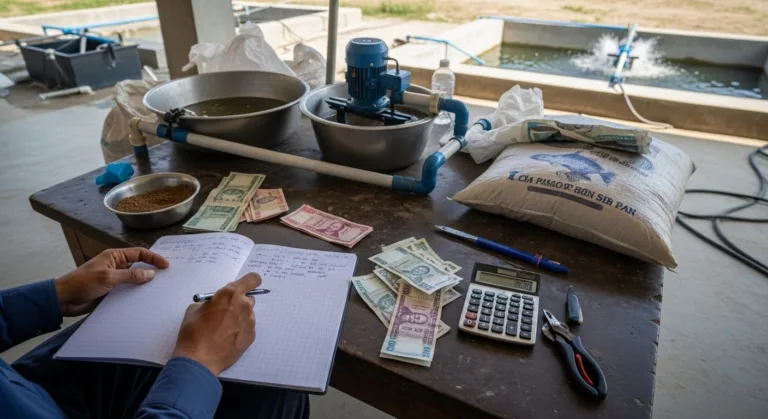
Imagine you’ve just told your parents you want to start a fish farm. Their first question (after they pick their jaws up off the floor) will probably be: “How much is this going to cost?” It’s a fair question! Whether you’re dreaming of a small backyard pond or planning a future business, understanding the costs involved in fish farming is super important.
Here’s the thing, starting a fish farm isn’t like buying a new video game where there’s just one price tag. It’s more like building a gaming setup from scratch. You need the console (or computer), games, controllers, a good screen, maybe a gaming chair, and don’t forget about the internet connection! Similarly, fish farming has lots of different pieces, and each one costs money. The total amount you’ll spend depends on how big you want to go and what kind of fish you want to raise.
The cool part? Fish farming can actually fit almost any budget. You could start small with just a few hundred dollars, or you could go big with a commercial operation costing thousands. Let’s break down all these costs so you can see exactly where the money goes and how much you’d really need to make your fish farming dreams come true.
Starting Small: The Backyard Fish Farm Budget
Let’s start with the most affordable option, a small backyard fish farm. This is perfect if you’re just testing the waters (pun totally intended!) or if you want to raise fish as a hobby or small side project.
The pond itself is your biggest initial expense. If you’re lucky enough to already have a pond on your property, awesome! You just saved yourself a bunch of money. But if you need to build one, a small pond (about 10 feet by 10 feet and 4 feet deep) might cost anywhere from $200 to $500 if you dig it yourself. You’ll need a liner to keep the water from seeping into the ground, which can run $100 to $300 depending on the quality. Think of the liner like a giant waterbed mattress that holds everything in place!
Equipment costs add up but stay manageable. You’ll need an aerator to keep oxygen in the water (fish need to breathe too!). A basic aerator costs between $50 and $150. You’ll also want some nets for catching fish ($20 to $50), buckets for moving fish around ($10 to $30), and a water testing kit so you can check if your water quality is good ($30 to $60). All together, you’re looking at roughly $110 to $290 for basic equipment.
Stocking your pond with fish is surprisingly affordable. Baby fish, called fingerlings, don’t cost much individually. Tilapia fingerlings might cost just 50 cents to $1 each, while catfish fingerlings run about the same. If you start with 100 fingerlings, that’s only $50 to $100! Not bad, right?
Fish food is an ongoing cost you can’t skip. Fish need to eat every day, and good quality fish feed costs about $30 to $50 for a 50-pound bag. How long that lasts depends on how many fish you have and how big they’re getting. For a small backyard operation with 100 fish, you might spend $100 to $200 on food over several months until harvest time.
Your total startup cost for a small backyard fish farm? Somewhere between $500 and $1,200. That’s about the same as a decent smartphone or a budget gaming laptop!
Stepping Up: The Medium-Sized Farm Investment
Now, let’s say you’re thinking bigger. Maybe you want to raise enough fish to sell at local markets or supply a few restaurants. This is where things get more serious, but also more exciting!
Bigger ponds mean bigger costs. A medium-sized operation might have two or three ponds, each about 20 feet by 30 feet. Professional excavation (having someone dig the ponds with machinery) could cost $1,000 to $3,000 per pond. You’re looking at $3,000 to $9,000 just for the ponds themselves. Some people save money by renting excavation equipment and doing it themselves, which could cut costs in half.
Your equipment list grows longer. At this level, you’ll want multiple aerators, better quality nets, fish grading equipment (to sort fish by size), and possibly some automatic feeders. You might also invest in a backup generator in case the power goes out, because if your aerators stop working, your fish could die. All of this equipment together might run $1,500 to $4,000.
Stocking costs multiply with your ambition. If you’re filling multiple ponds with fingerlings, you might be buying 1,000 to 3,000 baby fish. At roughly 75 cents each on average, that’s $750 to $2,250 just for your starting fish population. But remember, these fish will grow and multiply your investment!
Feed becomes a major ongoing expense. Feeding thousands of fish requires a lot more food. You might go through several bags of feed per week, spending $200 to $400 per month on fish food. Over a six-month growing cycle, that’s $1,200 to $2,400.
Additional costs you might not think about include things like water quality management supplies, medications (just in case fish get sick), transportation equipment for moving fish to market, and possibly some basic infrastructure like storage sheds. These “extras” might add another $500 to $1,500.
Total for a medium-sized fish farm? You’re looking at roughly $7,000 to $20,000 to get started. That’s a serious investment, kind of like buying a used car!
Going Big: Commercial Fish Farming Costs
What if you’re dreaming really big? Commercial fish farms that supply grocery stores and large restaurants operate on a completely different scale.
Land and construction costs skyrocket. Commercial operations often use multiple large ponds or sophisticated tank systems. Building proper infrastructure with water management systems, drainage, and access roads can easily cost $50,000 to $200,000 or more. Some commercial farms even use recirculating aquaculture systems (RAS), which are like super-advanced fish apartments with water recycling technology. These systems can cost hundreds of thousands of dollars!
Operating costs become a full-time business. You’ll need to buy fingerlings by the tens of thousands, purchase feed by the ton, pay for electricity to run all your equipment 24/7, hire employees to help manage everything, and cover insurance costs. Monthly operating expenses could run $5,000 to $20,000 or even more.
The good news? Commercial fish farms can also make serious money if managed well. But it’s definitely not something you’d jump into without a solid business plan and probably some investors or loans to help cover costs.
Smart Ways to Reduce Your Fish Farming Costs
Don’t let these numbers scare you off! There are plenty of clever ways to make fish farming more affordable.
Start small and grow gradually. You don’t have to build your dream farm all at once. Start with one small pond, learn the ropes, sell your first harvest, and then use those profits to expand. It’s like leveling up in a video game, you start at level one and work your way up!
DIY whenever possible. Building your own pond, constructing simple equipment, or even making your own fish feed (some farmers do this!) can save hundreds or even thousands of dollars. Just make sure you do your research first so you don’t make expensive mistakes.
Choose fish species wisely. Some fish are hardier and easier to raise than others. Tilapia, for example, can tolerate varying water conditions better than trout. Easier fish mean fewer losses and lower medication costs.
Buy in bulk and plan ahead. Fish food costs less per pound when you buy larger quantities. Fingerlings might be cheaper if you buy during certain seasons or directly from hatcheries instead of through middlemen.
Partner up or join a cooperative. Some fish farmers team up to share equipment, buy supplies together at bulk prices, or even share marketing costs. There’s power in numbers!
Hidden Costs You Should Know About
Before you finalize your budget, watch out for these sneaky expenses that catch new fish farmers by surprise.
Permits and licenses might be required in your area. Some places charge fees for operating a fish farm or require water use permits. These might cost $50 to $500 depending on where you live.
Water costs can be significant if you’re using municipal water instead of a well or stream. You’ll need to fill your ponds initially and add water regularly to replace what evaporates.
Emergency expenses happen. Fish get sick, equipment breaks, and sometimes you’ll lose fish to disease or predators. Smart farmers keep an emergency fund of at least 10-20% of their startup costs for unexpected problems.
Time is money too. Even if you’re not paying yourself a salary, remember that fish farming takes time. Daily feeding, water testing, and maintenance all require your attention. If you value your time, factor that into your decision.
Is Fish Farming Worth the Investment?
So, after looking at all these costs, you might be wondering if fish farming is actually worth it. The answer really depends on your goals!
If you’re doing it as a learning experience or hobby, even a small investment of $500 to $1,000 can teach you amazing lessons about biology, business, and responsibility. You might even make a little money on the side!
If you’re thinking about it as a serious business, the costs are definitely higher, but so are the potential rewards. Fish farming is a growing industry, and there’s increasing demand for locally-raised, sustainable seafood. With good planning and hard work, many fish farmers do make a profit.
The key is to start with a clear budget, understand all the costs involved, and be realistic about what you can afford. Don’t forget, every successful fish farm started with someone willing to take that first step (and spend that first dollar).
What size fish farm would you start if you had the money today? Would you go small and simple, or would you dive into something bigger?