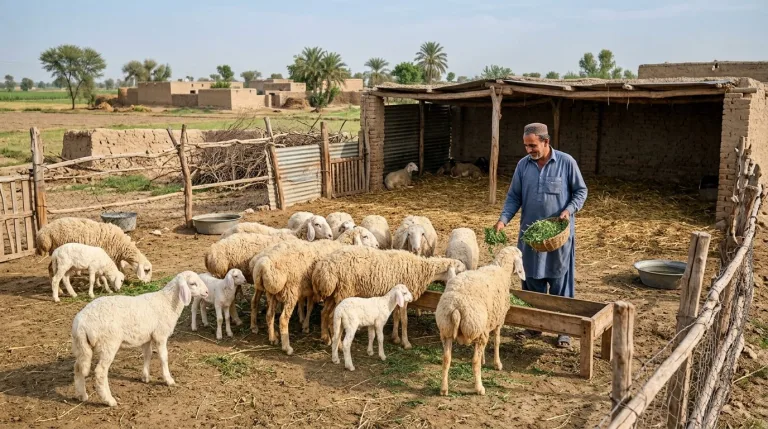
Have you ever seen a sheep with a big, round, wobbly tail that looks like a fluffy cushion? That’s a dumba, and it’s one of the most famous animals in Pakistan’s farming world. Every year, when Eid ul Adha comes around, dumbas are among the most wanted animals in the markets.
But there’s a lot more to this animal than its funny-looking tail. Dumba farming means raising these fat-tailed sheep for meat, income, and sometimes for breeding. Farmers across Punjab, Sindh, and Balochistan have been doing it for generations, and it keeps growing in popularity.
In this article, you’ll learn what makes a dumba special, what it eats, how it needs to live, and why so many farmers love raising it. Let’s get started!
What Exactly Is a Dumba?
A dumba is a breed of fat-tailed sheep. Instead of a thin tail like many other sheep, a dumba has a wide tail packed with stored fat. Think of it like a camel’s hump. A camel stores fat in its hump to survive when food is hard to find, and a dumba does the same thing with its tail.
This is why dumbas do so well in dry, hot areas where grass can be scarce. When food is limited, the body can use that stored energy. A mature dumba’s tail can hold several kilograms of fat, which is why people notice it right away.
Did you know? The word “dumba” comes from “dum,” the Urdu and Persian word for tail. So the name literally points to the animal’s most famous feature!
Why Do Farmers Love Raising Dumbas?
Imagine you’re picking a pet for a school project. You’d probably choose one that’s tough, easy to look after, and doesn’t get sick all the time. Farmers think the same way, and dumbas check a lot of those boxes.
Here are the main reasons farmers choose them:
- They’re hardy. Dumbas handle heat and dry weather better than many other breeds.
- They grow well. With good feed, they put on weight steadily.
- The meat is popular. Many people love the taste and tenderness of dumba meat.
- There’s steady demand. Buyers look for them all year, and especially before Eid.
That last point matters a lot. Imagine you run a lemonade stand and you know a huge crowd is coming next month. You’d get ready early, right? Smart dumba farmers do the same, planning their animals so they’re healthy and well fed when demand is highest.
What Do Dumbas Eat?
Food is the heart of dumba farming. Just like athletes need good meals to perform well, a dumba needs the right diet to grow strong.
A healthy feeding plan usually includes:
- Green fodder such as berseem (clover), alfalfa, and fresh grass. These give vitamins and fiber.
- Dry fodder like wheat straw or hay, which keeps the stomach working well.
- Concentrate feed, a mix of grains and protein like maize, wheat bran, and oilseed cake, which helps with quick growth.
- Clean water, always. Sheep drink a lot, especially in summer.
- Salt and mineral blocks, which work like daily vitamins for animals.
Here’s a handy way to think about it. Green fodder is like fruits and veggies on your plate, dry fodder is like bread, and concentrate feed is like a protein-packed dinner. A good meal needs all three!
Where Should Dumbas Live?
Even the toughest animal needs a comfortable home. A good shelter protects sheep from scorching sun, heavy rain, and cold winter winds.
The best sheds are dry, clean, and well ventilated. That means fresh air can move through, but no strong drafts blow directly on the animals. Wet, dirty floors are a big problem because they can cause infections and foot trouble.
Think about how you feel in a stuffy, smelly room compared to a fresh, breezy one. Sheep feel the same way! Cleaning the shed regularly and giving each animal enough space keeps them calm and healthy. Shade is also a must in places like Multan, where summer afternoons get seriously hot.
Keeping Dumbas Healthy
Healthy animals grow faster and sell for better prices, so health care is a big part of dumba farming. Farmers usually follow a simple routine:
- Vaccinations to protect against common sheep diseases
- Deworming to get rid of internal parasites that steal nutrients
- Regular checks for signs like low energy, poor appetite, or runny eyes
It’s a bit like going to the doctor for a check-up, even when you feel fine. Catching a problem early is much easier than fixing a big one later. A local veterinarian can tell you exactly which vaccines and medicines are right for your area and season.
How Does Fattening Work?
Many farmers buy young dumbas and raise them for a few months so they gain healthy weight before selling. This is called fattening.
The secret isn’t just feeding more. It’s feeding smart. A steady diet, clean water, calm surroundings, and regular health care all work together. Stressing or rushing the animals can actually slow their growth.
Picture a student preparing for exams. Studying a little every day works far better than cramming the night before. Dumbas are the same: steady care over time gives the best results.
Is Dumba Farming a Good Idea?
For many people, yes! It doesn’t always need a huge piece of land, and the animals are tough and well suited to local conditions. But it still takes patience, daily work, and good planning. Feed costs, shelter, and health care all need to be thought through before you begin.
That’s why learning the basics first is so smart. The more you understand about feeding, housing, and health, the better your chances of success. At Multanfarms.com, we love sharing practical knowledge about Pakistani farming so that curious learners and future farmers can grow with confidence.
Wrapping Up
Dumbas are far more than animals with fascinating tails. They’re hardy, useful, and an important part of Pakistan’s farming story. With the right food, a clean shelter, and regular health care, dumba farming can be a rewarding path for people who love animals and hard work.
So here’s something to think about: if you were starting your own little farm one day, what would you want to learn first?