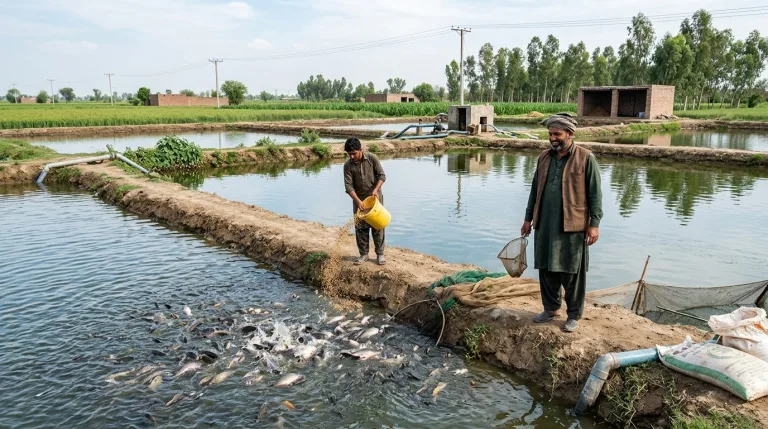
When people hear “Faisalabad,” they usually think of spinning mills, textile factories, and endless rolls of fabric. But there’s a quieter revolution happening on the edges of this city, inside carefully dug ponds filled with thousands of fish. Fish farming in Faisalabad has grown from a niche practice into a serious business, and farmers across Punjab are starting to pay attention.
So is a fish farm in Faisalabad actually worth setting up? Let’s break it all down.
Why Faisalabad Is a Natural Fit for Fish Farming
Faisalabad sits in the heart of Punjab, surrounded by one of the world’s most extensive irrigation canal networks. This isn’t just good for wheat and cotton. All that flowing water makes fish pond farming surprisingly practical here. Farmers can tap into canal water to fill ponds without relying on expensive groundwater pumping.
The climate helps too. Warm summers push water temperatures into the sweet spot for fast-growing fish like Rohu, Catla, and Grass Carp, all of which are popular across Punjab markets. These fish grow quickly in warm water, meaning a farmer can harvest a pond in just 8 to 12 months. Compare that to waiting two years for a mango orchard to produce its first fruit, and you start to see why fish farming is gaining ground fast.
The proximity to large urban markets is another big advantage. Faisalabad’s own population, plus easy road access to Lahore and Jhang, means fresh fish can reach buyers quickly. Freshness matters enormously in fish sales, and the city’s central location makes logistics much simpler for local farmers.
What Kinds of Fish Are Farmed in Faisalabad?
Most fish farms in Faisalabad use a polyculture system, which means raising multiple species in the same pond at the same time. Think of it like growing different vegetables in one garden plot, with each crop using a different layer of soil. Different fish species feed at different depths of the water, so they don’t compete with each other for food.
The most common species you’ll find on Faisalabad farms include:
- Rohu (Labeo rohita): One of Pakistan’s most consumed freshwater fish, prized for its taste and strong market price.
- Catla (Catla catla): A fast-growing surface feeder that adds weight quickly and sells reliably.
- Silver Carp: Filters algae and plankton, keeping the pond clean while adding to the total harvest weight.
- Grass Carp: Eats aquatic weeds, reducing maintenance costs without extra feeding.
- Common Carp: Hardy and adaptable, a solid choice for first-time farmers.
This mix allows farmers to maximize production from a single pond without needing more land or water.
How Does a Fish Farm Actually Work?
Setting up a fish farm isn’t complicated, but it does require planning. The first step is pond construction, where farmers excavate rectangular or square ponds, typically 0.5 to 2 acres in size. The pond floor is leveled and compacted to hold water, and inlet and outlet pipes are installed for proper water management.
Once the pond is ready, it’s filled with canal water and treated with lime to balance the pH and remove harmful organisms. After about a week, fish fingerlings (baby fish, usually 2 to 5 cm long) are stocked into the pond. Fingerlings are purchased from government hatcheries or private suppliers, and the Punjab Fisheries Department in Faisalabad regularly provides them at subsidized rates.
Feeding is where most of the daily work happens. Fish receive a mix of commercial pellets and natural supplements like mustard oil cake, rice bran, or cottonseed meal. Over the following months, the farmer monitors water quality, watches for signs of disease, and adjusts feeding amounts as the fish grow. By harvest time, a well-managed pond can yield 2,000 to 4,000 kilograms of fish per acre.
The Economics: Does Fish Farming in Faisalabad Actually Pay?
Here’s what most farmers really want to know. The short answer is yes, but results depend heavily on management. A one-acre fish pond in Faisalabad typically requires an initial investment of Rs. 80,000 to Rs. 1,50,000, covering pond preparation, fingerlings, feed, and basic equipment.
Revenue from a single harvest can reach Rs. 2,00,000 to Rs. 3,50,000, depending on market prices at the time of sale. Rohu especially commands strong prices in city markets throughout the year. After subtracting costs, a farmer can realistically net Rs. 80,000 to Rs. 1,50,000 per acre per cycle. Many experienced farmers run two overlapping cycles in larger ponds to smooth out their income across the full year.
Compared to cotton farming, which faces heavy input costs, water stress, and unpredictable pest pressure, fish farming offers a more stable return for many smallholders. It’s not risk-free, but the challenges are different, and most farmers find them easier to manage once they’ve received proper training.
Challenges Fish Farmers Face in Faisalabad
No farming system is without its problems, and fish farming is no exception. Water quality management is the biggest daily challenge. If oxygen levels drop suddenly, fish can die in large numbers overnight. Farmers need to monitor dissolved oxygen, pH, and ammonia levels regularly, especially in summer when heat depletes oxygen faster than the fish can handle.
Disease outbreaks are another serious concern. Bacterial infections and parasites can spread quickly through a pond if not caught early. The Punjab Fisheries Department offers extension services and technical support, but not every farmer in rural Faisalabad has easy access to expert help when problems arise.
Market price fluctuations are also a real issue. When many farmers harvest at the same time, prices drop sharply. Smart farmers stagger their harvest dates or build relationships with specific buyers in advance to secure better prices before the market gets flooded.
What Support Is Available for Fish Farmers?
The good news is that the government has taken fish farming seriously across Punjab. The Punjab Fisheries Department runs training programs, provides subsidized fingerlings, and offers technical guidance on pond management throughout the growing season. Faisalabad’s fisheries office is one of the more active district offices in the province.
Private companies have also entered the space, supplying quality fish feed, pond aeration equipment, and advisory services. Several agricultural development programs now offer low-interest loans specifically for fish farm setups, making it more accessible for farmers who don’t have large upfront capital available.
If you’re a farmer in or near Faisalabad considering this path, starting with one acre and proper training is the wisest approach. Learn the basics, get your water management right, and expand once you truly understand how the system works.
The Future Looks Promising for Faisalabad Fish Farmers
Fish farming in Faisalabad isn’t a passing trend. As Pakistan’s population grows and demand for affordable protein rises, freshwater fish is becoming more important than ever on the national food scene. The canal infrastructure is already here, water is available, and the markets are hungry for steady local supply.
Whether you’re a farmer looking to diversify your income or simply curious about where Pakistan’s food comes from, the opportunity is real and the timing has never been better.
For more articles on Pakistani agriculture, farming opportunities, and local food traditions, visit Multanfarms.com, your trusted source for real knowledge from the heart of Punjab.