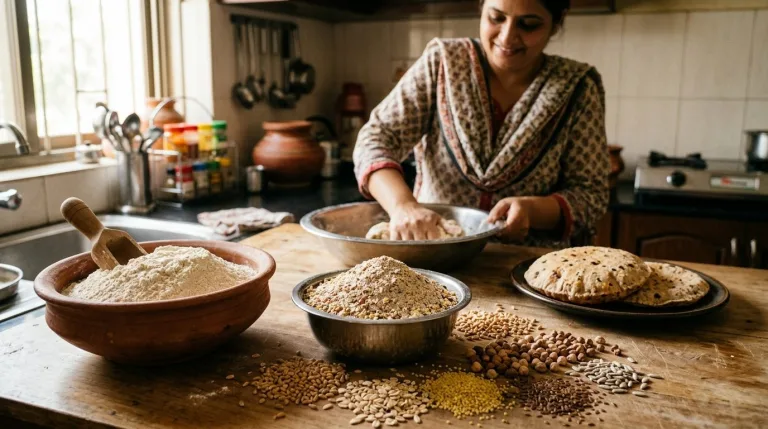
Walk into any grocery store in Pakistan today and you’ll notice something interesting. Alongside the familiar white maida and the classic chakki atta, there’s now a new category of flour sitting on the shelf, usually in premium packaging and carrying a noticeably higher price tag. That’s multigrain flour, and Pakistani households are buying it in growing numbers. But what exactly is it, why does it cost more than regular wheat flour, and is it actually worth the extra rupees you’d spend on it?
This article breaks down everything you need to know about multigrain flour prices in Pakistan, the grains that go into it, and how to decide whether it makes sense for your household.
What Is Multigrain Flour and How Is It Different?
Multigrain flour, known in Pakistani kitchens as multigrain atta, is exactly what its name suggests: a blend of several different grains ground together into a single flour. Where regular chakki atta uses only wheat, multigrain flour combines wheat with other whole grains like oats, barley, bajra (pearl millet), jowar (sorghum), and sometimes chickpea flour (besan), flaxseed, or quinoa.
The difference in nutritional value is significant. Each grain brings its own set of vitamins, minerals, and dietary fiber to the mix. Wheat provides structure and the familiar taste Pakistani rotis are known for, barley adds soluble fiber that’s good for the heart, oats contribute beta-glucan, which helps manage blood sugar, and bajra brings iron and magnesium that many Pakistanis don’t get enough of in their daily diet.
Think of it this way: if regular flour is a solo performance, multigrain flour is a full ensemble, where every grain plays its own part and the result is richer and more complete than any single ingredient could deliver on its own.
What Does Multigrain Flour Actually Cost in Pakistan?
Prices vary depending on the brand, the number of grains, the pack size, and where you buy from. Here’s a practical overview of what you’ll encounter across the market:
- Regular chakki atta (wheat flour): Rs. 120 to Rs. 175 per kilogram at retail
- Multigrain flour from local online brands: Rs. 240 to Rs. 450 per kilogram
- Branded multigrain atta in 5 kg packs: Rs. 1,100 to Rs. 1,200 (roughly Rs. 220 to Rs. 240 per kg)
- Multanfarms.com Multi Grain Flour: Rs. 285 per kilogram, available in 1 kg and 5 kg packs
So in practical terms, you’re paying roughly 1.5 to 2.5 times the price of regular wheat flour when you switch to multigrain. That gap might feel large at first, but it narrows considerably when you factor in what you’re actually getting in every kilogram.
Why Does Multigrain Flour Cost More?
The price difference isn’t arbitrary, and it’s not just branding. Several real factors drive up the cost compared to standard wheat flour.
Sourcing multiple grains requires procurement from different suppliers and growing regions. Wheat, barley, oats, bajra, and jowar don’t all come from the same fields or even the same parts of Pakistan. Getting consistent-quality supplies of each grain adds to the production cost before a single grain has been milled.
Stone-grinding versus machine processing is another factor. Many multigrain flour producers use stone mills (chakki) to preserve the bran, germ, and natural oils in each grain. Machine milling at high temperatures can degrade heat-sensitive nutrients. The slower, traditional stone-grinding process takes more time and produces lower volumes per hour, which pushes unit costs up.
Finally, shelf life and storage are more demanding for multigrain flour. The natural oils from multiple whole grains mean the flour can turn rancid faster than refined wheat flour if not stored correctly. Responsible producers invest in better packaging and tighter quality control to offset this, which adds to what you pay at checkout.
Is the Price Justified? What You Get in Return
Let’s look at this practically. A household that goes through 10 kg of atta per month would spend roughly Rs. 1,500 on regular chakki atta. Switching to multigrain flour at Rs. 285 per kg would bring that to about Rs. 2,850 per month, an increase of around Rs. 1,350.
What does that extra spend buy you? You get substantially more dietary fiber, which improves digestion and keeps hunger at bay for longer. You get a lower glycemic index, meaning blood sugar rises more slowly and steadily after eating multigrain rotis than after eating white or even standard wheat rotis. This is particularly relevant for the millions of Pakistanis managing diabetes or trying to prevent it. You also get a broader range of micronutrients, including B vitamins, iron, magnesium, and zinc, that are stripped from refined flour during processing.
For families where someone has been advised to watch their blood sugar, improve their gut health, or simply eat more whole grains, the Rs. 1,350 monthly difference is a modest investment compared to the cost of managing preventable health conditions over time.
What to Look For When Buying Multigrain Flour in Pakistan
Not all multigrain flours are created equal, and the price should not be the only thing you use to compare them. A few things worth checking before you buy:
- Grain count: Some blends include 5 to 6 grains, while others combine 13 or more. More grains generally means a broader nutrient profile, though the base grains of wheat, barley, oats, and bajra do most of the nutritional heavy lifting.
- Processing method: Stone-ground (chakki-ground) flour retains more nutrients than machine-milled alternatives. Look for this on the packaging.
- Additives and preservatives: A clean multigrain flour should have nothing but whole grains in the ingredients list. Avoid products that pad the mix with artificial colors, flavors, or excessive salt.
- Pack size: Buying a 5 kg pack is almost always more economical per kilogram than buying 1 kg repeatedly. For a household that uses flour daily, this is the smarter buy.
Where to Buy Multigrain Flour in Pakistan
Multigrain flour is now widely available through grocery stores in major cities, specialized health food shops, and online through platforms like Daraz and brand websites. Buying directly from a brand’s own website often gives you better value because you skip the retail markup.
Multanfarms.com offers Multi Grain Flour, a blend of wheat, oats, barley, and additional whole grains, at Rs. 285 per kilogram, available in both 1 kg and 5 kg pack sizes with delivery available across Pakistan.
Making the Switch: A Practical Decision, Not Just a Trend
Multigrain flour is not a health fad or a luxury product reserved for a certain income bracket. It’s a practical upgrade to something your household already buys every week. The price is higher than regular wheat flour, that’s a fact, but the gap between what you pay and what you get in return is much smaller than it might initially seem.
If you’re ready to give multigrain flour a real try, visit Multanfarms.com and order your first pack today. Your rotis will taste just as familiar, and your body will notice the difference.