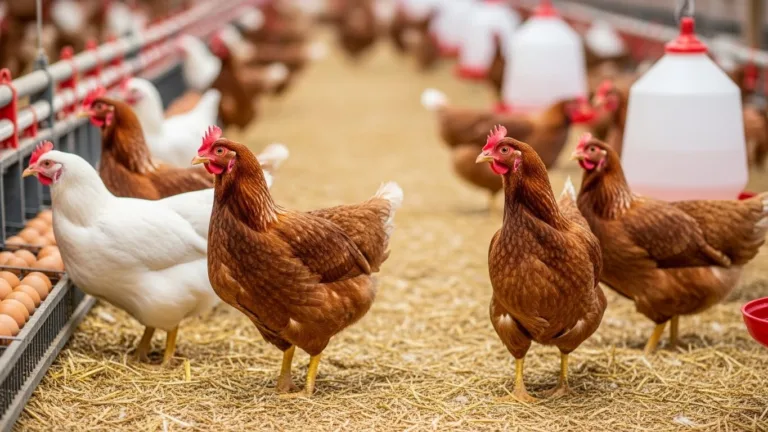
Have you ever stopped to think about where your breakfast eggs actually come from? Sure, you know they come from chickens, but not just any chickens! There’s a special group of super-productive hens that have one main job: laying eggs, and lots of them. These amazing birds are called layer hens, and they’re the reason you can enjoy scrambled eggs, omelets, and baked goods without thinking twice.
Here’s a mind-blowing fact: a single layer hen can produce over 300 eggs in just one year! That’s almost an egg every single day. To put that in perspective, if you had just five layer hens, you’d have enough eggs to make breakfast for your entire family every day with plenty left over for baking cookies and cakes. Pretty impressive, right?
In this article, you’ll discover what makes layer hens special, how they’re different from other chickens, what their daily life looks like, and why they’re so important to farms like Multanfarms.com. Get ready to see these feathered egg-producing machines in a whole new light!
What Exactly Are Layer Hens?
Let’s start with the basics. Layer hens are female chickens that have been specifically bred to lay lots and lots of eggs. Think of them as the egg specialists of the chicken world! Not all chickens are great at laying eggs, just like not all dogs are great at the same things. Some dog breeds are excellent at herding sheep, while others are better at being cuddly companions. Chickens are similar!
There are actually three main types of chickens in the farming world. First, you’ve got layer hens, whose job is laying eggs. Second, there are broiler chickens, which are raised for meat. Third, there are dual-purpose breeds that can do both jobs reasonably well, though they’re not as specialized as the other two types.
Layer hens are typically smaller and leaner than broiler chickens because their bodies are designed to put energy into egg production rather than building muscle. It’s like comparing a marathon runner to a weightlifter, they’re both athletes, but their bodies are built for different purposes!
The Daily Life of a Layer Hen
So what does a typical day look like for these egg-laying superstars? Well, it’s more structured than you might think! Layer hens thrive on routine, and farms create environments that keep them healthy, comfortable, and productive.
A layer hen’s day usually starts early in the morning, around sunrise. Hens need about 14 to 16 hours of light each day to keep laying eggs consistently. This is because their bodies are naturally programmed to respond to daylight, which signals that it’s time to be active and productive. On farms, lights are often used to extend daylight hours during winter when days are shorter.
Throughout the day, layer hens spend their time eating, drinking, and socializing with other hens. They need a balanced diet rich in protein, calcium, and other nutrients to produce strong, healthy eggs. The calcium is especially important because eggshells are made mostly of calcium carbonate. Without enough calcium in their diet, hens can’t make sturdy shells!
Believe it or not, hens also need entertainment and exercise. Modern farms often provide perches where hens can roost, nesting boxes where they can lay eggs in private, and space where they can scratch around and explore. Happy, comfortable hens produce better quality eggs!
The Science Behind Egg Production
Ever wonder how a hen actually makes an egg? The process is pretty fascinating! It all happens inside the hen’s reproductive system, which works like a super-efficient factory assembly line.
When a hen is ready to lay an egg, her body releases a yolk from her ovary. This yolk then travels through a tube called the oviduct, which is about 25 to 27 inches long. As the yolk moves through different sections of the oviduct, layers are added one at a time. First comes the egg white (called albumen), then the shell membranes, and finally the hard outer shell.
The whole process takes about 24 to 26 hours from start to finish! That means a hen needs roughly a full day to create one complete egg. This is why even the most productive layer hens usually lay one egg per day at most. Their bodies need that full cycle to build each egg properly.
Here’s something really cool: the color of the eggshell depends on the breed of hen! Some hens lay white eggs, others lay brown eggs, and some special breeds even lay blue or green eggs. But here’s the secret, the color of the shell doesn’t affect the taste or nutritional value of the egg. It’s just for looks!
Different Breeds of Layer Hens
Just like there are many breeds of dogs or cats, there are different breeds of layer hens, each with their own characteristics. Let’s meet some of the most popular ones!
Leghorns are like the champions of egg-laying. These white-feathered birds are lean, efficient, and can produce around 300 white eggs per year. They’re energetic and active, always on the move. Most commercial egg farms use White Leghorns because they’re so productive.
Rhode Island Reds are larger, brown-feathered hens with a friendly personality. They lay brown eggs and are known for being hardy, which means they can handle different weather conditions well. They’re like the reliable, all-around performers of the chicken world.
ISA Browns are specially bred hybrid chickens that combine the best traits from different breeds. They’re extremely popular on farms because they’re calm, friendly, and excellent egg layers. They can produce over 300 brown eggs per year while being easy to care for.
Sussex chickens are beautiful birds with speckled feathers that come in several color patterns. They’re dual-purpose birds, meaning they’re decent at both egg-laying and providing meat, though they’re not as specialized as pure layer breeds.
Why Layer Hens Matter to Farms Like Multanfarms.com
So why do farms put so much effort into raising layer hens? The answer is simple: eggs are one of the most important and versatile foods in the world! Think about how many things you eat that contain eggs. Bread, cakes, cookies, pasta, mayonnaise, and of course, eggs themselves for breakfast. Without layer hens, all of these foods would be much harder to make and way more expensive.
Farms like Multanfarms.com understand that raising healthy, happy layer hens is crucial for producing high-quality eggs. When hens are well-cared for, they produce eggs that taste better and have stronger shells. These farms focus on giving their hens proper nutrition, clean living conditions, and enough space to move around comfortably.
Quality matters because not all eggs are created equal! Eggs from well-raised hens have brighter yolks, firmer whites, and better flavor. They’re also fresher because they don’t have to travel as far from the farm to your table. When you get eggs from a local farm like Multanfarms.com, you’re getting a product that was probably laid just days ago, not weeks ago like some store-bought eggs.
The Health Benefits of Fresh Eggs
Let’s talk about why eggs from healthy layer hens are so good for you! Eggs are often called “nature’s multivitamin” because they’re packed with nutrients. One large egg contains high-quality protein, vitamins A, D, E, and B12, plus minerals like iron and zinc. All of this comes in a package with only about 70 calories!
The protein in eggs is especially important. It contains all nine essential amino acids, which are the building blocks your body needs to grow and repair itself. This makes eggs a “complete protein,” which is pretty rare in the food world. It’s like getting all the pieces of a puzzle in one box!
Fresh eggs from well-fed layer hens often have deeper colored yolks, which usually means they contain more nutrients like omega-3 fatty acids and vitamins. Hens that eat a varied, healthy diet pass those benefits along in their eggs. It’s a direct connection from what the hen eats to what ends up on your plate!
Understanding Egg Labels and What They Mean
When you shop for eggs, you might see all sorts of labels: cage-free, free-range, organic, and more. What do these actually mean? Let’s break it down so you can make informed choices.
Cage-free means the hens aren’t kept in individual cages but have space to move around inside a barn or building. They can walk, spread their wings, and lay eggs in nests. However, this doesn’t necessarily mean they go outside.
Free-range hens have access to the outdoors, though the amount of outdoor time and space can vary. These hens can exhibit more natural behaviors like scratching in the dirt and foraging for bugs.
Pasture-raised hens spend most of their time outdoors in fields or pastures, which is closest to how chickens naturally live. They eat grass, bugs, and other things they find while roaming around, in addition to their regular feed.
Understanding these terms helps you know more about where your eggs come from and how the layer hens that produced them were raised!
The Future of Layer Hen Farming
The farming industry is always evolving, and layer hen farming is no exception. Farmers are constantly looking for ways to improve the lives of their hens while also producing high-quality eggs efficiently. New technologies help monitor the health of individual birds, ensure they’re getting proper nutrition, and keep their living spaces clean and comfortable.
There’s also growing interest in sustainable farming practices. This means raising hens in ways that are good for the environment, good for the birds, and good for the people who eat the eggs. Farms like Multanfarms.com are at the forefront of these efforts, working to balance productivity with animal welfare and environmental responsibility.
Wrapping It Up: The Amazing World of Layer Hens
Layer hens are truly remarkable creatures! These specialized chickens have been bred over generations to be egg-laying superstars, and they do their job incredibly well. From the science of how they produce eggs to the different breeds with unique characteristics, there’s so much more to these birds than meets the eye.
The next time you crack an egg into a pan or bite into a fresh cookie, remember the layer hen that made it possible. These birds work hard every single day, producing nutritious food that billions of people around the world depend on. Farms like Multanfarms.com play a crucial role in ensuring these hens are healthy and well-cared for, which directly affects the quality of eggs you eat.
So here’s something to think about: now that you know the amazing story behind every egg, will you look at your breakfast differently? And maybe, just maybe, will you appreciate those hard-working layer hens a little bit more?