Close your eyes and imagine biting into a perfectly ripe mango. The sweet, juicy flavor explodes in your mouth, and sticky juice runs down your chin. Mmm, delicious, right? But here’s something that might blow your mind: that tropical treat you’re enjoying has been around for over 4,000 years and was once so valuable that people considered it a luxury fit for royalty!
Mangoes aren’t just another fruit sitting in the produce section of your grocery store. They’re actually one of the most popular fruits in the entire world, with millions of people eating them every single day. From India to Mexico, from Thailand to right here in your own kitchen, mangoes have captured hearts (and taste buds) across the globe. But there’s so much more to this golden fruit than just its amazing taste.
Get ready to discover some seriously cool facts about mangoes that’ll make you appreciate this tropical superstar even more. We’re diving into everything from where mangoes come from to why they’re so good for you, and trust me, some of these facts are going to surprise you!
Mangoes Have Been Around Forever (Well, Almost!)
Let’s start with a history lesson that’s actually interesting, I promise! Mangoes have been cultivated, which means purposely grown by humans, for more than 4,000 years. That’s right, people were enjoying mangoes when the ancient Egyptian pyramids were still being built! The mango tree originally comes from South Asia, particularly India and Myanmar (formerly called Burma).
Here’s where it gets really cool: in India, mangoes are so important that they’re considered the national fruit. Ancient Indian legends and religious texts mention mangoes all the time, and even Buddha himself supposedly meditated in a mango grove! That’s some serious street cred for a fruit. Kings and emperors treasured mango orchards like we treasure our favorite video games today.
The fruit didn’t stay in Asia for long, though. Explorers and traders carried mango seeds with them as they traveled the world, kind of like how you might share your favorite app with friends. Eventually, mangoes spread to Africa, the Middle East, South America, and basically anywhere with a warm, tropical climate. Today, mangoes grow in over 100 countries worldwide!
The Mango Family Tree Is Huge!
Think there’s just one type of mango? Think again! There are actually over 1,000 different varieties of mangoes around the world. That’s like having a thousand different flavors of ice cream to choose from! Each variety has its own unique taste, texture, color, and size.
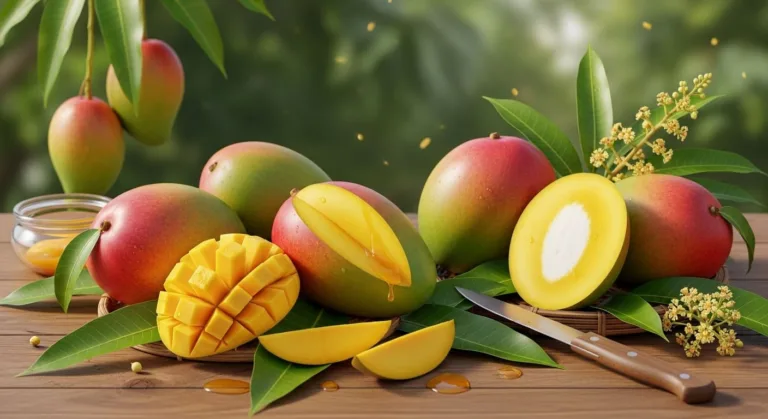
Some mangoes are as small as plums, while others can weigh up to five pounds, that’s like carrying a small laptop made entirely of fruit! The colors range from green to yellow to orange to deep red, and some varieties even have a mix of all these colors. It’s like nature’s own rainbow collection.
Some of the most popular varieties you might find at the store include:
- Alphonso: Known as the “king of mangoes” in India, super sweet and creamy
- Tommy Atkins: The most common variety in the U.S., with red and green skin
- Kent: Large, juicy, and almost fiberless (no stringy bits in your teeth!)
- Ataulfo: Small, golden, and incredibly sweet, also called honey or champagne mango
Each variety has fans who swear it’s the best, kind of like how people debate which superhero is the strongest. The truth is, they’re all delicious in their own way!
Mangoes Are Nutritional Superstars
Okay, so mangoes taste amazing, but are they actually good for you? The answer is a huge YES! Mangoes are packed with vitamins, minerals, and other nutrients that your body absolutely loves. Think of them as nature’s multivitamin, but way tastier.
First up, mangoes are loaded with vitamin C. Just one cup of mango gives you about 60% of the vitamin C you need for the whole day! Vitamin C helps your immune system fight off colds and keeps your skin healthy and glowing. It’s like having a tiny army of defenders inside your body, all thanks to that delicious fruit.
They’re also rich in vitamin A, which is super important for good eyesight. Ever heard the saying “eat your carrots so you can see in the dark”? Well, mangoes have the same benefit! Vitamin A keeps your eyes healthy and helps you see better, especially in low light. Plus, it keeps your skin looking great and helps your body grow properly.
But wait, there’s more! Mangoes contain over 20 different vitamins and minerals, including folate, vitamin B6, vitamin E, and potassium. They also have fiber, which helps your digestive system work smoothly. And here’s a bonus: mangoes contain special compounds called antioxidants that help protect your cells from damage. It’s like giving your body a shield against things that could make you sick!
Mind-Blowing Mango Production Numbers
Ready for some numbers that’ll make your jaw drop? The world produces about 55 million tons of mangoes every year. That’s roughly 110 billion pounds! To put that in perspective, if you stacked all those mangoes, they’d probably reach the moon and back several times. Okay, maybe I’m exaggerating a bit, but you get the idea, that’s a LOT of mangoes!
India is the undisputed champion of mango production, growing about 40% of the world’s supply. That’s almost half of all mangoes coming from one country! Other major producers include China, Thailand, Indonesia, Mexico, and Pakistan. Together, these countries turn mango farming into a massive global industry worth billions of dollars.
Here’s something interesting: even though India grows the most mangoes, they actually consume most of them within their own country! Indians love their mangoes so much that they keep most of the harvest for themselves. Can you blame them? Mexico, on the other hand, is one of the biggest exporters, shipping mangoes all around the world, including to the United States.
At Multanfarms.com, we appreciate the incredible work that goes into growing quality produce. While we specialize in other agricultural products, we recognize that fruit farming, like mango cultivation, requires dedication, knowledge, and a deep understanding of what makes crops thrive.
Mangoes in Culture: More Than Just a Snack
Mangoes aren’t just food, they’re a huge part of many cultures around the world. In India, mango leaves are used in religious ceremonies and weddings. People hang them in doorways during festivals because they’re considered symbols of love and good luck. Imagine if we decorated our houses with apple branches during the holidays, that’s how important mango leaves are in Indian culture!
In the Philippines, there’s actually a variety called the Carabao mango that holds a Guinness World Record for being the sweetest mango in the world. The whole country takes pride in this achievement, kind of like how Americans feel about winning gold medals in the Olympics. Filipino people are so proud of their mangoes that they feature them in art, festivals, and even popular songs!
Mangoes have also inspired artists, poets, and writers for centuries. The famous Spanish artist Salvador Dalí painted mangoes, and countless poets have written about the fruit’s beauty and sweetness. In literature, mangoes often symbolize tropical paradise, summer, and the sweetness of life itself. Not bad for a fruit, right?
The Mango Tree: A True Survivor
Let’s talk about the tree that produces this amazing fruit. Mango trees are seriously impressive plants that can live for over 100 years! Some ancient mango trees in India are reportedly over 300 years old and still producing fruit. That means the same tree could have fed someone’s great-great-great-great-great-grandparents and is still feeding people today!
These trees can grow incredibly tall, sometimes reaching heights of 100 feet, that’s about as tall as a 10-story building! Their canopy (the leafy part at the top) spreads wide and provides awesome shade, which is why you’ll often see people gathering under mango trees in tropical countries during hot days. It’s like nature’s own air-conditioned hangout spot.
One mango tree can produce hundreds or even thousands of mangoes in a single season. The trees bloom with small, fragrant flowers that smell absolutely amazing, kind of like a mix of lily and jasmine. Bees and other pollinators love these flowers, which is how the mangoes get pollinated and eventually grow into the fruits we love to eat.
Fun Mango Facts That’ll Impress Your Friends
Ready for some quick-fire amazing mango facts? Here are some tidbits that’ll make you the most interesting person at the lunch table:
- Mangoes belong to the same family as cashews and pistachios! They’re all related, which is why some people who are allergic to nuts need to be careful with mangoes too.
- The word “mango” comes from the Tamil word “mangkay” or “mankay,” which traveled through Portuguese to eventually become the English word we use today.
- Ripe mangoes can actually help you fall asleep better because they contain a good amount of vitamin B6, which helps your body produce serotonin, a chemical that makes you feel calm and sleepy.
- Mango skin is edible! While most people peel mangoes, the skin is actually packed with nutrients. Just make sure to wash it thoroughly first.
- In some countries, people eat unripe green mangoes with salt and chili powder as a popular snack. It’s sour, spicy, and totally delicious!
Why Mangoes Matter Today
So why should you care about all these mango facts? Well, mangoes are more than just a tasty treat. They’re an important food source for millions of people around the world, providing essential nutrients, especially in developing countries where other fruits might be scarce or expensive.
The mango industry also provides jobs for countless farmers, pickers, packers, and sellers globally. When you buy a mango at the store, you’re supporting entire communities that depend on this fruit for their livelihood. It’s pretty cool to think that enjoying a sweet, juicy mango connects you to farmers in India, Mexico, or Thailand!
Plus, understanding where our food comes from and appreciating its history makes eating more meaningful. Instead of just grabbing any old fruit, you now know you’re biting into something that’s been cherished by humans for thousands of years, traveled across continents, and carries cultural significance for billions of people.
The Sweet Conclusion
From ancient Indian groves to your local grocery store, mangoes have had quite the journey! We’ve discovered that these golden fruits have been around for millennia, come in over a thousand varieties, pack a serious nutritional punch, and hold cultural importance across the globe. Pretty impressive for something that just tastes like sunshine in fruit form, right?
Whether you prefer your mangoes in smoothies, sliced fresh, dried, or even in spicy salsa, you’re now part of a worldwide tradition of mango lovers that stretches back thousands of years. The next time you enjoy this tropical treat, you can appreciate all the history, culture, and amazing facts that come with every delicious bite.
So here’s my question for you: now that you know all these incredible mango facts, what variety are you most excited to try? And maybe, just maybe, you’ll never look at a mango the same way again!