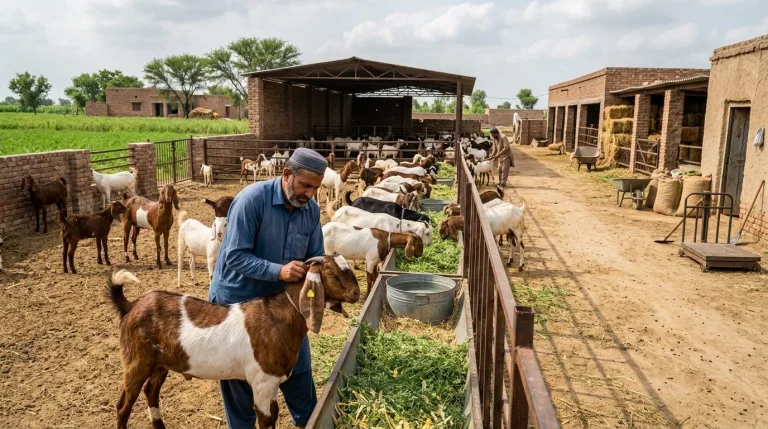
Pakistan is home to over 80 million goats, giving it one of the largest goat populations in the world. That number alone tells you something important: bakra business (goat farming and trading) isn’t a casual side project. It’s a full-scale agricultural industry that generates serious income, sustains rural households, and ties directly into cultural traditions that run deep across the country. Whether you’re farming in South Punjab, Khyber Pakhtunkhwa, or anywhere in between, goat farming has a meaningful place in the economy and the community.
So what makes this business work, and how do you get started on solid footing? Let’s break it all down.
Why Goats Make Such Good Business Sense
Goats are often called “the poor man’s cow,” but that nickname undersells them badly. Bakray are hardy, adaptable animals that thrive in Pakistan’s varying climates, from the dry heat of Multan to the cooler highlands of Balochistan. They don’t need acres of land or expensive infrastructure, which makes them one of the most accessible livestock options for farmers at every income level.
Compared to cattle, goats have a shorter gestation period of around 150 days, mature faster, and reproduce more frequently. A single healthy doe can kid twice a year and deliver one to three kids per pregnancy. That means your herd can grow quickly when managed well, and faster growth translates directly into faster returns.
The Cultural Engine Behind Demand: Eid ul Adha
No discussion of the bakra business in Pakistan is complete without Eid ul Adha, the Festival of Sacrifice. Every year, millions of Muslim families across the country purchase goats, sheep, and cattle for Qurbani, and demand spikes dramatically in the weeks leading up to Eid. Prices reflect that surge sharply.
A goat that might sell for 15,000 to 18,000 rupees in an off-season mandi can fetch 30,000 to 60,000 rupees, or more for premium breeds, right before Eid. Farmers who plan their breeding and purchase cycles around this window can significantly increase their earnings in a single season. This annual price surge is one of the key reasons bakra farming continues to attract serious investment across rural Pakistan.
Popular Goat Breeds You Should Know
Not all goats are equal, especially in a business context. Pakistan has several strong commercial breeds, each with distinct advantages worth understanding.
Beetal goats are among the most prized in Punjab, known for their large frame, fast growth, and high market value. A well-raised Beetal buck can cross six figures at peak Eid season without much trouble. Teddy goats are smaller but excel in milk production and ease of management, making them popular with small-scale farmers in central and southern Punjab who want productivity year-round. Kajli goats, a Sargodha-origin breed recognizable by their long flat ears, attract buyers specifically for Qurbani purposes and maintain consistently strong prices. Choosing the right breed for your target market is one of the most important early decisions in building a bakra business.
Starting Out: What You Actually Need
Getting into the bakra business doesn’t require massive upfront capital, but it does require clear planning. Start with a covered shelter that protects your animals from rain, extreme heat, and predators. Even a semi-permanent pucca structure works well as long as ventilation is good, since poor airflow is one of the leading causes of respiratory illness in goats.
Feed quality separates profitable herds from struggling ones. Combine green fodder like berseem or lucerne with dry hay and grain supplements such as wheat bran or corn, and ensure clean water is available throughout the day. Beyond feed, set up a vaccination schedule with a local vet from day one. Common diseases like PPR (Peste des Petits Ruminants) and FMD (Foot-and-Mouth Disease) can devastate a herd quickly, and prevention is far cheaper than treatment.
Running the Numbers: Is It Actually Worth It?
Let’s look at a realistic small-scale scenario. A farmer in Multan purchases 10 young bakray at an average of 10,000 rupees each, spending 1,00,000 rupees on stock. Over six to eight months, feed, healthcare, and housing add another 40,000 to 50,000 rupees in operating costs, bringing the total investment to around 1,40,000 to 1,50,000 rupees.
At Eid, those well-grown, healthy goats sell for an average of 28,000 to 35,000 rupees each, putting total sales between 2,80,000 and 3,50,000 rupees. After expenses, net profit on a 10-goat operation can comfortably reach 1,30,000 to 2,00,000 rupees in a single season. Scale to 30 or 50 animals with better infrastructure, and the numbers improve considerably. Profitability depends on cost control, breed selection, timing, and market access, but the fundamentals are solid.
Marketing Your Goats the Smart Way
Selling at the local mandi is still common, but it’s no longer the only option. More farmers are using social media, WhatsApp groups, and agricultural platforms to reach buyers directly, cutting out middlemen and capturing better margins.
Posting clear photos, sharing the goat’s breed, weight, and health record, and responding to inquiries promptly builds buyer trust quickly. For premium animals, a short video clip showing the goat’s build and temperament can make a real difference in closing sales at stronger prices. Platforms like Multanfarms.com make it easier for livestock sellers to connect with buyers across Pakistan, especially in the lead-up to Eid. Being visible online isn’t just a nice-to-have anymore; it’s a genuine competitive edge.
A Business with Deep Roots and Real Potential
Bakra business is not a shortcut to easy money. It takes consistent effort, sound animal husbandry, financial discipline, and real market awareness. But for those willing to invest the time and care, it offers something genuinely valuable: steady demand, manageable startup costs, and a direct connection to one of the most important cultural traditions in the country.
Whether you’re entering livestock farming for the first time or looking to grow an existing operation, goat farming offers a clear path to financial growth. Visit Multanfarms.com to explore more livestock guides, buyer connections, and agricultural resources built specifically for Pakistan’s farming community.