Picture this: you’re standing face-to-face with a bird that’s taller than most adults, can run faster than a car in a school zone, and has eyes bigger than its brain. Welcome to the world of ostriches! These incredible birds aren’t your typical backyard chickens, and if you’re thinking about raising them (or just curious about how farms like MultanFarms.com keep them), you need to know that ostriches have some pretty specific needs.
Ostriches are the largest birds on Earth, and they come with some seriously unique requirements. You can’t just put them in a regular chicken coop and call it a day. These birds need space, lots of it, plus the right kind of fencing, shelter, and ground conditions to thrive. Getting the enclosure wrong can lead to stressed, unhealthy birds, and nobody wants that!
In this article, we’ll explore everything you need to know about ostrich enclosure requirements. Whether you’re dreaming of starting your own ostrich farm, working on a school project, or just fascinated by these amazing birds, you’ll learn exactly what it takes to create a safe and comfortable home for these feathered giants. Trust me, it’s a lot more interesting than you might think!
Why Ostrich Enclosures Are Nothing Like Regular Bird Coops
Let’s start with the obvious: ostriches are huge! An adult male ostrich can stand up to 9 feet tall and weigh over 300 pounds. That’s about the same weight as a baby grand piano, except this piano has legs and can kick hard enough to seriously injure a person. So yeah, you need to think big when it comes to their living space.
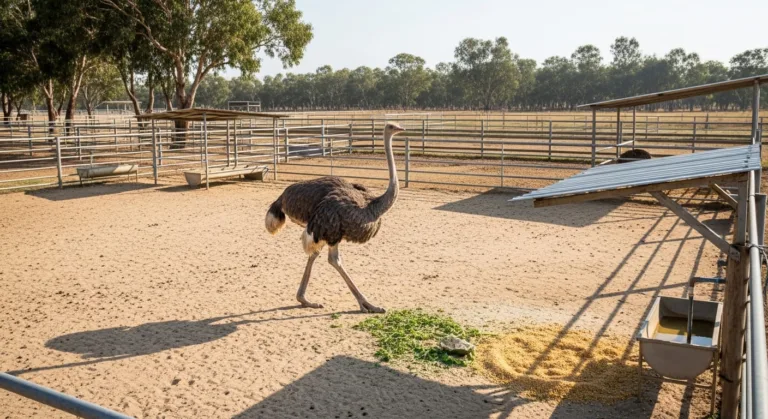
The first rule of ostrich housing is simple: space matters, a lot. Each adult ostrich needs at least one acre of land to roam around comfortably. If you’re keeping a breeding pair, you’ll want even more space, ideally 2 to 3 acres. Think about it like this: if you had to stay in your bedroom all day, every day, you’d go stir-crazy pretty quickly. Ostriches feel the same way! They’re naturally active birds that love to run and explore.
At farms like MultanFarms.com, proper space planning isn’t just about keeping the birds happy. It’s also about their health. Overcrowded ostriches can become aggressive, stressed, and more susceptible to diseases. Plus, when you give them enough room, they can express their natural behaviors like running, dust bathing, and foraging, which keeps them mentally and physically fit.
Fencing: Building Walls They Can’t Jump, Kick, or Peck Through
Now let’s talk about fencing, because this is where things get really interesting. You might think any old fence would work, but ostriches are surprisingly clever and incredibly strong. They can jump over obstacles, kick through weak barriers, and even get curious enough to peck at anything shiny or colorful.
The ideal fence height for ostriches is between 6 to 8 feet tall. Why so high? Because these birds can leap pretty impressively when they want to, and you definitely don’t want an ostrich escaping into your neighbor’s yard! The fence also needs to be sturdy, typically made from strong materials like wooden posts with wire mesh or metal panels.
Here’s a pro tip that experienced farmers swear by: avoid using barbed wire or sharp edges. Ostriches have delicate skin that can tear easily, and their long necks mean they can accidentally injure themselves on poorly designed fencing. Instead, use smooth, tightly-woven wire mesh that’s strong enough to withstand their kicks but won’t cut them if they bump into it. Some farmers even paint the top rail of their fences a bright color so the birds can clearly see where the boundary is. It’s like putting up a “Do Not Cross” sign that ostriches can actually understand!
The fence posts should be buried deep (at least 2 to 3 feet into the ground) and spaced close enough together that the fence stays rigid. Remember, an ostrich kick can generate serious force, so your fence needs to be able to handle the occasional bump or collision without collapsing.
Shelter and Shade: Protection from the Elements
You might assume that since ostriches come from Africa, they can handle any weather thrown at them. Not quite! While they’re pretty hardy birds, they still need proper shelter to protect them from extreme conditions, whether that’s scorching sun, heavy rain, or cold nights.
A basic ostrich shelter doesn’t need to be fancy, but it should provide enough covered space for all your birds to fit comfortably. Think of it as a three-sided barn or a large covered shed that blocks wind and rain while still allowing plenty of ventilation. The floor should be covered with clean, dry bedding like straw or wood shavings, which needs to be changed regularly to prevent bacterial growth.
The shelter should be at least 12 feet high (remember, these are tall birds!) and provide about 100 to 150 square feet of covered space per bird. In hotter climates like Punjab, shade is absolutely critical. Ostriches can overheat surprisingly quickly, so having shaded areas throughout their enclosure, whether from trees, shade cloths, or shelters, helps them regulate their body temperature.
During winter or cooler months, even though ostriches have feathers, they might need some extra protection from harsh winds and freezing temperatures. Many farmers at operations like MultanFarms.com use windbreaks or enclosed shelters with proper insulation to keep their birds comfortable year-round.
Ground Conditions: What’s Under Their Feet Matters
Here’s something most people don’t think about: the ground surface in an ostrich enclosure is super important! Ostriches have powerful legs with two toes on each foot, and they spend all day walking, running, and standing on whatever surface you provide. Get it wrong, and you could end up with injured birds.
Well-drained, sandy soil is ideal for ostrich enclosures. It’s soft enough to be comfortable on their feet but firm enough to prevent them from sinking in. The sand also allows for natural dust bathing, which is how ostriches keep their feathers clean and free from parasites. It’s basically their version of taking a shower!
Avoid concrete or hard-packed surfaces because these can cause foot problems and leg injuries over time. Similarly, muddy or constantly wet ground is a big no-no. It can lead to bacterial infections and make it harder for the birds to move around comfortably. If your area gets a lot of rain, you’ll need to plan for proper drainage systems that keep water from pooling in the enclosure.
Some farmers also add different textures in various parts of the enclosure, like gravel paths or grassy areas. This gives the ostriches variety and helps naturally wear down their toenails (yes, ostrich pedicures are a thing, and trust me, you’d rather let nature handle it!).
Water and Feeding Stations: Keeping Giants Fed and Hydrated
Ostriches might be big, but they’re not super messy eaters, thank goodness! However, you still need to set up proper feeding and watering stations that can handle birds this size.
Water troughs should be large, sturdy, and positioned at a comfortable height, usually about 2 to 3 feet off the ground. Ostriches drink a lot of water, especially in hot weather, so you’ll need containers that hold several gallons and are refilled daily. Some farmers use automatic waterers that connect to a water line, making the job much easier.
Feeding stations should be designed to minimize waste and keep food clean. Many farms use long, trough-style feeders that multiple birds can access at once without fighting over food. The feeders should be heavy enough that an ostrich can’t accidentally tip them over (because they will try, believe me!).
Here’s a fun fact: ostriches are curious birds and will peck at almost anything shiny or interesting. That means you need to keep their enclosure free from small objects, tools, or debris that they might try to eat. They’re like toddlers with beaks and an appetite for weird stuff!
Safety Features: Protecting Both Birds and People
Last but definitely not least, let’s talk about safety. Ostriches are generally calm birds, but they can be defensive, especially during breeding season. That powerful kick we mentioned earlier? It’s not just for show. An ostrich can seriously injure a person if it feels threatened.
Smart enclosure design includes safe entry and exit points with double-gated systems. This means you enter through one gate, close it behind you, then open a second gate to access the main enclosure. This prevents birds from escaping while you’re coming and going. It’s like an airlock system on a spaceship, just for birds!
Many farms also create separate handling areas or smaller pens within the main enclosure. These are useful for health checks, moving birds between areas, or separating individuals when needed. Having these spaces planned into your design from the start makes life much easier down the road.
At professional operations like MultanFarms.com, staff are trained to work safely around ostriches, understanding their body language and knowing when to give these birds space. If you’re planning to raise ostriches, investing time in learning their behavior is just as important as building the perfect enclosure.
Conclusion: Creating the Perfect Ostrich Paradise
So, what does it really take to keep an ostrich happy and healthy? As you’ve learned, it’s all about providing adequate space, secure fencing, proper shelter, good ground conditions, and well-designed feeding areas. These aren’t optional extras, they’re absolute requirements if you want healthy, thriving birds.
Building the right ostrich enclosure is like creating a carefully balanced habitat where these amazing birds can express their natural behaviors while staying safe and comfortable. Whether you’re at a large farm like MultanFarms.com or planning your own small ostrich operation, getting these basics right makes all the difference.
Remember, ostriches are intelligent, active birds that deserve respect and proper care. When you meet their enclosure requirements, you’re not just following rules, you’re giving these incredible creatures the quality of life they need to flourish. Now that you know what it takes, would you ever consider raising these fascinating birds? What part of creating an ostrich enclosure sounds the most challenging to you?